

Dakar Rally and Africa Eco Race
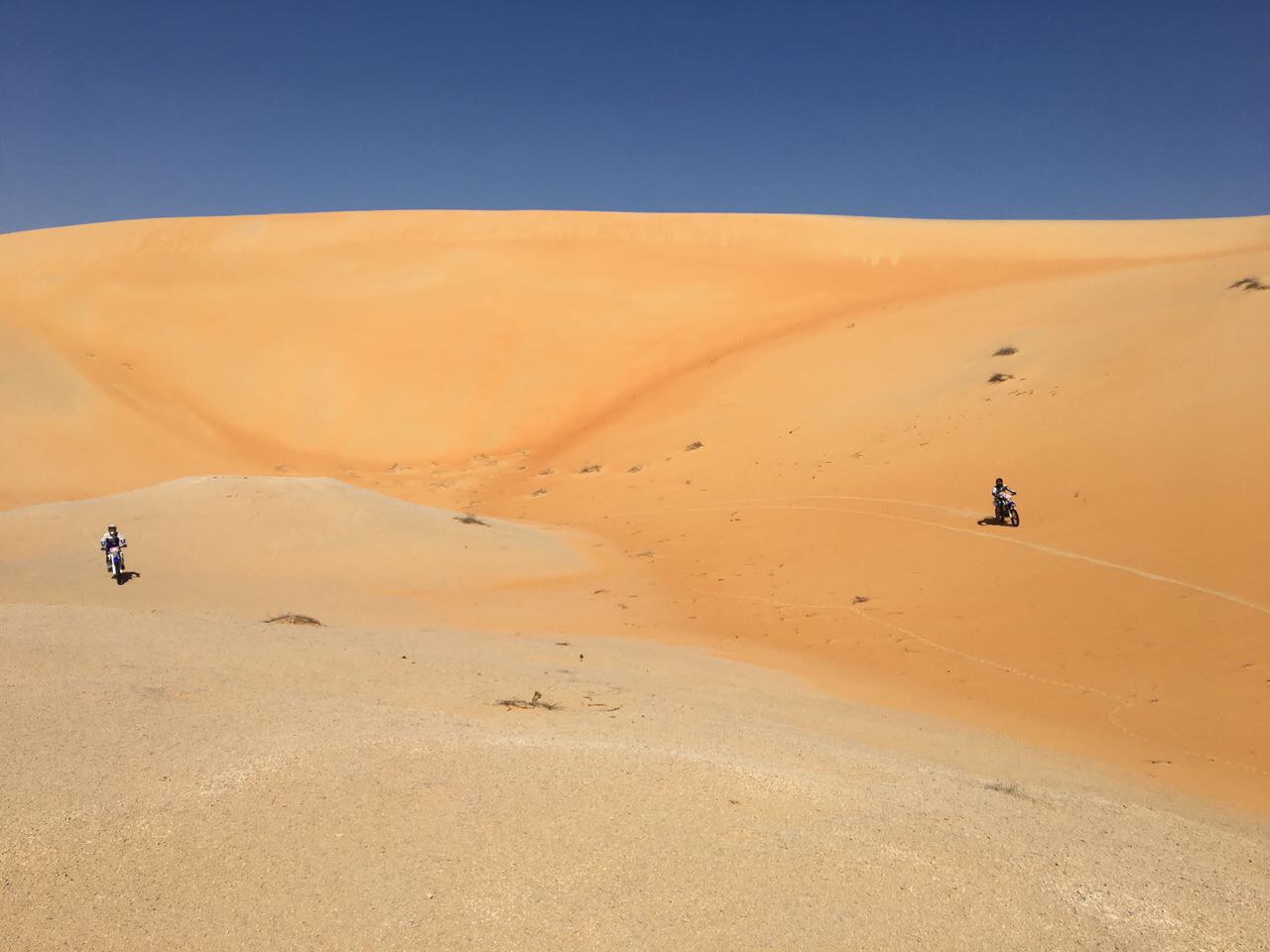
We have previously written about Annie Seel, one of Sweden’s most experienced Dakar riders, and about what it means to line up time and again at the start of a rally that rarely offers any shortcuts. As she herself put it ahead of her first Dakar:
“This is something you do once in a lifetime. Or hopefully more, if it goes well.”
At the same time, we have followed Stewe, who is now preparing for his next Africa Eco Race. For him, the rally is as much about the journey to and from the event as it is about the competition itself, with long transport stages, careful planning and an approach where the overall picture matters more than any single day.
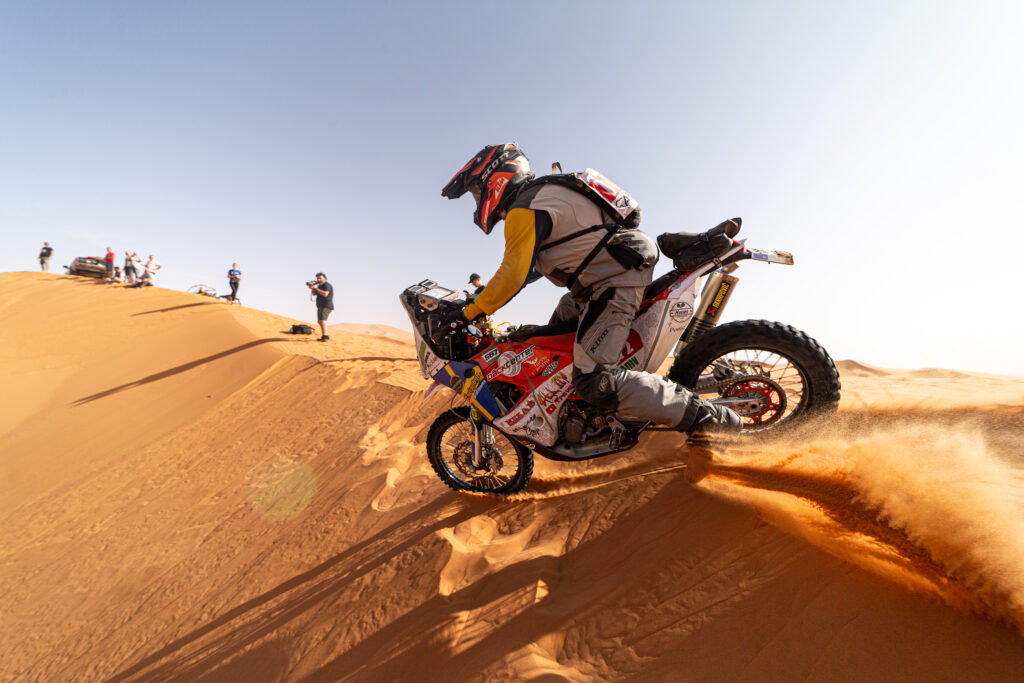
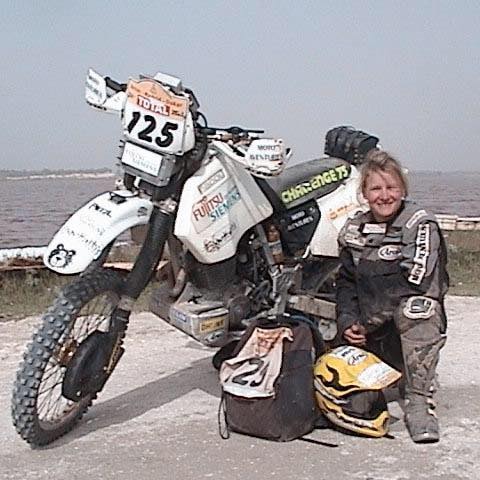
A lost Frenchman created Dakar
Behind the Dakar Rally stands the French motorcyclist Thierry Sabine. During the Abidjan–Nice rally in 1977, he lost his way in the Libyan desert and was left alone in the terrain for several days before being found.
Sabine later described the experience as formative. Not because it was dramatic, but because it clarified what it means to travel alone on a motorcycle in open desert. Without a co-driver, without protection, without anyone else to make decisions for you.
Two years later, in 1979, he founded the Paris–Dakar Rally.
The early years
When Dakar was first run, it was far removed from today’s high-tech competition. Motorcyclists navigated using a simple roadbook, often roughly prepared, supplemented by a compass, maps and their own ability to read the terrain.
Navigation errors were common and accepted. Reaching the finish was as much about judgement, mechanical understanding and endurance as it was about speed. During the 1980s and 1990s, Dakar gradually evolved. The roadbook became more detailed, safety improved and motorcycles developed into purpose-built rally machines. Factory teams grew in influence and the pace increased.
The most significant change came in the late 2000s. Ahead of the 2008 edition, the security situation deteriorated in several of the countries the rally passed through, particularly in Mauritania. Following deadly attacks on French citizens in the region and concrete threats against the event, organisers concluded that the risks could no longer be managed.
The Dakar Rally was cancelled in 2008 and never returned to Africa.
From 2009, the rally was run in South America, and after ten years it moved to Saudi Arabia in 2020, where it has since been based. The move brought improved security and logistics, but also a clear change in the character of the rally. Stages became shorter and more concentrated, the pace increased and the margins grew smaller.
In today’s Dakar, motorcyclists navigate using a mandatory digital roadbook and GPS-based waypoints. The system is strict, and each day is ridden with very little margin for error.
Rooted in tradition
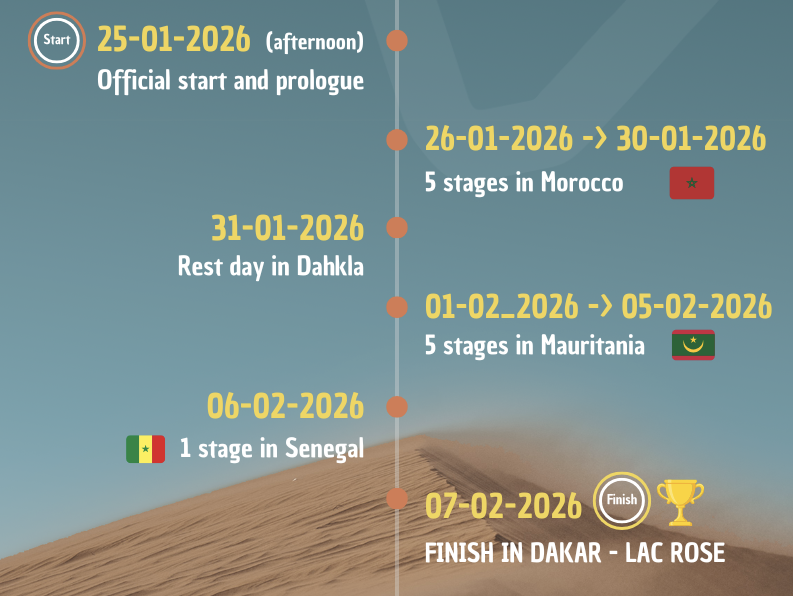
The Africa Eco Race was founded in 2009 by Dakar veteran Jean-Louis Schlesser, together with former Dakar organiser René Metge. The rally broadly follows the classic Dakar route, starting in Europe and travelling through Morocco, Mauritania and Senegal, before finishing at Lac Rose outside Dakar.
This is a rally where navigation is central. Distances are long, the terrain changes gradually, and each stage forms part of a larger whole. Speed in itself is not the objective, but rather the result of how well the rider reads the roadbook, the terrain and their own physical condition.
Navigation today can be carried out using either a digital or a traditional paper roadbook, depending on the rider’s choice. The Africa Eco Race allows greater freedom in route choice and decisions whose consequences unfold over time, rather than immediate time penalties.
Thierry Sabine was killed in a helicopter accident during the Dakar Rally in 1986, but the core idea lives on in both events. Whether it involves a digital roadbook or paper, Saudi Arabia or West Africa, both rallies are built on the same principle:
The motorcyclist must be able to take responsibility for their own decisions when no one else can do it for them. On a motorcycle, margins are small. Historically, only around half of those who start manage to reach the finish, which means that simply completing the rally is often valued more highly than a position on the results sheet.
Today, the Dakar Rally and the Africa Eco Race represent two different interpretations of the same idea. One focuses on maximum performance, the other on the bigger picture over time. Which is more appealing depends less on ambition and more on what kind of challenge one is seeking in the desert.
Dakar Rally and Africa Eco Race 2026
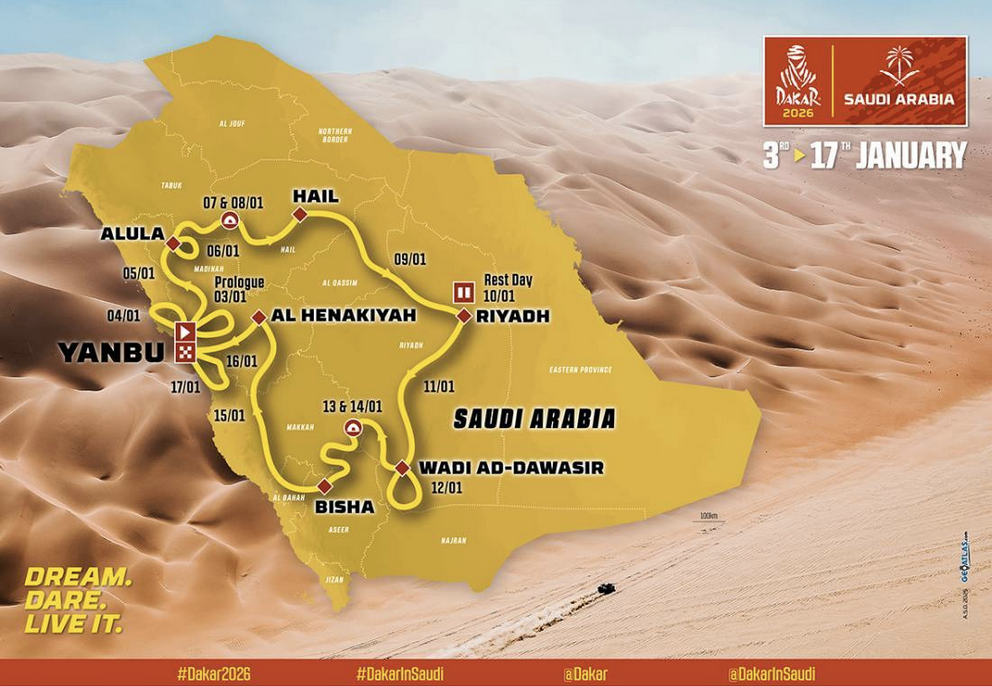
Dakar Rally 2026
Date: 3–17 January 2026
Start & Finish: Yanbu, Saudi Arabia
Africa Eco Race 2026
Date: 24 January – 7 February 2026
Start: Tangier, Morocco
Finish: Lac Rose, Dakar, Senegal
Anna Haglund