

Joacim Boive – two wheels, one leg
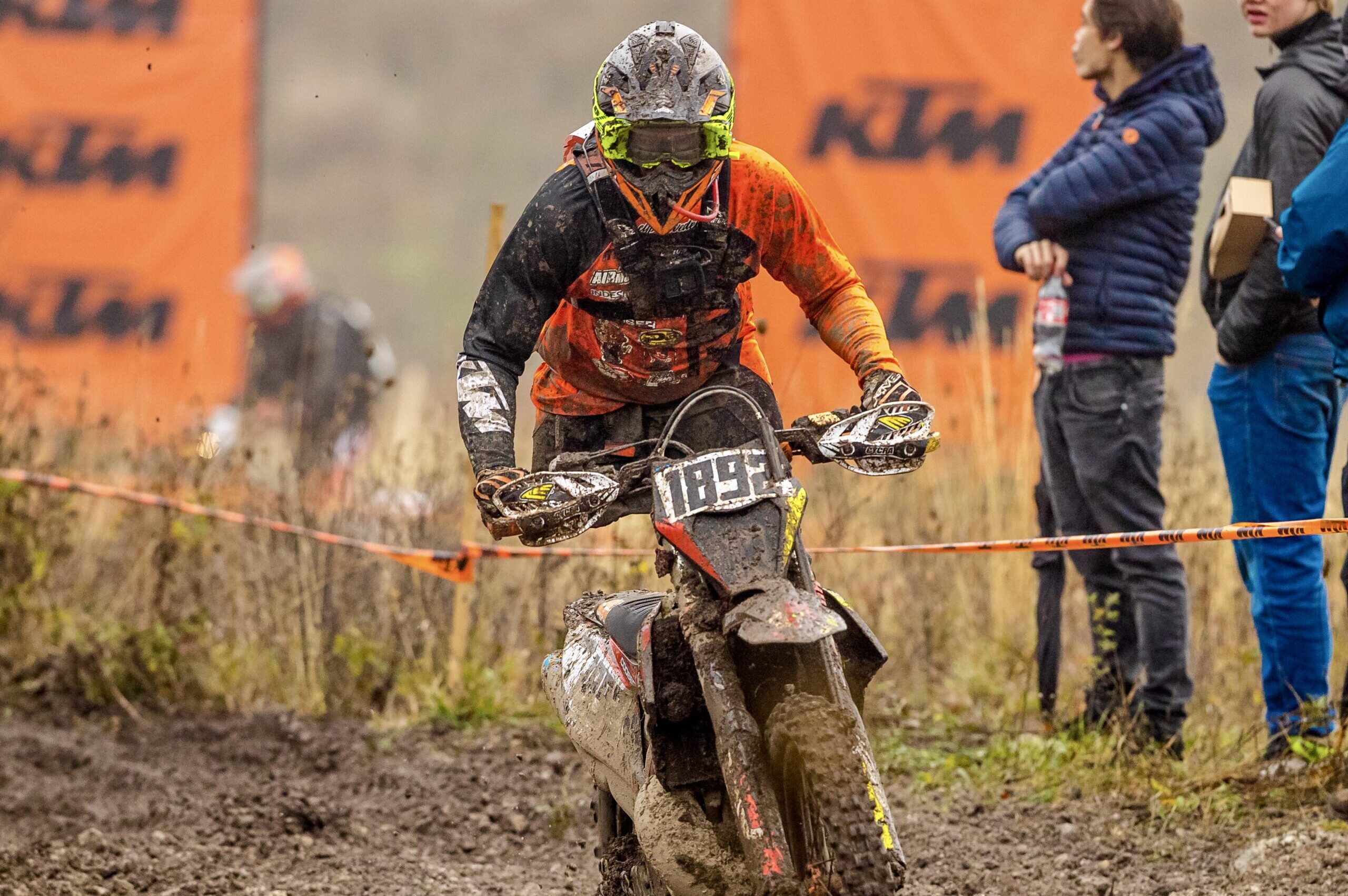
Joacim was thirteen years old when he was diagnosed with cancer. The illness led to his right leg being amputated above the knee. It changed many of the conditions in his life, but not the direction.
“I’ve been very fortunate,” he says today, adding that he has a great deal to thank his father for. His father’s attitude proved decisive. When Joacim came home from the hospital, they sat down and talked about what lay ahead.
“We could either shut ourselves away and think life was ruined. Or we could make the best of the situation. For my dad, there was never any doubt.”
There was never any talk of “you can’t”. Instead, it was always about how. Just two weeks after the amputation, Joacim was back out riding a bicycle. He crashed and ended up in the emergency room when the stitches burst. The doctor was unimpressed, but at home the reaction was not worry, rather a matter-of-fact conclusion: it may have been a bit early, but it was still a step forward.
From moped to motorcycle licence
An interest in engines was there from an early age. His father had ridden both motorcycles and rally cars, and for him it was only natural that his son should do the same.
Officially, you are allowed to ride a moped from the age of fifteen, but Joacim was granted special permission at just thirteen. It gave him far greater freedom and allowed him to get to school on his own.
“Dad built a solution so I could bring my crutches on the moped. One of those holders like the kind you hang a rake handle on.”
As Joacim approached sixteen, the next step took shape: a motorcycle licence. The county authority’s initial response was no. You could not obtain a motorcycle licence with only one leg.
But Joacim and his father refused to give up. After many discussions and a good deal of persuasion, they eventually succeeded. The requirement became two independent braking systems, long before today’s off-the-shelf solutions existed.
“Dad went down to the garage and tinkered a bit. He was something of an inventor,” Joacim says.
The result was a heel brake operated with the heel. It was far from ideal. You could either brake or change gear, but not both at the same time. Still, it worked, and Joacim became the first person in Sweden to obtain a motorcycle licence with one leg.
Without a prosthesis
Joacim is clear about his view on prosthetics. “There’s a general assumption that if you’re an amputee, you should have a prosthesis. I don’t agree.”
If you don’t have a knee, he says, it’s hard to see the point. In the early years he did use a prosthesis, mainly to avoid standing out as a thirteen-year-old. But it never became a long-term solution. “It chafes, it gets sweaty, it doesn’t fit when your weight changes. I felt restricted.”
Joacim was advised not to start using a wheelchair. “If you do, you’ll stay in it.” He followed that advice completely. With plenty of support and encouragement from friends, school and family, Joacim has continued to live an active life.
Challenges
When asked what the biggest challenge of riding with one leg is, Joacim replies that he’s not sure he has any. What he is most often asked is how he manages if he has to stop suddenly.
“But it’s in my muscle memory. I never think about it. I just turn the handlebars slightly and lean to the left.” Another question has followed him for years. “What happens if you tip over to the right when you’re riding?”
The answer is always the same. “Then I pick up the bike again. There are no secret tricks, no special solutions. On the road, it’s never happened. Not once in more than 30 years as a motorcyclist.”
When he later started riding enduro, it was a different matter. Joacim stands as much as he can, but it’s a challenge to maintain balance, to be unable to change gear while standing, to be unable to grip the seat with his knees, and to have no foot or leg to put out in tricky right-hand turns. “I fell quite a lot at the beginning before I got the hang of it,” Joacim laughs, recalling the joy of overtaking another rider for the first time.
Fully loaded through the Stelvio Pass
The Stelvio Pass is a challenge for many motorcyclists. Its tight hairpins, steep gradient and often heavy traffic have made it famous far beyond the Alps. Online, countless clips circulate of riders losing balance in one of the most exposed corners and dropping their bikes at low speed.
It’s easy to assume that the greatest challenges arise on the enduro trail. But sometimes it’s everyday riding that demands the most.
Joacim describes a trip through Italy as a clear example. The motorcycle was fully loaded, with his wife riding pillion. With that kind of load, balance becomes more sensitive, margins smaller, and every stop requires careful thought.
In the narrow switchbacks, often at low speed and sometimes in rush-hour traffic, it’s essential to stay calm. Joacim must keep the bike slightly leaned to the left at all times. Too much lean becomes heavy to hold, while tipping to the right is not an option.
Tight uphill right-hand turns with a heavy load are the most demanding situations. It’s about maintaining momentum, making the right decision at the right moment, and trusting what’s in your muscle memory. When speed drops and rhythm is lost, the motorcycle quickly becomes difficult to manage.
From track to enduro
For many years, Joacim rode almost exclusively on asphalt. There was plenty of track riding with the Swedish Motorcyclists’ Association, something he greatly enjoyed. The riding was technical, controlled and developmental. But over time, a feeling grew that he wanted to try something different.
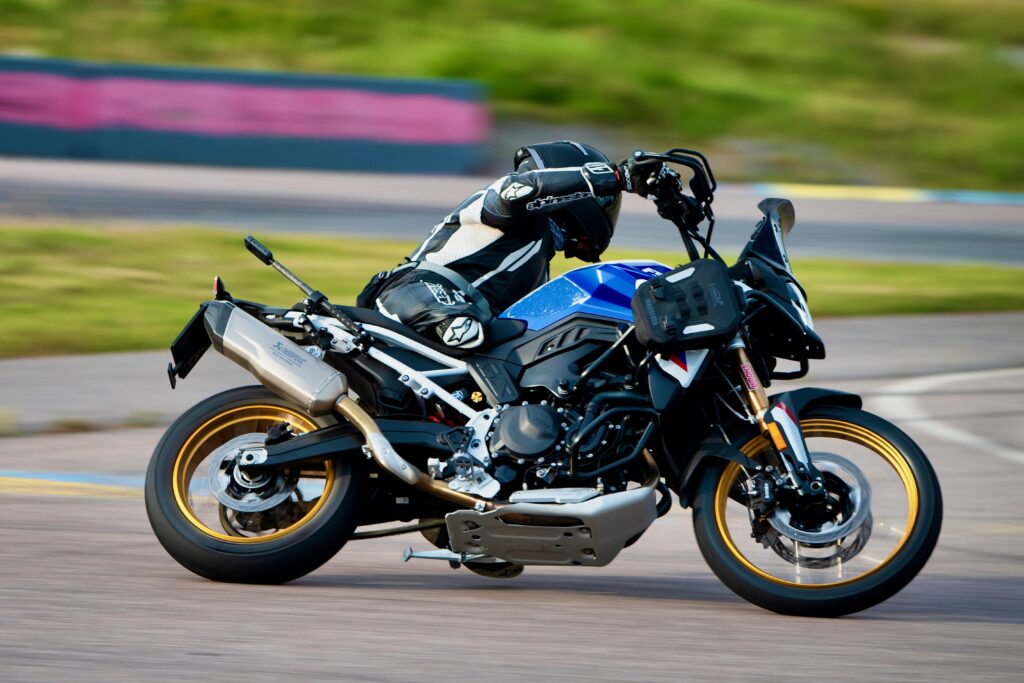
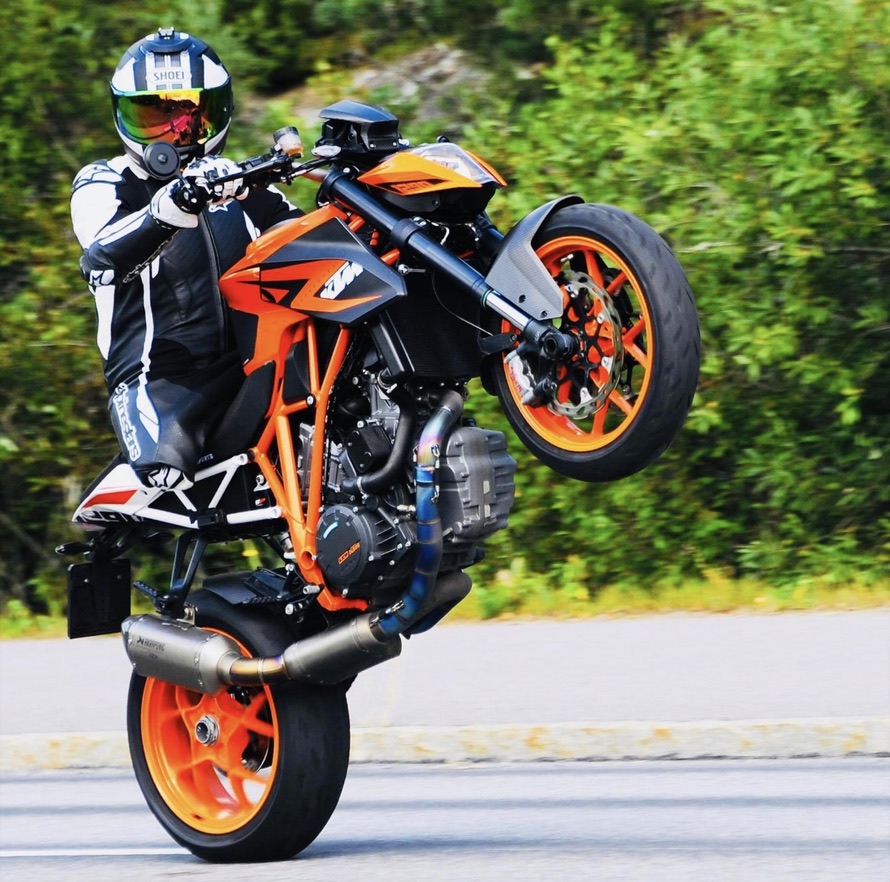
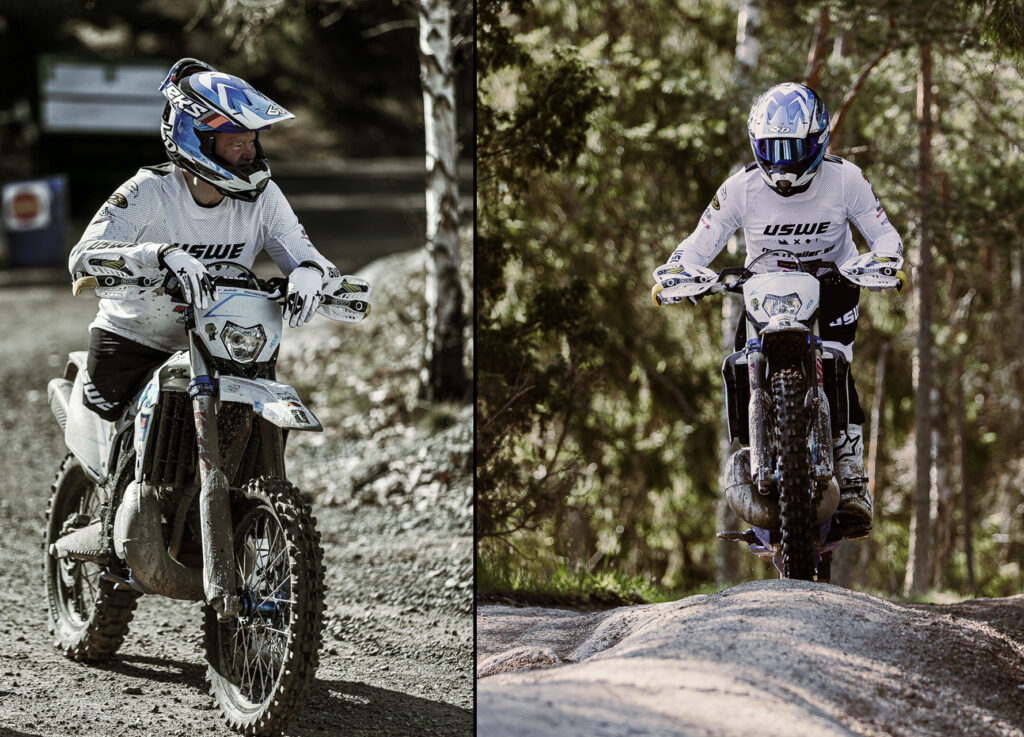
In 2019, he decided to start riding enduro, despite not really knowing what it involved. He had never heard of anyone riding enduro with one leg, and that was precisely why it felt like a reasonable next challenge. When Joacim spoke about his plan, he made contact with KTM Scandinavia, who welcomed him with open arms and allowed him to choose his own bike.
The choice fell on a 450 cc four-stroke. Partly because of the engine’s character, with strong engine braking and good pull across the rev range, and partly because it can cope even when gear changes are not always optimal. Joacim rides using only the front brake and cannot change gear while standing like other riders. That requires an engine that can manage even in the wrong gear.
Reactions on social media were quick to follow. A 450 was considered far too big, a beast in the forest and absolutely unsuitable for a beginner. Riding enduro with only a front brake was described as impossible. But Joacim, determined to prove the doubters wrong, found it both easy to ride and agile.
He started cautiously on a small motocross track and had never ridden standing up.
“I was completely exhausted, even though I was barely moving.”
The first session in the forest was brutal. The enduro trail outside Åkersberga is filled with rocks, roots and technical sections and is arguably one of the more demanding enduro tracks in the Stockholm area. Fatigue set in quickly, and before long his forearms were so pumped he could barely pull in the clutch.
The Enduro Classic
The original plan was to compete as early as 2020. When the pandemic hit and competitions were cancelled, the plans were postponed. That was probably for the best, Joacim says, as he wasn’t ready. It took about a year before the riding truly began to click, and he dared to maintain pace and trust his riding.
In 2022, he completed the Enduro Classic as the first person with one leg.
The series consists of three races: Stångebro, Ränneslätt and Gotland Grand National.
The large four-stroke had been replaced by a KTM 300 two-stroke fitted with a solution that allowed him to use the rear brake. Joacim had asked for a race with a reasonable level of difficulty, and the choice fell on Stångebro.
Initially, the goal was not the full Classic, but conditions were good and Joacim completed three laps, finishing around the middle of the field. That became the starting point for a full commitment to completing the Enduro Classic.
The next race was Ränneslätt, and it was a completely different story. The track is tough, the riding demanding from the start, and there are few opportunities to recover. After the first lap, the thought of retiring was close, but Joacim dug deep and not only went out for a second lap, but a third as well. Still, it was clear that Ränneslätt was not a favourite.
Gotland Grand National may not be the most technically difficult course, but the slippery limestone is a challenge, as is the mental pressure of completing the required laps for the Classic. The plan was three laps. It became four. Not through a conscious decision, but because the pace was good and time allowed. Only afterwards did he realise he had lost count and thought he had completed three laps. There was time to go out for a fifth, but the energy was gone.
The latest challenge
Ahead of 2025, Joacim chose to enter Gotland Grand National 2.0, this time in the adventure class on a BMW F 900 GS, sponsored by Motorrad Center Stockholm. Given Joacim’s determination and steady progression, the challenge was entirely reasonable. Unfortunately, it turned out to be the worst possible year. The race was run in the harshest conditions since its inception 42 years ago. Around 460 riders failed to finish, and more than 200 motorcycles became stuck in the mud. The requirement of three laps for the Classic was reduced to just one. Joacim was among those who did not reach the finish line; the mud simply had the final word.
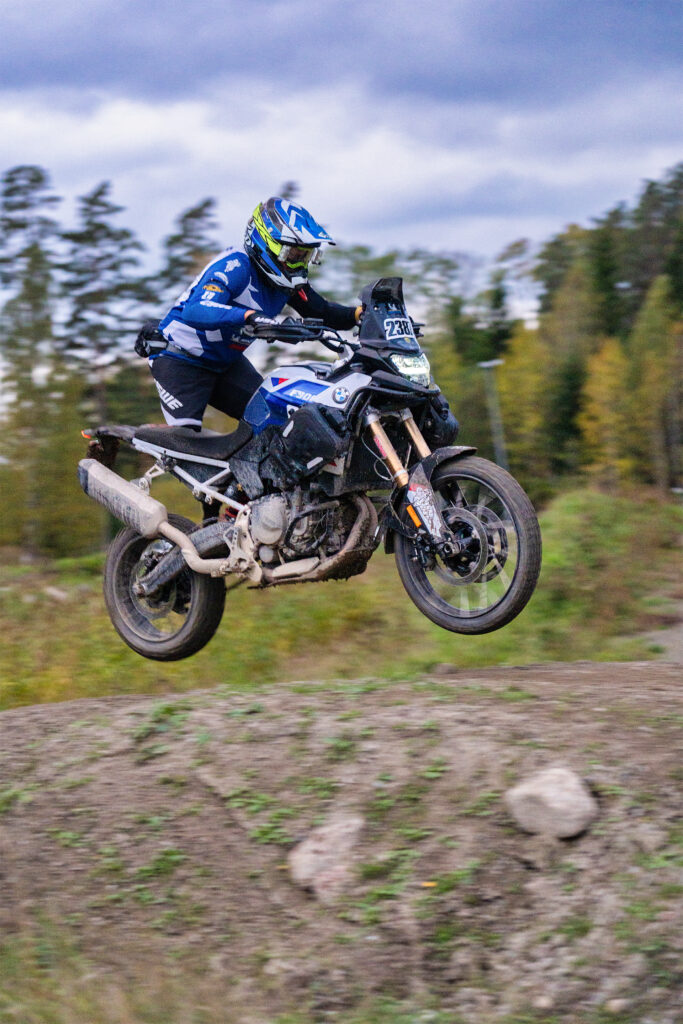
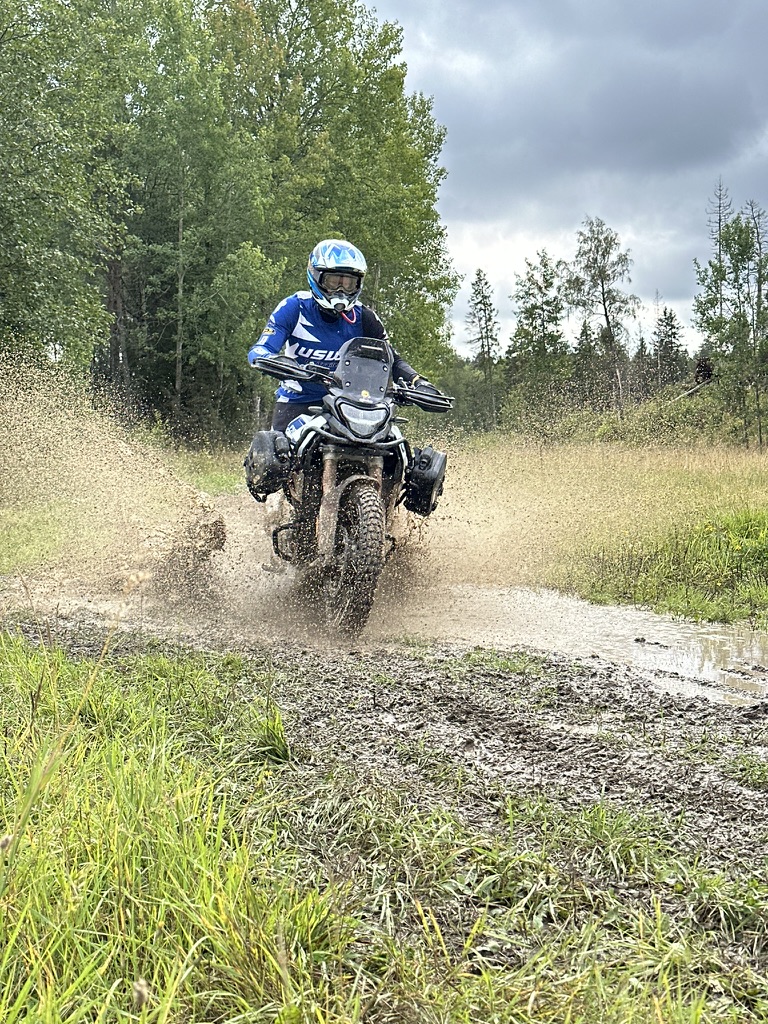
Completing the Enduro Classic is an achievement in itself, and doing so with only one leg makes the accomplishment even more impressive. Taking on Gotland Grand National in the adventure class on a 219-kilogram BMW F 900 GS demonstrates a relentless attitude to what is possible, and a drive that stretches far beyond the established norms.
Joacim shows that limitations are not always where we think they are, and that what may initially seem unrealistic can, in fact, be achieved.
Följ Joacims äventyr på två hjul på sociala medier!
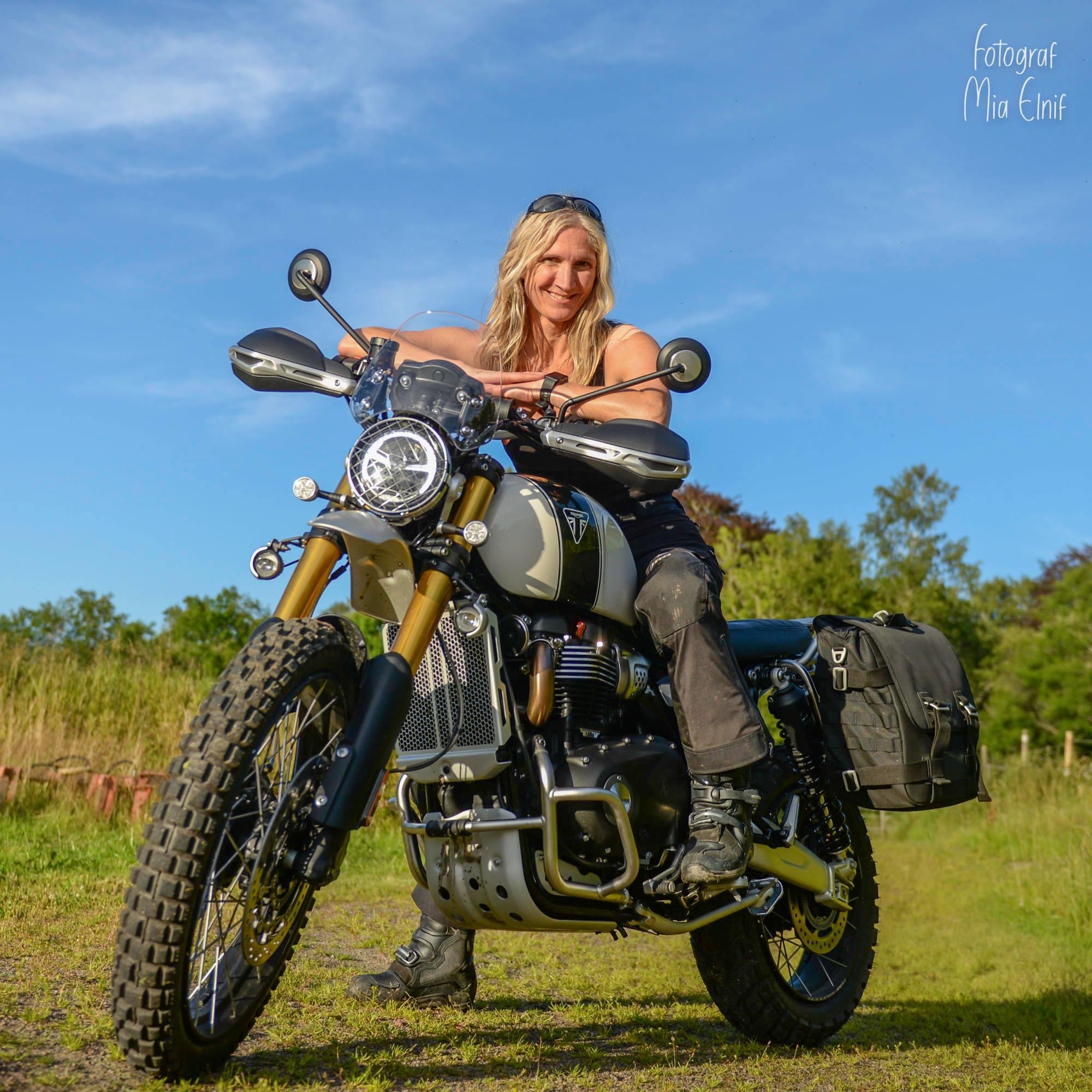
Anna Haglund