

Mini Tip – how ABS works on your motorcycle
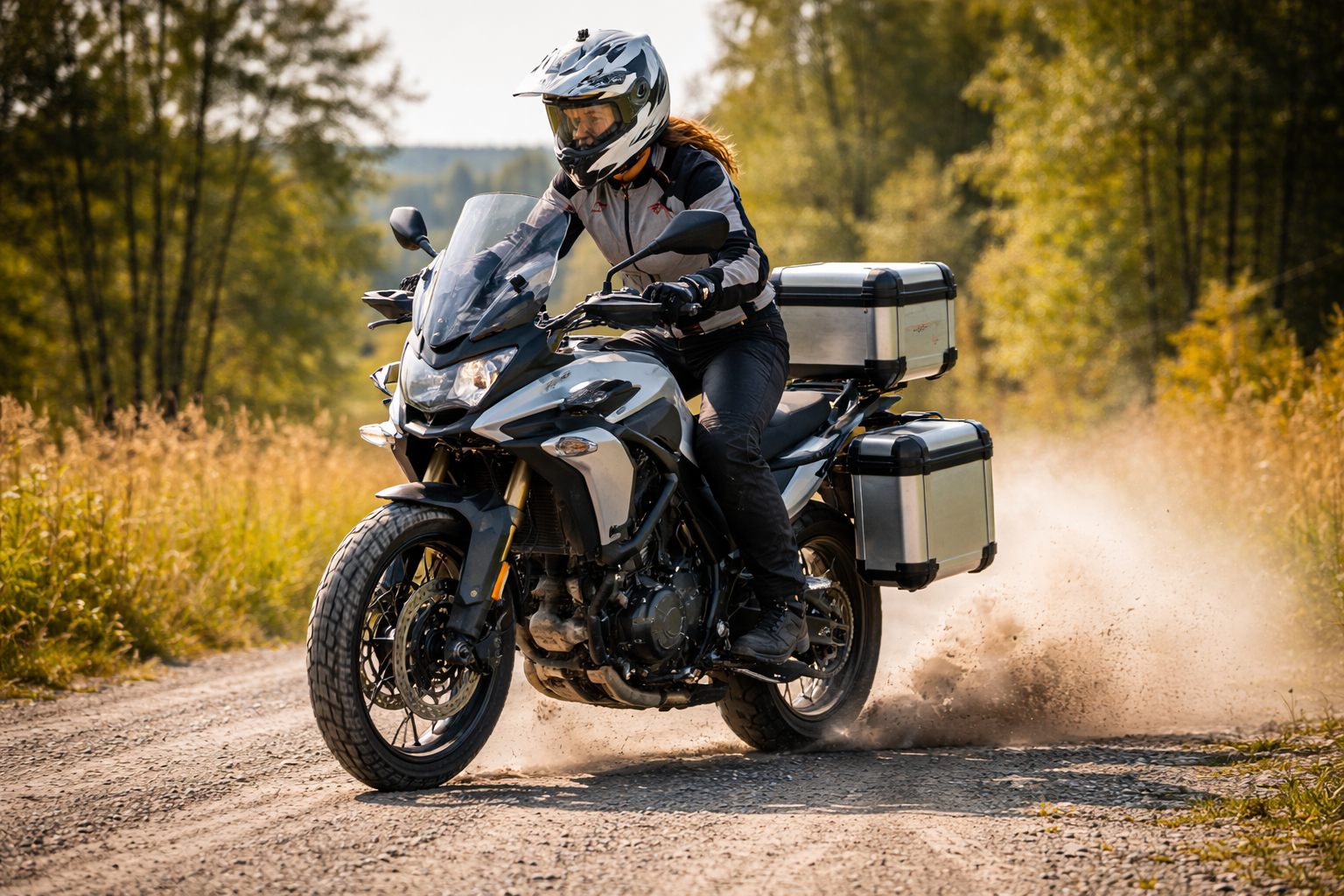
Get to know how ABS works on your particular motorcycle – and in which situations it is beneficial to keep it activated or to switched it off.
ABS is now standard on most new motorcycles and has undoubtedly contributed to increased safety for many riders. At the same time, it is a system that does not always feel the same in every riding situation. Knowing when ABS is helpful, and when it can feel limiting, is especially valuable when riding away from tarmac.
What ABS does and how it works
ABS – Anti-lock Braking System – is designed to prevent the wheels from locking during heavy braking. When the system detects that a wheel is about to lock, it releases brake pressure in rapid pulses. This allows the tyre to keep rolling, helping the motorcycle maintain steering control even under hard braking.
On tarmac, particularly in rain, cold conditions or unexpected situations, this is a major aid and a clear safety advantage. For many riders, ABS makes the difference between a controlled stop and a crash.
ABS works best:
- during emergency braking on tarmac
- on wet, slippery or uneven surfaces
In these situations, the system reduces the risk of the front wheel locking, which would otherwise often lead to an immediate loss of control.
ABS off-road
Once you leave the tarmac, the picture becomes more complex. On loose surfaces such as gravel, sand or snow, the conditions differ significantly from asphalt, and opinions on ABS tend to be divided.
On very loose terrain, a certain amount of wheel lock can sometimes help braking performance, as the tyre builds up material in front of it, creating additional resistance. When ABS prevents this by releasing brake pressure, the braking distance can in some situations become longer, particularly at low speeds or on steep descents.
At the same time, wheel lock always reduces steering control, making this a technique that is highly situation-dependent and generally more suitable for experienced riders than for beginners.
The difference between front and rear
This balance is the reason why many adventure and off-road motorcycles are designed so that ABS can be switched off at the rear wheel but not at the front.
The front wheel provides the majority of braking force, around 70 percent. If the front wheel locks on loose surfaces, there is often very little chance of recovering the situation, and the risk of crashing is high. For this reason, many manufacturers choose to keep ABS permanently active at the front, from a safety perspective.
The rear brake, however, serves a different purpose off-road. It is often used to control speed on descents, stabilise the bike at low speeds, or adjust direction. In these situations, a locked rear wheel can sometimes be a deliberate tool, which is why rear ABS can often be disabled, either manually or automatically via an off-road mode.
It is also important to distinguish between gravel roads and more technical terrain. On hard-packed gravel or forest roads, ABS is often a clear advantage, especially at higher speeds or when encountering unexpected obstacles. Here, the system contributes to stability and control, and for most riders it is safer to ride with ABS than without it.
Technology is a support, not a replacement
ABS is an aid, not a guarantee. Ultimately, safe braking comes down to understanding and practice. A rider who knows how the technology works, and where its limitations lie, will always be better prepared than someone who relies blindly on the system.
If you are unsure how much difference there is between ABS on and ABS off, there are ways to practise and feel the difference without taking unnecessary risks. The key is choosing the right place and the right speed.
An empty, flat area with good visibility, such as a deserted car park or a wide gravel road with no traffic, is a good place to start. Begin at low speed and perform controlled braking, first with ABS activated. Focus on the feel at the brake lever and how the motorcycle behaves when the system intervenes.
If your motorcycle allows it, you can then repeat the same exercise with ABS switched off, still at low speed. The difference is often more noticeable than expected, particularly in brake feel and perceived stability. Never increase speed until you feel completely confident, and avoid testing the front brake on loose surfaces if you lack experience.
The aim is not to push limits, but to build understanding. Once you know how your bike responds with and without ABS, it becomes easier to make the right decisions when it really matters.

Anna Haglund