

Motorcycle police – more than what you see in traffic
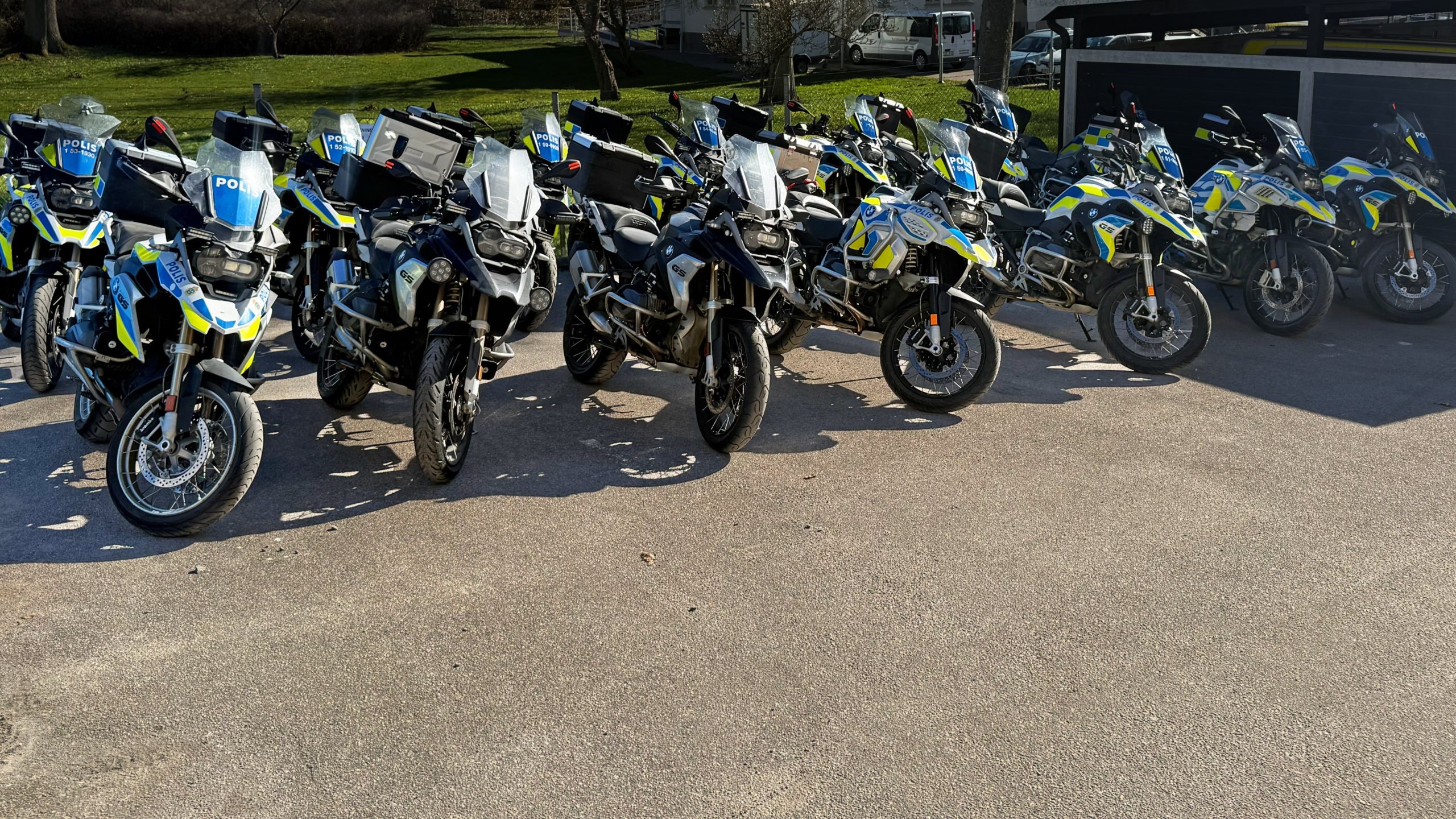
All about Bikes had the pleasure of speaking with both one of the police force’s own instructors and a newly qualified motorcycle officer about what the role entails and how it feels to police from the saddle.
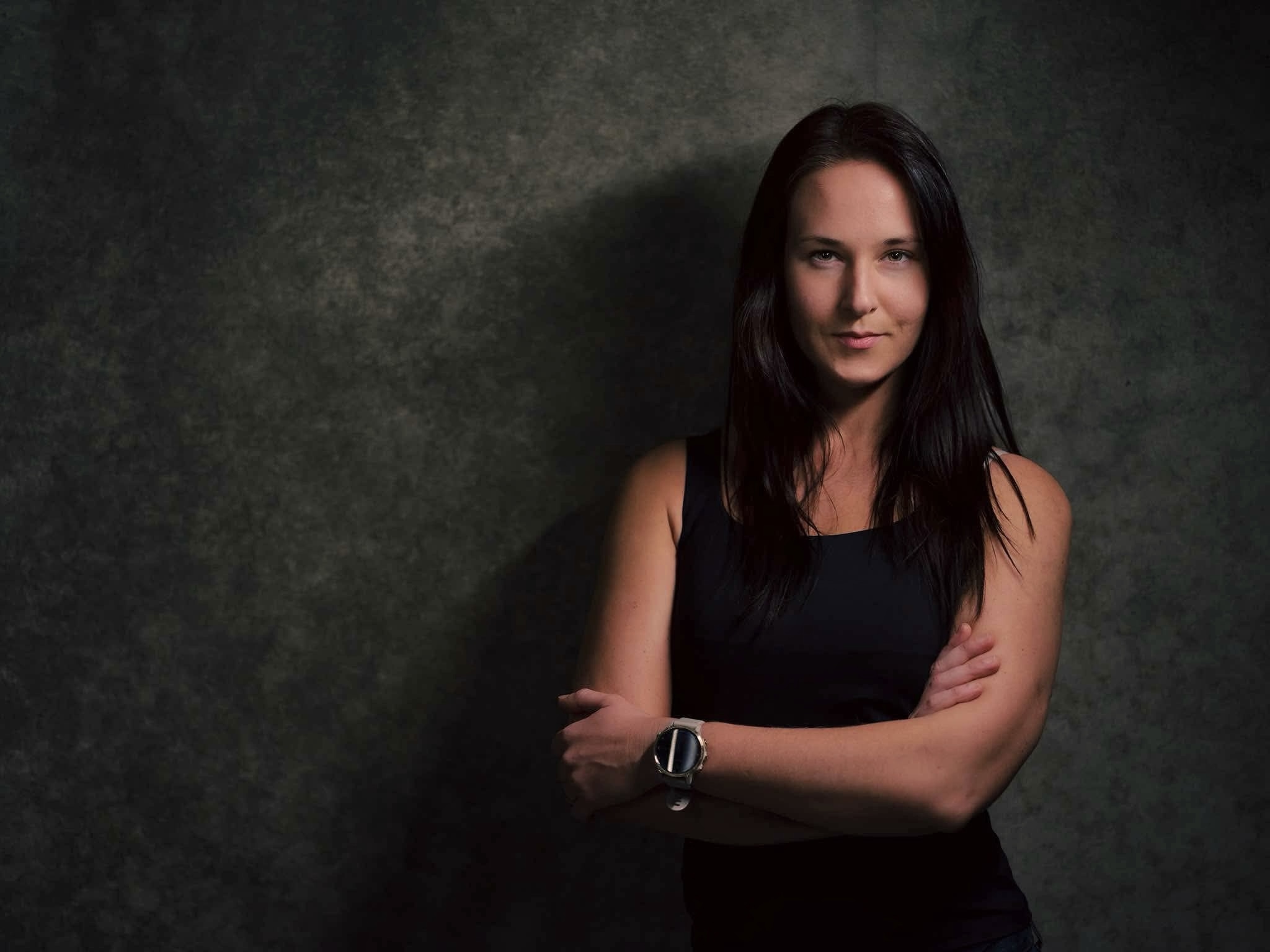
Anna S. has worked as a motorcycle officer for six years and now also serves as an instructor in the police’s internal motorcycle training programme. Since she began, adaptations for individual riders have become more common, including lowered chassis and seats. When Anna herself trained, at 163 cm tall, she had to handle a full-sized BMW 1250 GS. From a technical perspective, she emphasises that control lies at the very heart of it all, becoming one with the machine:
“Motorcycles are a tool, and all the extensive training during the course, across a range of situations, gradually allows you to detach from the bike. Riding should become second nature. Safety thinking is the biggest component, and it becomes more important every year. We must never expose ourselves or others to unnecessary risks.”
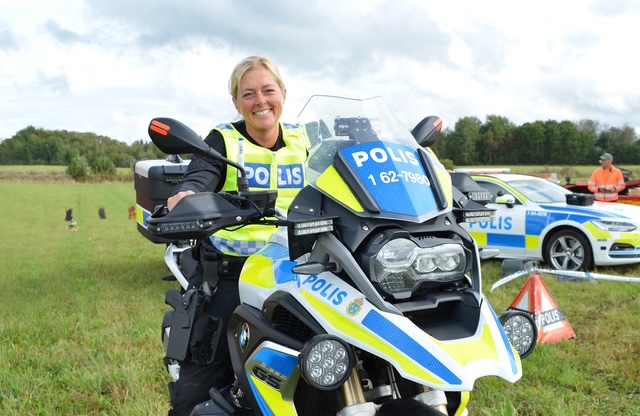
About Anna S.
Age: 48
Based: Kristianstad
Motorcycle licence: Light 1993, full 1995
First bike: Honda 75cc, followed by a Kawasaki AR125 (light) and a Suzuki GSX400R (full licence)
Dream bike: Ducati 959 (owned one, but sold it)
Anna explains that, particularly at the beginning, it becomes clear just how many elements must function simultaneously, but over time it all starts to fall into place more naturally. Before the basic motorcycle training even begins, candidates are first screened through a series of pre-tests over several days, where they are assessed on fundamental riding skills and their ability to avoid risk-taking. Those who are accepted can expect long days and many hours in the saddle:
“The training lasts six weeks and involves continuous assessment, so it is up to us as instructors to create a safe environment and a strong learning culture. You do need a motorcycle licence, but there is no requirement for how long you have held it,” Anna notes.
The high standard of the training becomes evident when Christoffer A., who qualified last autumn, describes his experience. He previously worked in a narcotics unit, which was later reorganised into a neighbourhood policing team that includes motorcycle officers, and he found inspiration in his two-wheeled colleagues:
– Few people are fortunate enough to be paid for six weeks to do what they enjoy most, and then get to have it as part of their job.
It may sound like a cliché that you have ridden bikes before, but you genuinely become a better and more proactive rider through all the techniques, cornering and everything included. The training had a clear progression, starting with the basics to reach the final goal.
Variety was a major part of the experience: riding stairs, off-road terrain, trail braking, and even slow-speed manoeuvring, which at first did not seem particularly appealing, eventually became a challenge against oneself.
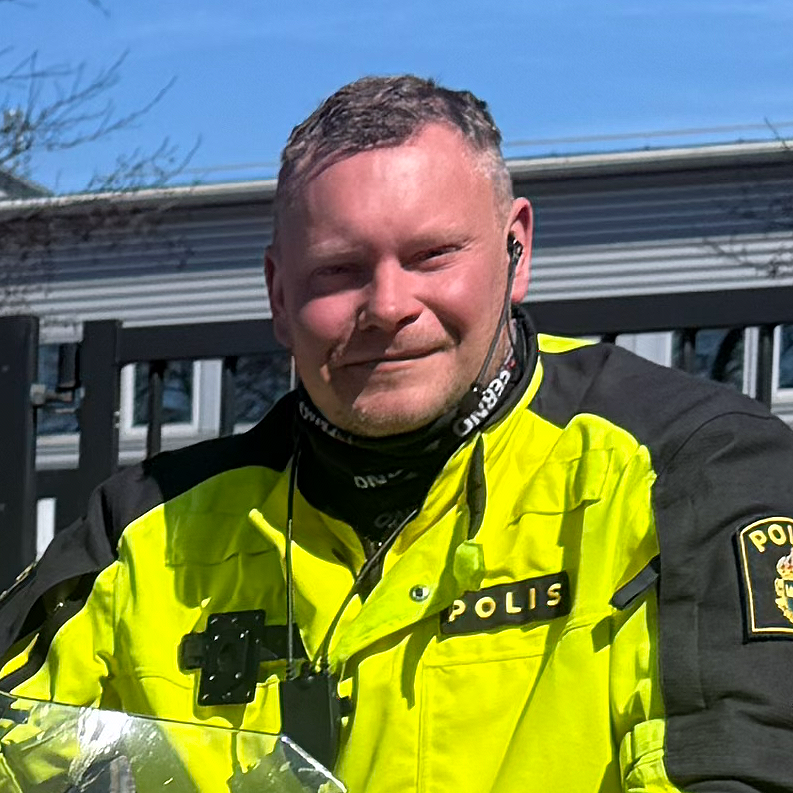
About Christoffer A.
Age: 40
Based: Gothenburg Motorcycle licence: 2018
First bike: Triumph Tiger 1050 Dream bike: KTM Super Adventure (currently rides an S 1290)
Looking ahead, he is especially keen to work with escorts, events and in large public gatherings. On a motorcycle, you connect with the public in an entirely different way.
More than a traffic resource
Both Christoffer and Anna point out that there is a strong case for increasing the number of motorcycle officers, precisely because of the flexibility they bring.
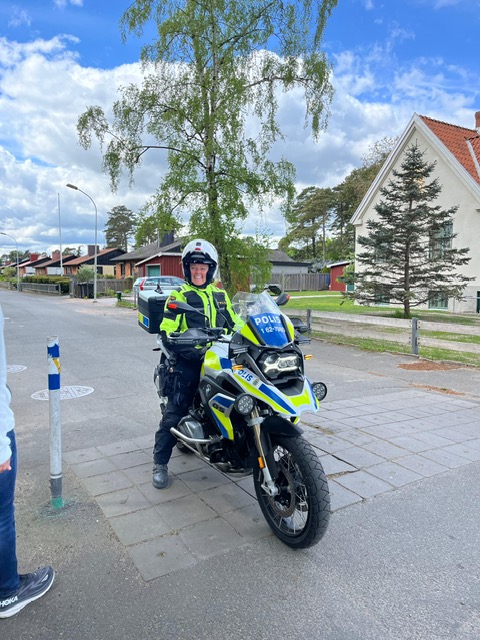
Motorcycles make it possible to operate where access is limited: in heavy traffic or terrain where you need to get past barriers into courtyards, or where it is simply too tight or complex for patrol cars.
In other words, motorcycle officers do far more than monitor behaviour in traffic. They work day and night, all year round, as long as icy conditions do not pose a safety risk. The role can be operational, involving dispatch to a wide range of incidents, from thefts and medical emergencies to search operations.
Anna recalls one particular memory that has stayed with her:
“My colleagues and I, ten of us in total, were preparing a motorcycle training session last year when we received a call from the control centre about a missing person in the region. Together, we all set off to assist with the search. Then hearing over the radio that the person had been found and was safe… well…”
Anna pauses for a moment before continuing:
“…you just feel so happy! Even though it was my colleagues who found the person, it was still a team effort. It is a wonderful feeling.”
More riders on two wheels ahead
This is not about replacing other parts of the organisation, but about complementing them where they can make the greatest difference. Anna also expresses a hope to see more women become motorcycle officers, noting that the concerns she once had about being judged based on gender in a male-dominated environment never proved true. Christoffer adds encouragingly:
“If you are curious, just come up and talk to me or any of my colleagues, as long as we are not obviously busy. We usually stop if someone waves and wants to speak to us.”
Although the work is often carried out independently, you are always part of a larger whole. Being a motorcycle police officer is not something you ever fully master; it is a role in which you continually develop, combining a tangible sense of freedom with significant responsibility.
Motorcycle Police in Sweden
Robin Pecillo