

Report from the trail – the Battle of Stångebroslaget
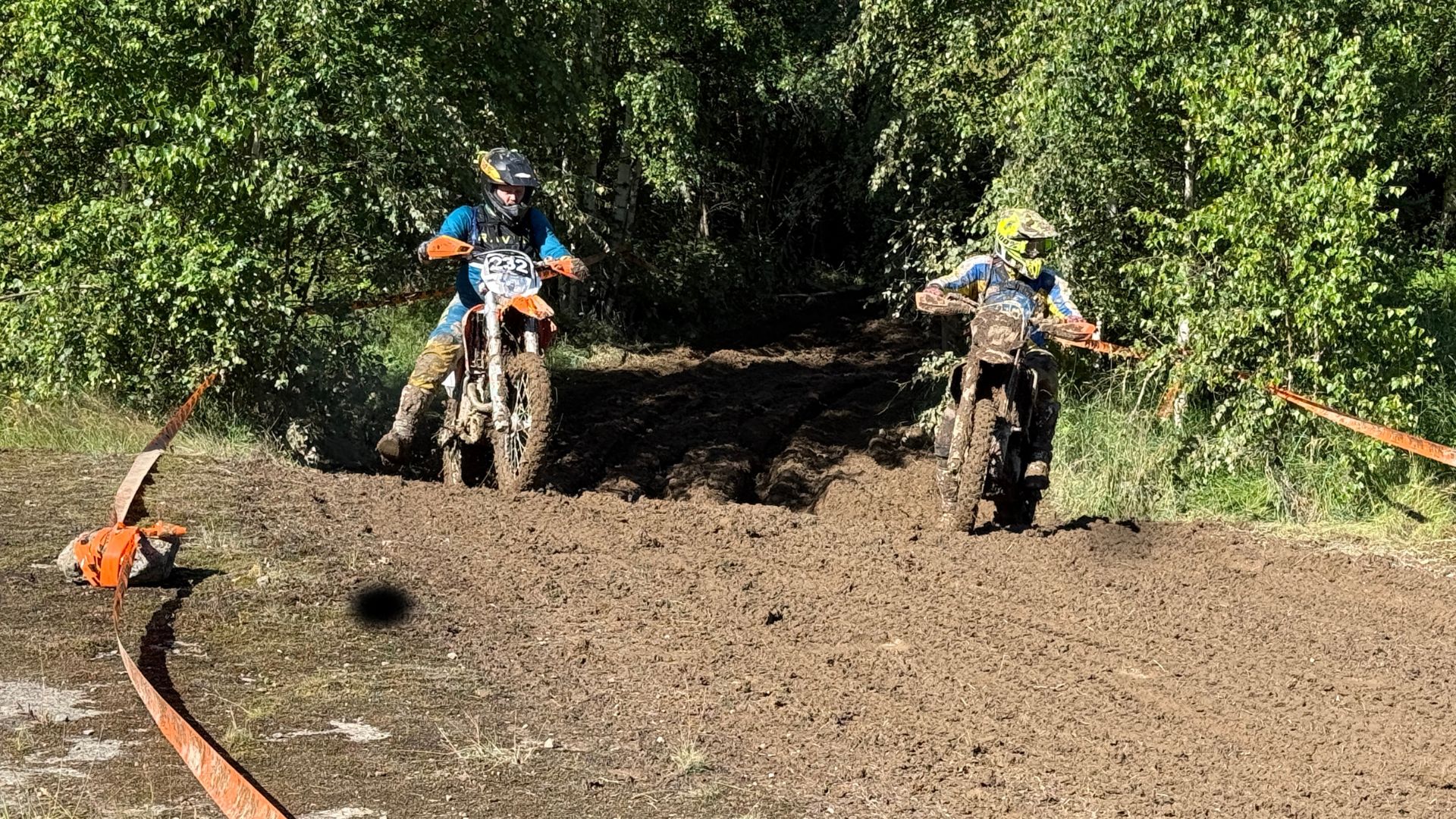
Stångebroslaget takes its name from the historic Battle of Stångebro. After this year’s event, the name felt more fitting than ever. Because this really was a battle. Against the mud. Against exhaustion. Against sheer determination. And, perhaps most of all, against yourself.
First held in 1994, Stångebroslaget has long been the opening round of the Swedish Enduro Classic. For riders chasing the coveted Classic title, the challenge sounds straightforward on paper: complete three laps of the 22-kilometre course within the time limit. Fail here, and the dream of completing the Classic has to wait until next year.
This year, that proved far easier said than done.
I’d ridden enduro in muddy conditions before. In fact, I got my fair share of mud at last year’s Gotland Grand National, an event that went down in history as the wettest and muddiest edition ever. It was wet, exhausting and hard work, but it was still possible to keep moving, and I left the island with the satisfaction of having completed one lap, with both me and the bike still reasonably intact.
It turned out I’d only met mud’s friendly cousin. At Stångebroslaget, I met its far nastier relative, with one goal in mind: to put you on the ground.
Ready to start… but not exactly eager
This year I entered Friday’s race instead of the women’s class on Saturday afternoon. The reason was simple. Jens was racing on Saturday morning, and we wanted to head home together afterwards. Looking back, I do wonder whether Saturday would have been any easier. Probably not. Just a different kind of challenge.
So there I was, standing on the start line alongside 369 other riders. I wouldn’t exactly say I was feeling confident. I knew all the rain would make the course incredibly slippery, but I’d never ridden Stångebroslaget in wet conditions before. I’d only ever heard the stories.
Even before the start we got a glimpse of what was waiting for us. Our start was delayed by fifteen minutes because there were still riders from the previous race out on the course, battling their way to the finish.
Chaos from the very beginning
Just as expected, everything came to a halt in the first corner. But unlike previous years, the queue never really disappeared. The course was so slippery that most riders simply couldn’t get their bikes moving properly.
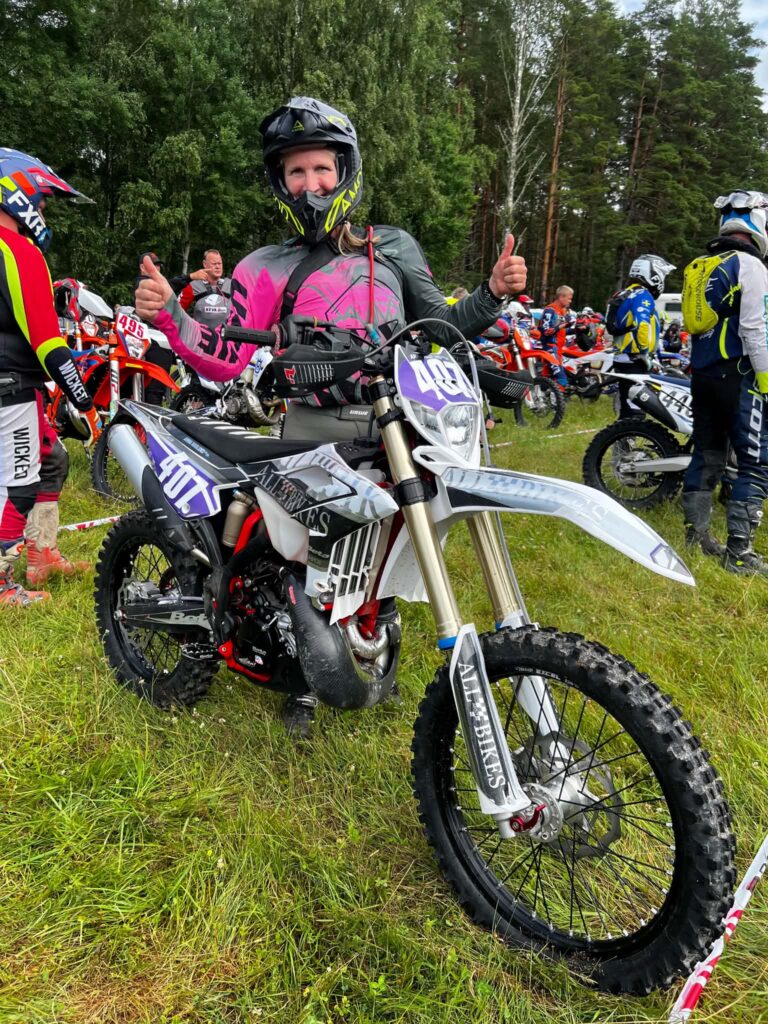
I managed to find a decent line early on and picked my way past plenty of riders who were stuck or standing still, but it came at a price. After only two or three kilometres I was completely exhausted. And I certainly wasn’t the only one. Many riders called it a day before they had even made it through the opening corners. This wasn’t fun anymore.
Not for anyone.
”At one point I caught up with a rider slumped over his handlebars, completely spent. I shouted something that was meant to sound encouraging. He simply replied – Shoot me.”
I understood him completely.
Oddly enough, the course actually became slightly easier whenever another shower swept through. You could stick one foot out, almost as if you were riding in snow, and let it skim across the surface. But as soon as the rain eased, everything became worse again.
By then the ruts had become deep enough that the only realistic option was to stay in them and hope you’d picked one that wasn’t too deep. The problem came when you caught another rider. Somehow, despite my snail’s pace, I still managed to do that from time to time. Changing ruts was almost impossible.
I kept battling on alongside a handful of the same riders. Sometimes they were quicker than me, sometimes slower, depending on how tired they were, whether they’d got stuck, or how many times they’d already picked their bike up. There was plenty of paddling along with both feet dangling, even though I constantly tried to keep at least one foot on the peg to build enough speed for the tyres to clear themselves.
That strategy failed spectacularly. I simply wasn’t carrying enough speed. The tyres packed solid with mud until they became nothing more than two enormous brown lumps, leaving me with virtually no grip at all.
Right in the middle of all this I was lapped – twice – by seven-time World Champion Anders Eriksson.
He made it look ridiculously easy. The funny thing was, he didn’t even look particularly fast. He just flowed across the terrain, while I was fighting pure chaos.
Halfway… and the thought that crept into my mind
Then there were the deadlifts. Picking up an enduro bike is hard work on any day. In this mud, with no footing whatsoever, it drained every last bit of energy from you. I lost count of how many times I had to lift the bike back onto its wheels. Every time I came to a stop and put a foot down for support, it simply slid away beneath me, and before I knew it, I was lying in the mud again.
I passed a couple of riders who had stopped for a breather. “We’re nearly halfway now!” one of them shouted cheerfully. Brilliant, I thought, glancing at my watch.
We’d already been out there for almost an hour and a half.
I’d made up my mind that I was going to complete at least one lap. But suddenly, the time limit started to feel uncomfortably close and, somewhere out there in the mud, a thought quietly crept into my head. Was this really worth it?
There wasn’t a single part of it that was enjoyable anymore, and I was completely spent. Then again… No. I wasn’t going to give up. I carried on.
The end of the battle
Eventually I reached a corner where I could see the spectators and the lap checkpoint ahead. Then I crashed. I picked the bike up, swung a leg over the saddle again… and managed to hook my boot on the footpeg. Down I went. Again. This time on the opposite side.
That was the moment I made my decision.
Enough!
I was so close to an escape route out of the mud. If I missed this opportunity, there might not be another one for quite some time.
Another rider helped lift the course tape so I could get out of the track, and a couple of kind spectators helped me over the next barrier.
And just like that, my dance with the mud was over.
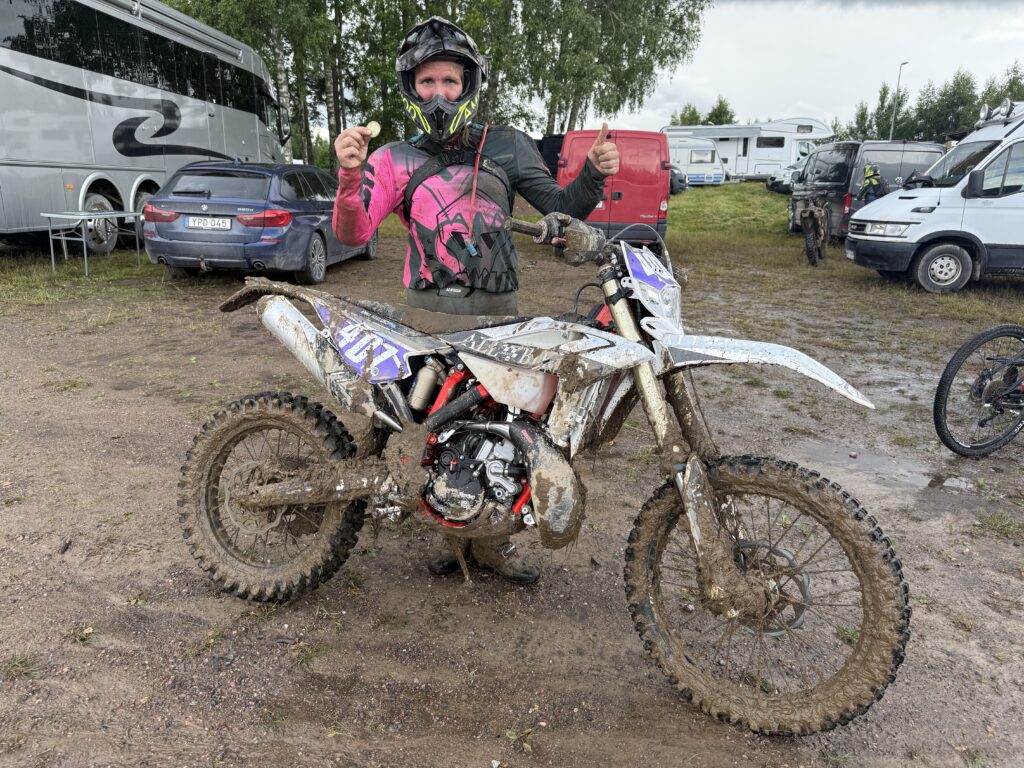
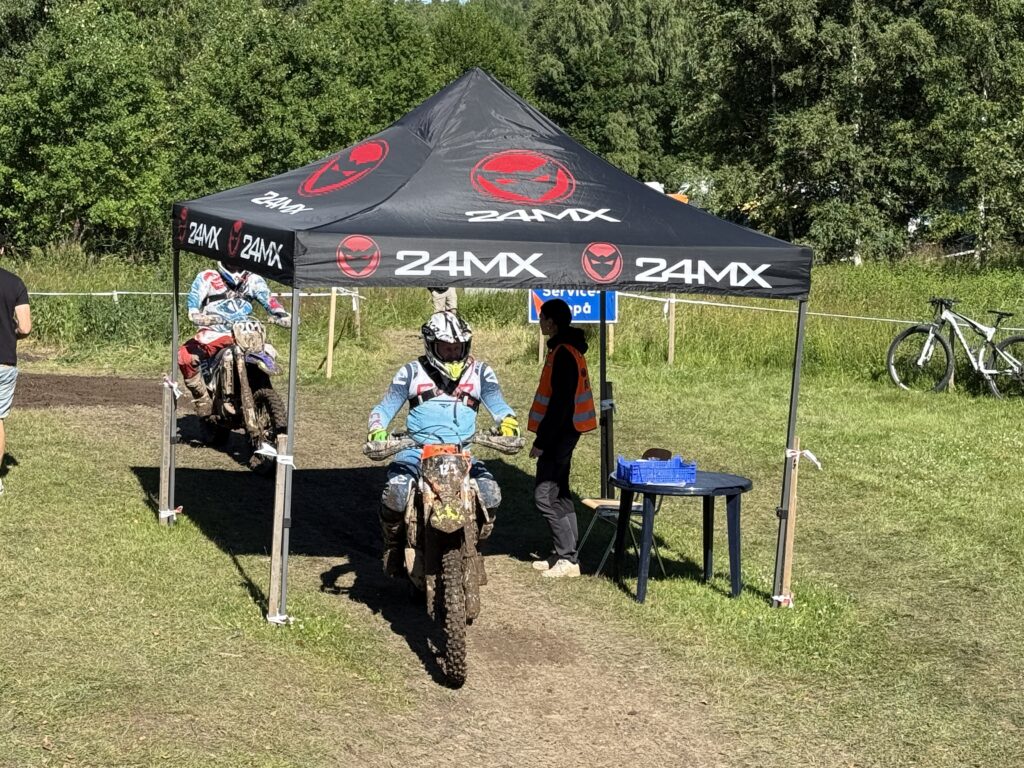
When I checked my Garmin afterwards, it showed a maximum heart rate of 183 bpm and an average of 156 bpm over the course of an hour and a half. If nothing else, it had been one serious workout.
If nothing else, it had been one serious workout.
I rolled into the finish area feeling half relieved and half frustrated that I’d retired. I collected the commemorative plaque that every rider receives simply for making it to the start line and setting off. A small consolation prize, perhaps, but proof that you’d been there and given it a go.
Unfortunately, it also meant my Enduro Classic campaign was over before it had really begun.
At least I wasn’t alone. Seventy of the 370 riders in my start group retired. Saturday’s competitors also faced extremely demanding conditions, although they were at least spared the rain.
One rider from Friday’s race summed it up perfectly:
“But I had so many great conversations out on the course yesterday with other heroes, all helping each other and looking after those who were struggling the most.”
Results (unofficial – from live timing)
Official results have not yet been published at the time of writing. Below are the top 3 in each class according to live timing.
| Pos. | Rider | Club | Class |
| Elite | |||
| 1 | Albin Elowson | FMCK Skövde | Husqvarna |
| 2 | Casper Lindholm | Linköpings MS | KTM |
| 3 | Lucas Bergström | Solshesters MCK | Husqvarna |
| Junior | |||
| 1 | Kalle Ahlin | Falköpings MK | KTM |
| 2 | Alfons Lindström | Göta MS | Husqvarna |
| 3 | Mille Söderblom | Göta MS | KTM |
| Senior | |||
| 1 | Lukas Largén | Norrahammars MK | Husqvarna |
| 2 | Andreas Karlsson | Wäxjö MS | Husqvarna |
| 3 | Robin Stjernström | Vimmerby MS | Husqvarna |
| Women’s Elite | |||
| 1 | Hanna Lagher | Botkyrka MK | Beta |
| 2 | Matilda Ahlström | Töreboda MK | Husqvarna |
| 3 | Lisa Nyqvist | SMK Trollhättan | KTM |
History
Stångebroslaget was first held in 1994 on the training ground at the Linköping garrison, and continued to be run there until 1997. The name, with its military connection, was chosen by the then regimental commander as a tribute to the Battle of Stångebro. The event’s logo – Folke Filbyter – is taken from Carl Milles’ statue in Stora Torget, Linköping.
As the event grew, the organisers behind Ränneslättsloppet and Gotland Grand National were contacted, which led to the creation of the Swedish Enduro Classic (Svenska Enduroklassikern). To complete the Classic, a rider must start and finish all three races – Stångebroslaget, Ränneslättsloppet and Gotland Grand National – within the same year.
Anna Haglund