

What does Euro 5+ mean?
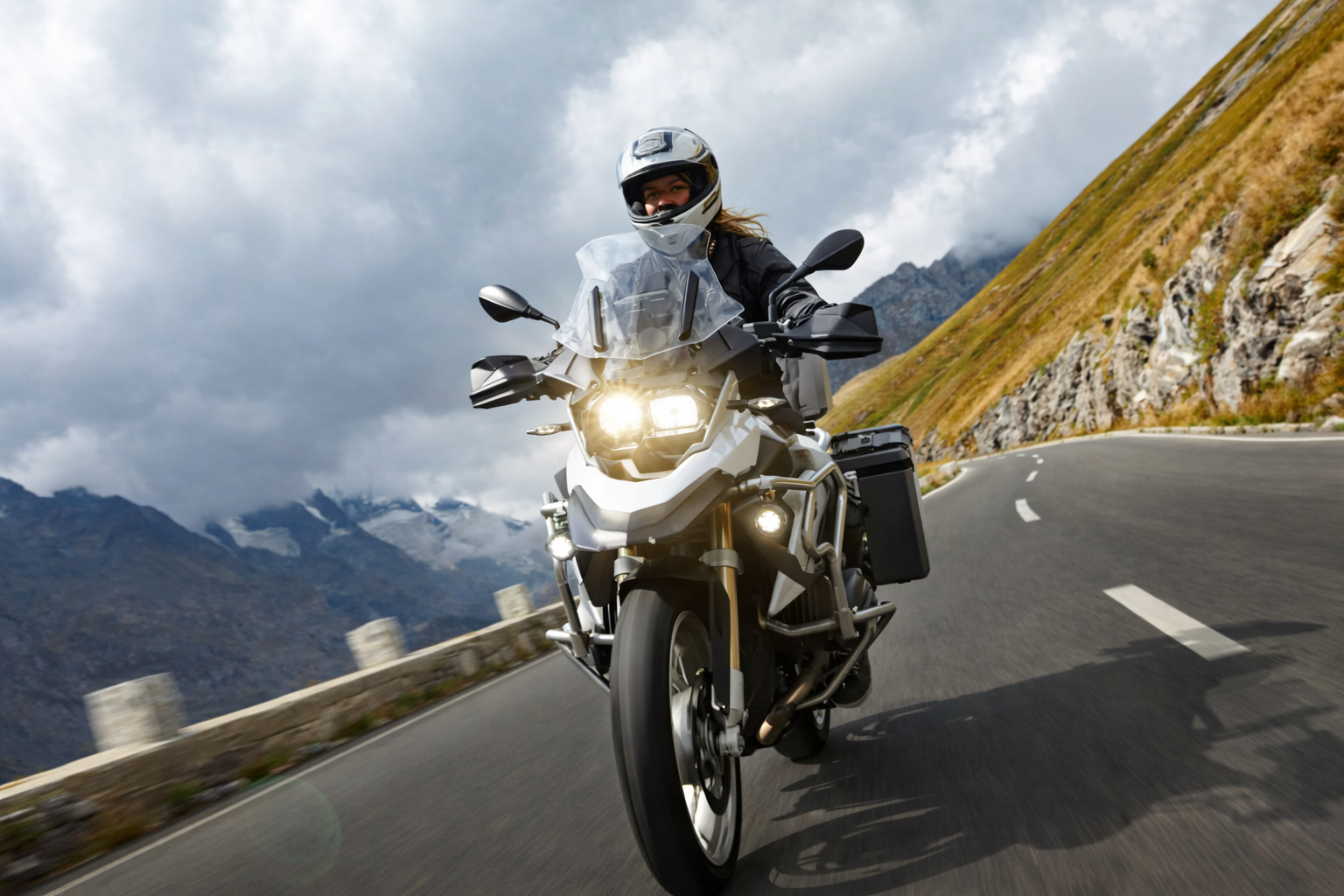
Euro 5+ is more than just a new emissions stage. Although the requirements are the same for all road-legal motorcycles, their impact differs depending on the segment – urban and commuting use, touring, adventure riding, or road-registered enduro.
Euro 5 and Euro 5+ – the difference
Euro 5 was introduced for motorcycles in 2020, setting clear limits for emissions and noise. Euro 5+ represents the next step within the same regulatory framework, but it does not introduce new emission limit values as such. Instead, it tightens the requirements for how effectively a motorcycle must be able to monitor and maintain its emission performance during real-world use and over a longer period of time.
This includes, among other things:
- more advanced diagnostic systems
- clearer requirements for detecting faults and deviations
- higher durability requirements for exhaust after treatment systems
With Euro 5+, the role of the motorcycle’s diagnostic systems has become increasingly important. OBD (On-Board Diagnostics) is the motorcycle’s built-in monitoring system, which continuously checks the engine and exhaust system during operation. The system records deviations that may affect emissions or functionality and stores information that can be accessed during servicing or inspection.
For new type approvals, these requirements apply from 2024, and from 2025 they apply fully to all new registrations. This has led many manufacturers to introduce technical updates to existing models, even when the changes are not visually apparent.
Different consequences
Euro 5+ applies to all road-legal motorcycles, regardless of segment. The difference therefore does not lie in the regulation itself, but in how motorcycles are used in practice. Riding patterns, load, temperature and operating time vary significantly between different types of use, meaning that the same requirements result in different technical consequences depending on the application.
It is also important to distinguish between road-legal motorcycles and pure competition machines. Motocross (MX) motorcycles are not covered by Euro 5+, as they do not have road type approval. Road-registered enduro motorcycles, however, are fully subject to the regulation.
Urban and commuting use
Motorcycles primarily used for urban riding and commuting are often subjected to frequent cold starts, short journeys, and low to medium load. Under Euro 5+, this represents a demanding usage pattern. Exhaust aftertreatment systems must be optimised to function earlier in the ride and across a wider range of operating conditions than before, while diagnostic systems must be able to monitor performance despite frequent start-stop cycles.
Technical consequence:
More advanced engine management, careful calibration at low load, and in some cases increased heat management around the exhaust system.
Road riding and touring
During road riding and touring, the engine more often operates within a stable temperature range, which fundamentally benefits emissions systems. At the same time, Euro 5+ requires emission performance to be maintained over long distances and extended periods of use.
Technical consequence:
More robust exhaust aftertreatment systems, a focus on long-term durability, and in some cases increased weight or more complex system solutions.
Adventure
Adventure motorcycles are typically used across a wide range of conditions, from paved roads to light gravel riding, with varying loads and riding pace. This places high demands on systems that must be durable, well protected, and able to function correctly across many different operating scenarios.
Technical consequence:
Compromises in weight and component placement, along with calibration for a broad range of use rather than optimisation for a single riding style.
Road-registered enduro
Enduro motorcycles intended to be road-legal are subject to the same Euro 5+ requirements as other motorcycles. At the same time, this type of motorcycle prioritises low weight, slim design, and controllability at lower speeds.
Here, the conflicts become clear:
- emissions systems take up space and add weight
- heat must be managed and shielded
- design margins are small
Technical consequence:
Clear compromises in design and a growing divergence between competition motorcycles (MX) and road-legal enduro models.
The market around the transition
In the lead-up to the transition to Euro 5+, several European markets saw a clear shift in registration patterns. The decline in new registrations during 2025 is primarily explained by changes in registration timing. Ahead of Euro 5+, many outgoing models were registered earlier than usual, resulting in high volumes before the regulatory change and a calmer market afterwards. At the same time, the transition coincides with a more cautious economic climate in Europe.
An interim stage in development
Euro 5+ does not mark the end of the internal combustion motorcycle, but it does represent a clear shift in how it is developed. Margins become tighter, systems more integrated, and the requirements for long-term functional performance more demanding.
For the rider, this does not necessarily mean a different riding experience, but rather a motorcycle that is increasingly designed to function correctly over time and in real-world use. That is where Euro 5+ makes its greatest difference.

Anna Haglund