

Tracy sold her house to ride around the world
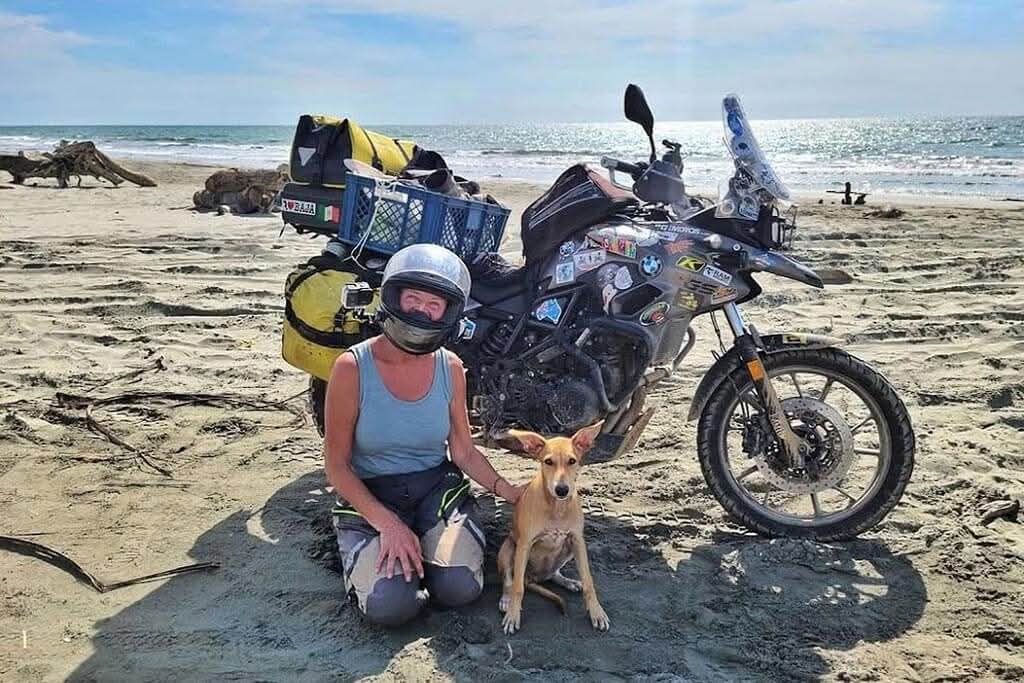
When Tracy first started riding motorcycles, neither a round-the-world journey nor a long-distance adventure was anywhere on her wish list.
Her husband had died of brain cancer at just 46 years old. Tracy was left with their daughter, who was 11 at the time. Tracy had always loved travelling and had previously worked as a flight attendant, but her husband had never been particularly interested in travel. About a year after his death, she began finding her way back to that part of herself. She started travelling again, got her scuba diving certification and took her daughter with her almost everywhere.
Then, when a friend asked if she wanted to get a motorcycle licence, she said yes.
“It wasn’t even on my bucket list, but I thought: why not?”
They were not exactly naturals.
“We were terrible. We dropped those little training bikes so many times,” Tracy says, laughing at the memory.
But they got their licences, and Tracy bought an orange BMW 800. It looked good, but she quickly realised it might not have been the smartest choice. The bike scared her.
From tarmac to gravel
Even though she was still a relatively new rider, Tracy booked an off-road tour in Peru. There she rode a BMW 650 and discovered how much more comfortable she felt with the more upright riding position. She felt more relaxed and more in control. So when she returned home, she traded in her first BMW for the BMW F 700 GS that is still her faithful companion around the world.
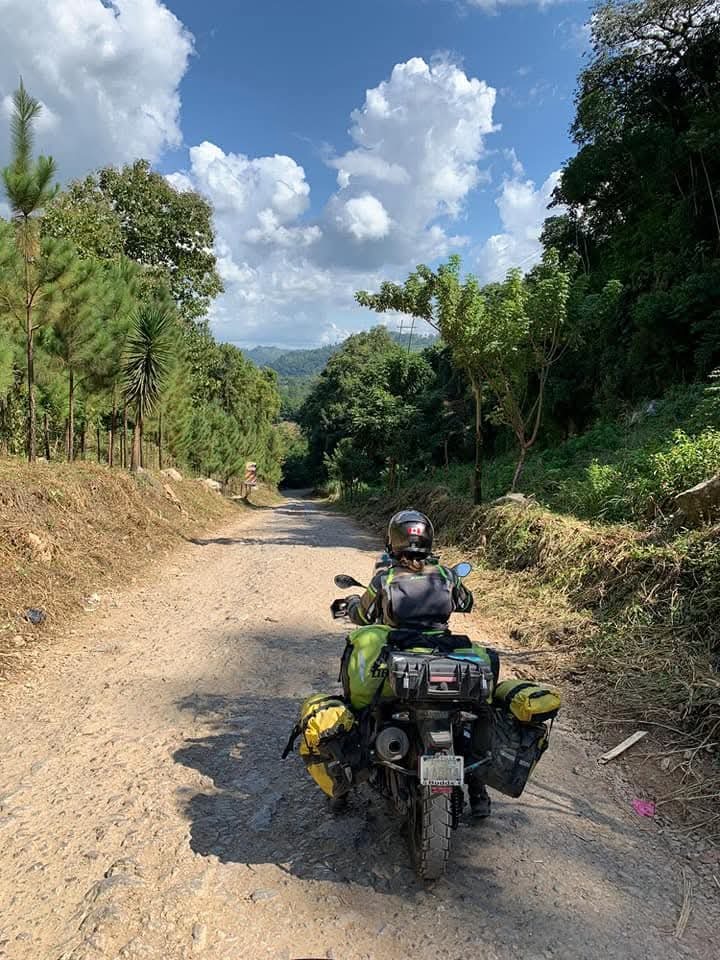
The Peru trip left her wanting more, and Tracy began taking various off-road riding courses. The only problem was that there were not many people to practise with where she lived.
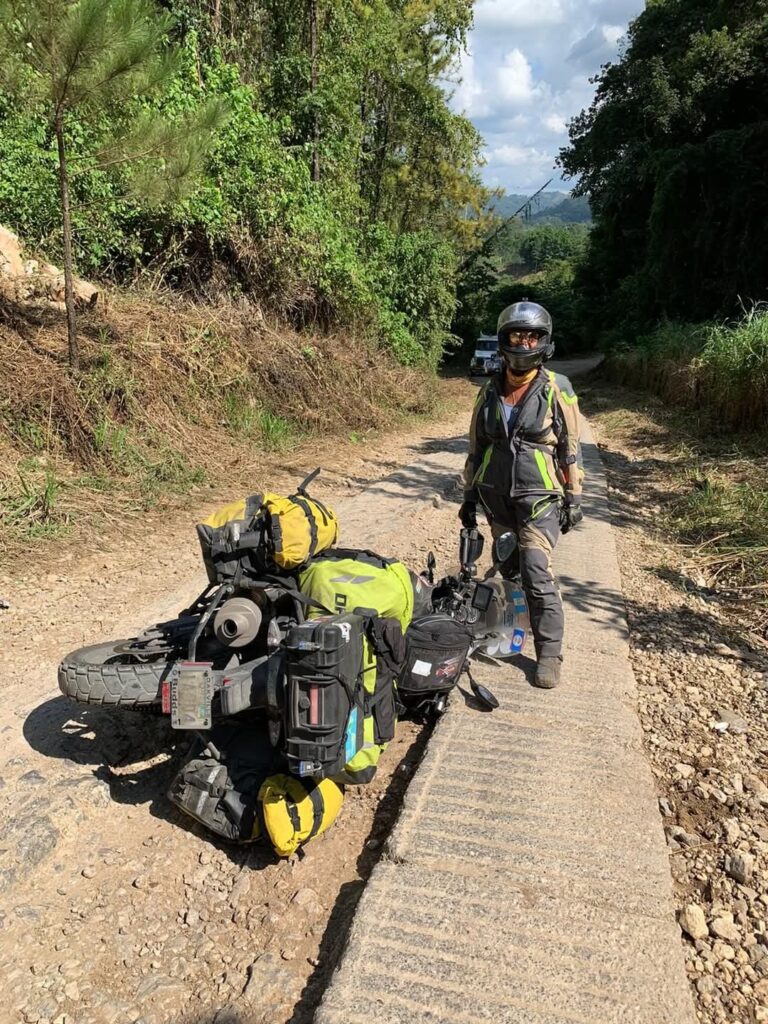
So those skills sat quietly in the background until, a few years later, she really needed them.
An offer that changed everything
The turning point came when her workplace was reorganised. Tracy worked within the Canadian workers’ compensation system and was given a choice: accept a worse job for less money, or receive her full salary for two years leading up to early retirement.
She did not need much time to think.
“I just asked: where do I sign?”
She went home to her daughter, who was at university by then, and told her what she was thinking.
She wanted to sell the house. Sell the car. Find an apartment for her daughter and make sure she was financially secure until she had finished university. Then Tracy wanted to try riding a motorcycle around the world. If her daughter had said no, the plan would have stopped there. She didn’t.
“She just said: ‘Go for it.'”
Then everything happened quickly. The house sold within three weeks, and the buyers wanted to move in three weeks after that. In a very short space of time, Tracy had to sell most of what she owned, find temporary accommodation for both herself and her daughter, and start preparing for a life in which almost everything would have to fit on a motorcycle.
The big decision had been made.
How do you prepare for not coming home?
It is easy to imagine that a journey like this requires years of meticulous planning. For Tracy, the preparations were more about creating the conditions that would allow her to leave.
Financially, she relied on her pension and what was left after selling the house. She tries to live relatively cheaply, alternating simple accommodation with the occasional more expensive stop when she needs time to recover. Nor was she an accomplished motorcycle mechanic when she left.
She can change the oil, adjust the chain and repair a puncture, but she leaves bigger jobs to workshops along the way. Years on the road have, however, taught her a great deal more about her motorcycle. When she got her first puncture in Mexico, it was a Sunday and everything was closed. A cactus thorn had gone straight through an almost new tyre.
The solution was a kerb, her phone, a puncture repair kit and YouTube. The repair lasted for another 15,000 kilometres or so.
“YouTube is your best friend.”
She has also relied heavily on other motorcyclists, WhatsApp groups and social media when she has needed to find spare parts, workshops or someone with local knowledge.
Mexico and everything she had been warned about
Mexico became one of the first major mental barriers. Tracy did not speak Spanish, and before leaving she had heard warnings about cartels, robbers and roads she absolutely should not ride. She was frightened when she crossed the border. A few days later, that fear began to fade.
“People meant well, but I realised pretty quickly that even if the warnings weren’t 100 per cent wrong, they were 99.9 per cent wrong.”
It is an experience she has had repeatedly during the journey.
She has ridden through places other people described as dangerous and encountered bad roads, chaotic situations and large groups of curious people gathering around the motorcycle. But she says she has never been genuinely afraid of the local people.
The few unpleasant situations she has experienced with men have instead involved other travellers.
Then Rue came along
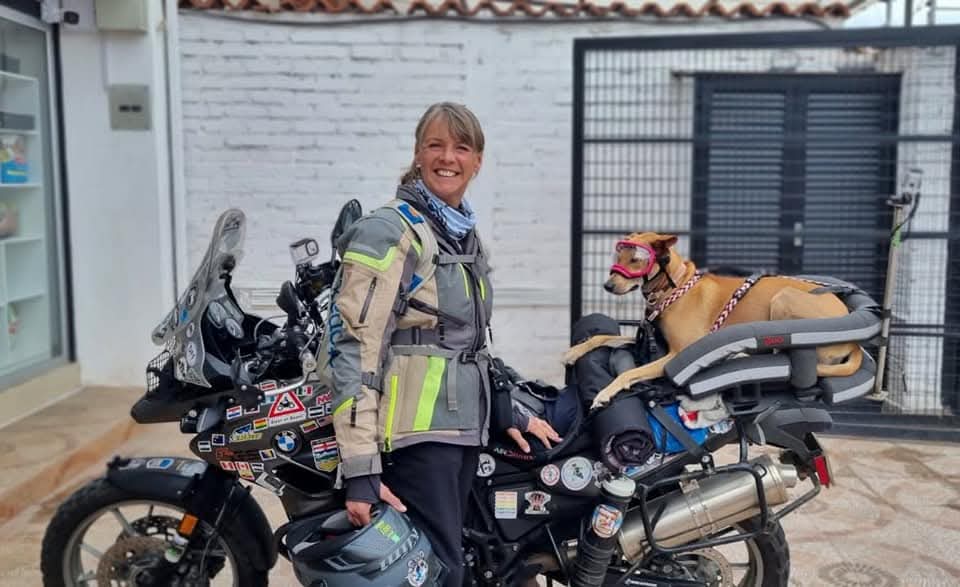
Her journey changed in Colombia.
Tracy had spent a lot of time in the mountains but was longing for the sea, so she headed towards the Caribbean coast.
In a small town, she was sitting in a hammock with a glass of wine and a book when everything suddenly went flying.
A skinny little puppy covered in ticks had jumped up onto her. The staff chased the dog away.
She came back.
She lay under Tracy’s chair while Tracy went swimming. She followed her to restaurants and waited outside. When Tracy worked on the motorcycle, the puppy jumped up and sat on the seat. Then one evening, she somehow managed to get into the locked hostel, find Tracy’s room on the second floor, rush inside and jump straight onto the bed.
“That’s when I thought: okay, you’re coming with me.”
The original plan had been to vaccinate and spay her, get her healthy and then find her a good home. That was not what happened. By the time everything was sorted, Tracy had already fallen in love with her. Rue had found her person.
A new way to travel
Rue has now been travelling with Tracy for almost five years. She makes the journey richer, but also considerably more complicated.
Border crossings require veterinary paperwork and vaccinations. Some countries have specific rules for dogs, while others involve risks that make Tracy choose a different route.
Heat is another challenge. While travelling through West Africa, Tracy has drastically shortened their riding days.
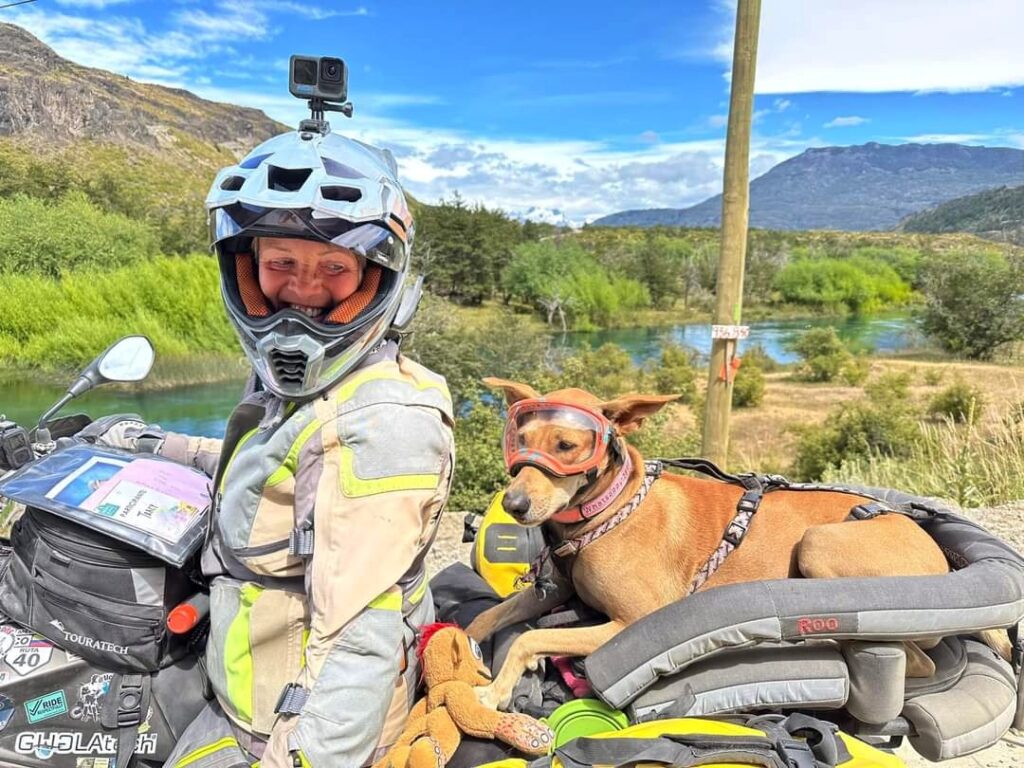
They often leave as early as six or half past six in the morning and ride for only two or three hours before the temperature becomes too high. She has tried a cooling vest for Rue, but the airflow dried it out in around half an hour.
Rue never seems to hesitate when it comes to the motorcycle itself. As soon as Tracy starts packing, the dog is ready. More recently, Rue has also taken on a new role of her own. She guards both the motorcycle and Tracy, barking at people who come too close.
“She’s made herself my security guard.”
At the same time, Tracy is clear that she would not choose to make a journey like this with a dog again. Shorter trips and camping, absolutely. Several years crossing different continents, no.
“It’s too much work on a motorcycle.”
The hate that comes with followers
As Tracy’s journey has attracted more attention, the nasty comments have increased too. A video from Morocco unexpectedly went viral. The followers poured in, and with them came something else. After a difficult gravel road where she lost control and ended up in a ditch, she posted the video just as she usually does: unedited and unfiltered.
The comments came quickly.
” Old lady, go home. You can’t pick up your bike. The bike’s too heavy. You have no skills”.
Almost exclusively from men.
“Not all men, but it’s always men,” Tracy says.
For a while, she allowed the comments to get to her. She says she began doubting herself. Maybe she was too old. Maybe the motorcycle really was too big for her. It was her daughter who made her stop.
“Mum, stop reading them,” she said.
So Tracy did. She took a break from social media and quickly noticed that she felt better. There is an irony in it all, Tracy points out. Social media, seeing other people doing the same thing, was what gave her the confidence to leave in the first place. The same platform that inspired her was also the one that eventually made her start doubting herself.
She has seen the same pattern on gravel roads too. She has met male riders who simply assume she will be slower because she is a woman.
“Sometimes half the challenge is figuring out how to overtake them without hurting their ego,” she says with a laugh.
When the road decides
Travelling without an end date does not mean you can avoid planning.
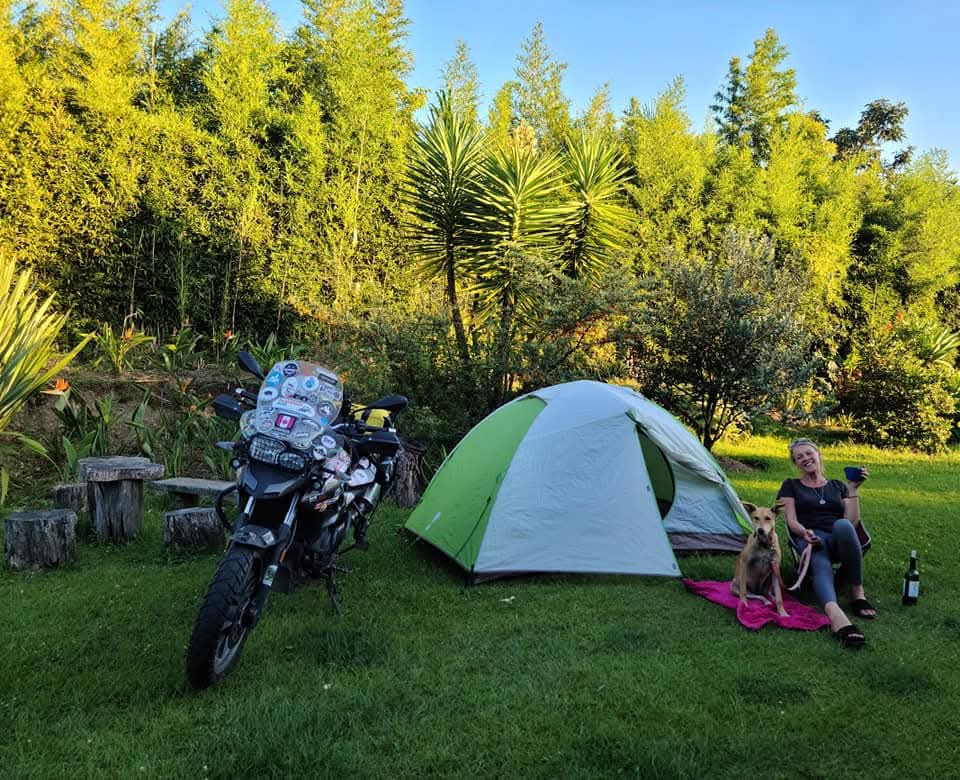
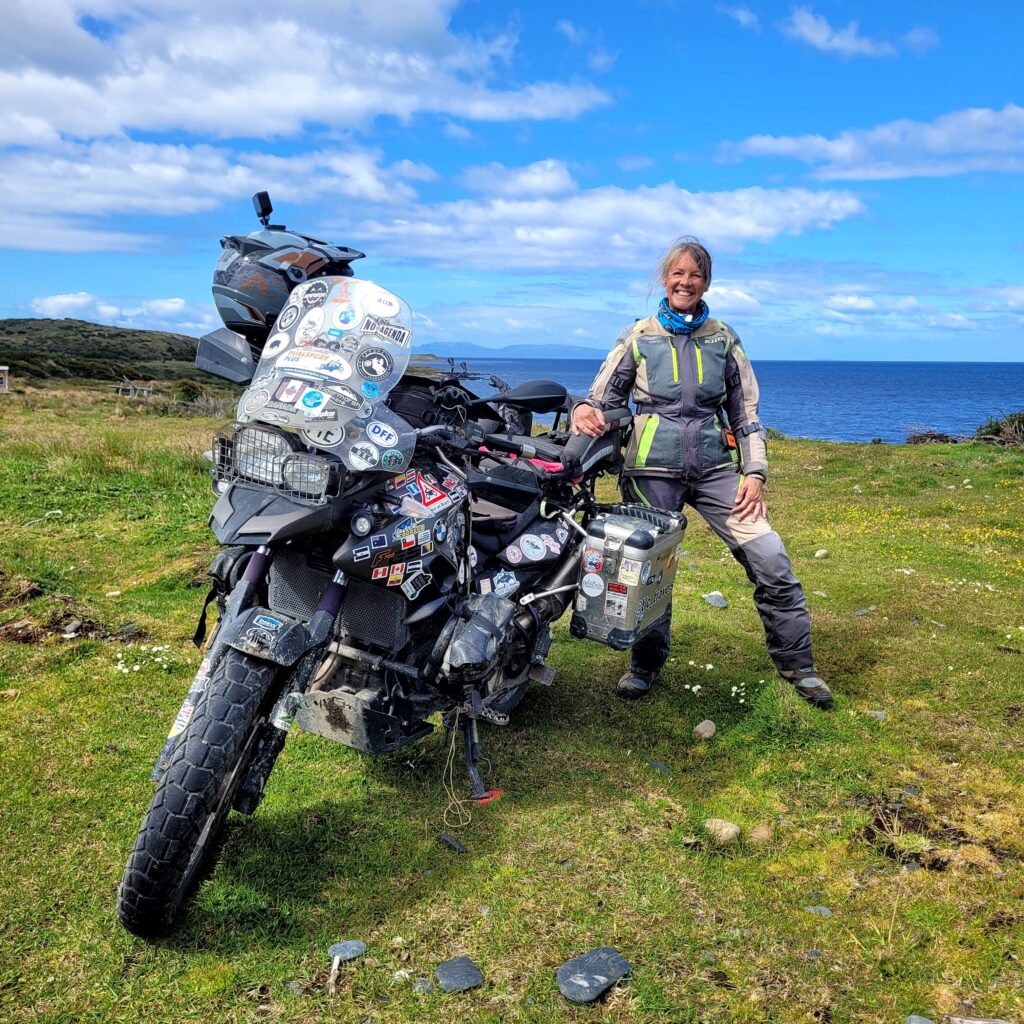
Visas expire. Borders close. The motorcycle breaks down. Spare parts get held up. Dog paperwork is valid in one country but not the next.
After South America, Tracy flew the motorcycle from Argentina to England. Her original plan had been to spend several months in Norway, Sweden and Finland.
But the Schengen rules put pressure on the schedule. She rode through Europe and continued to Morocco.
There, a new idea began to take shape. Why not keep heading south along Africa’s west coast?
And that is exactly what she did. In West Africa, her patience has been tested in entirely new ways. She talks about border crossings that have taken eight and a half or nine and a half hours, in intense heat and sometimes without any shade.
“I’ve learnt to turn the situation around. Things never go the way you planned.”
She says she has become considerably more patient.
“I still get angry sometimes, but there aren’t any explosions anymore. You just have to take things as they come.”
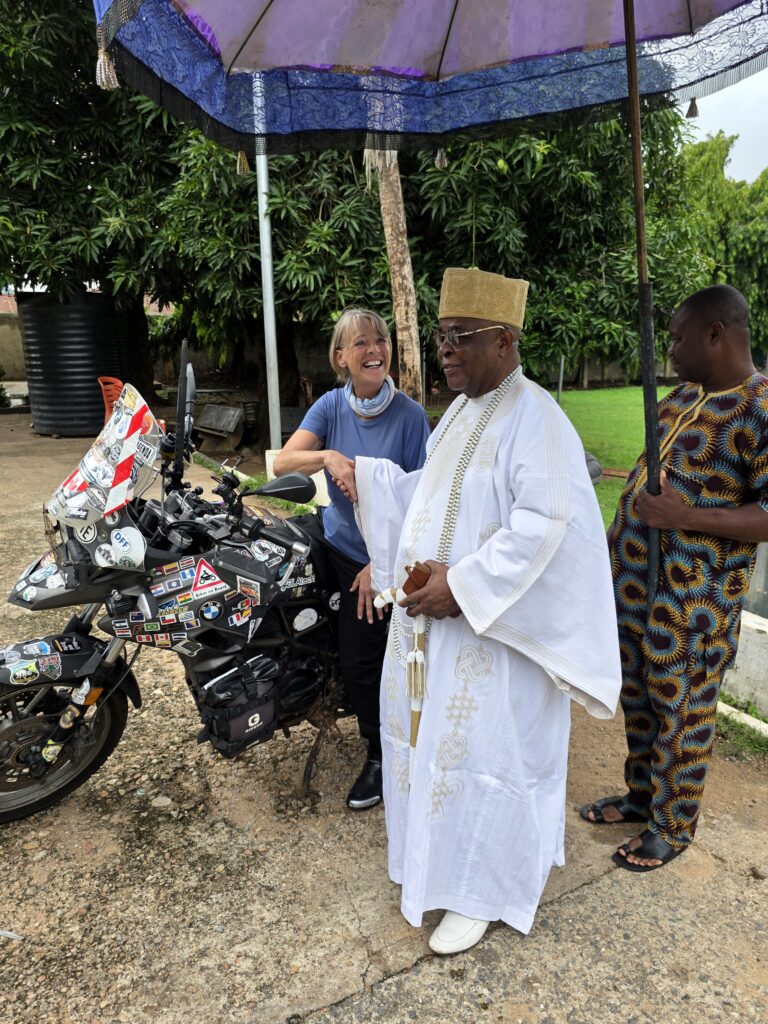
But there have also been plenty of memorable moments. In Abeokuta, Nigeria, Tracy was not only escorted into the city by a group of local motorcyclists, she was also granted an audience with the king.
The photo she would show her younger self
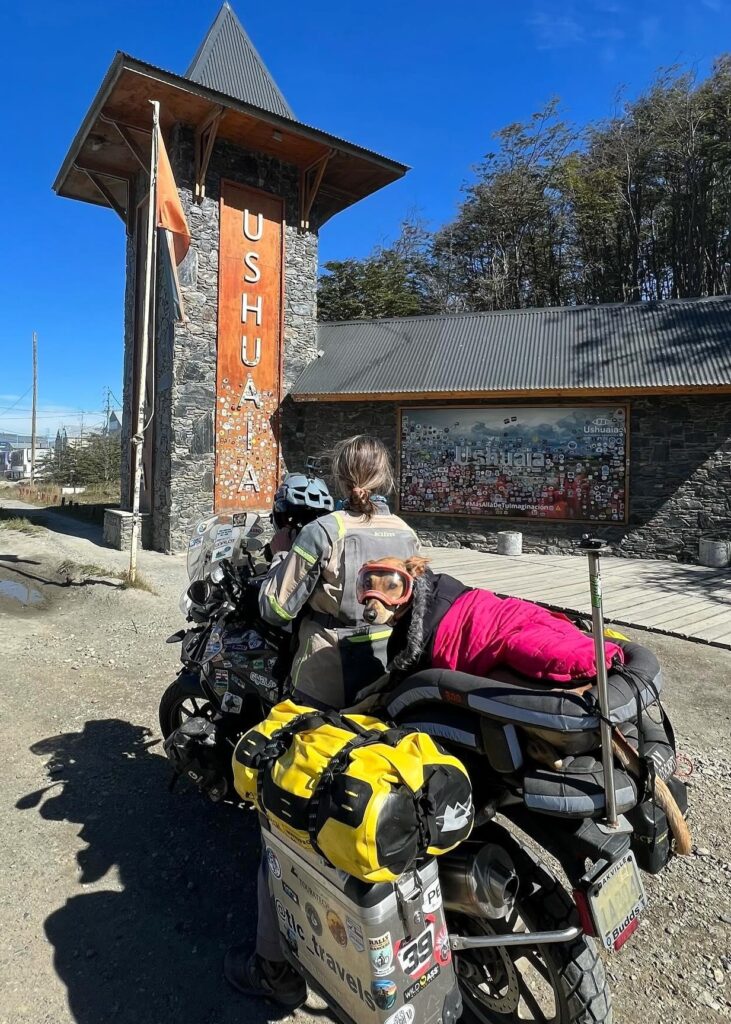
There is one photograph from the journey that means more than the others.
It is not particularly well composed. It is not posed. It is not even especially sharp, Tracy says.
In the photo, she and Rue are standing with the motorcycle in front of the sign in Ushuaia, at the very bottom of Argentina.
It had taken four and a half years to get there. Covid had slowed the journey down, and somewhere along the way Tracy had also learnt that she did not need to rush.
When she saw the sign, she called her daughter.
“I cried and said, ‘Mommy made it.'”
Because deep down, she had never been completely sure she would make it that far.
The body sets limits, but the will doesn’t
Tracy was 53 when she set off. Today she is 60, and seven years on a motorcycle have left their mark. Her hands hurt. Her hips complain. That is why she is beginning to wonder whether the next chapter might be travelled on four wheels.
“I think I’ll probably move over to some kind of van within the next few years.”
But she has no intention of giving up travelling.
“I can’t stay at home. I need something new, something different. And when I get tired, I can stay in the same town for three months. It doesn’t matter. But I have to keep moving.”
Do it before you talk yourself out of it
After all these years on the road, Tracy also has some very clear advice for anyone dreaming of doing something similar: do it, don’t overthink it, and turn off the news. Because the longer you think about it, the more reasons you can find to wait. You need more equipment. More money. More experience. Better timing. Eventually, you risk talking yourself out of the whole idea.
Tracy did the opposite. She sold the house, packed the motorcycle and left. And perhaps that is what best sums up the way she travels. You do not need to have all the answers before you begin.
You just need to start.
Where are Tracy and Rue now?
When the interview took place, they were in West Africa, heading south towards Nigeria. Since then, the journey has continued, and today Tracy and Rue are in the Republic of the Congo.
Tracy planned to continue south before eventually turning north along Africa’s east coast. After that, both the Middle East and a return to Europe were possibilities. But as she herself points out, plans are constantly changing when you live on the road.
Follow Tracy and Rue: Facebook
Support Tracy – Buy Me a Coffee
Who is Tracy Charles?
- 60 years old, Canadian, from Port Dalhousie, Ontario
- Former flight attendant, later worked in workers’ compensation
- Set off at the age of 53, seven years ago
- Rides a BMW F 700 GS
- Has been travelling with her dog Rue for almost five years
- Has ridden through North, Central and South America, Europe and West Africa – currently in the Republic of the Congo
Travelling with a dog by motorcycle
- Paperwork at every border: up-to-date vaccinations and veterinary certificates are required, with different rules in different countries
- Titre test: a rabies antibody test that can cost around 800 CAD in Canada – some countries/regions won’t accept a test already taken, which can mean long waits for a new one
- Heat is a major challenge: shorter riding days, often setting off as early as 6–6.30am and riding for only 2–3 hours before it gets too hot
- Cooling vests don’t work well on a motorcycle: the airflow dries them out in around 30 minutes
- Transport: a purpose-built dog carrier fitted to the motorcycle
- Some countries call for extra care (such as Nigeria), while others are avoided altogether because of the risks to the dog (such as Turkey, due to the country’s livestock guardian dogs)
- Unexpected bonus: the dog can turn into a self-appointed security guard, barking at anyone who gets too close to the motorcycle
Anna Haglund