

Alakonnu Ralli – an Estonian roadbook adventure
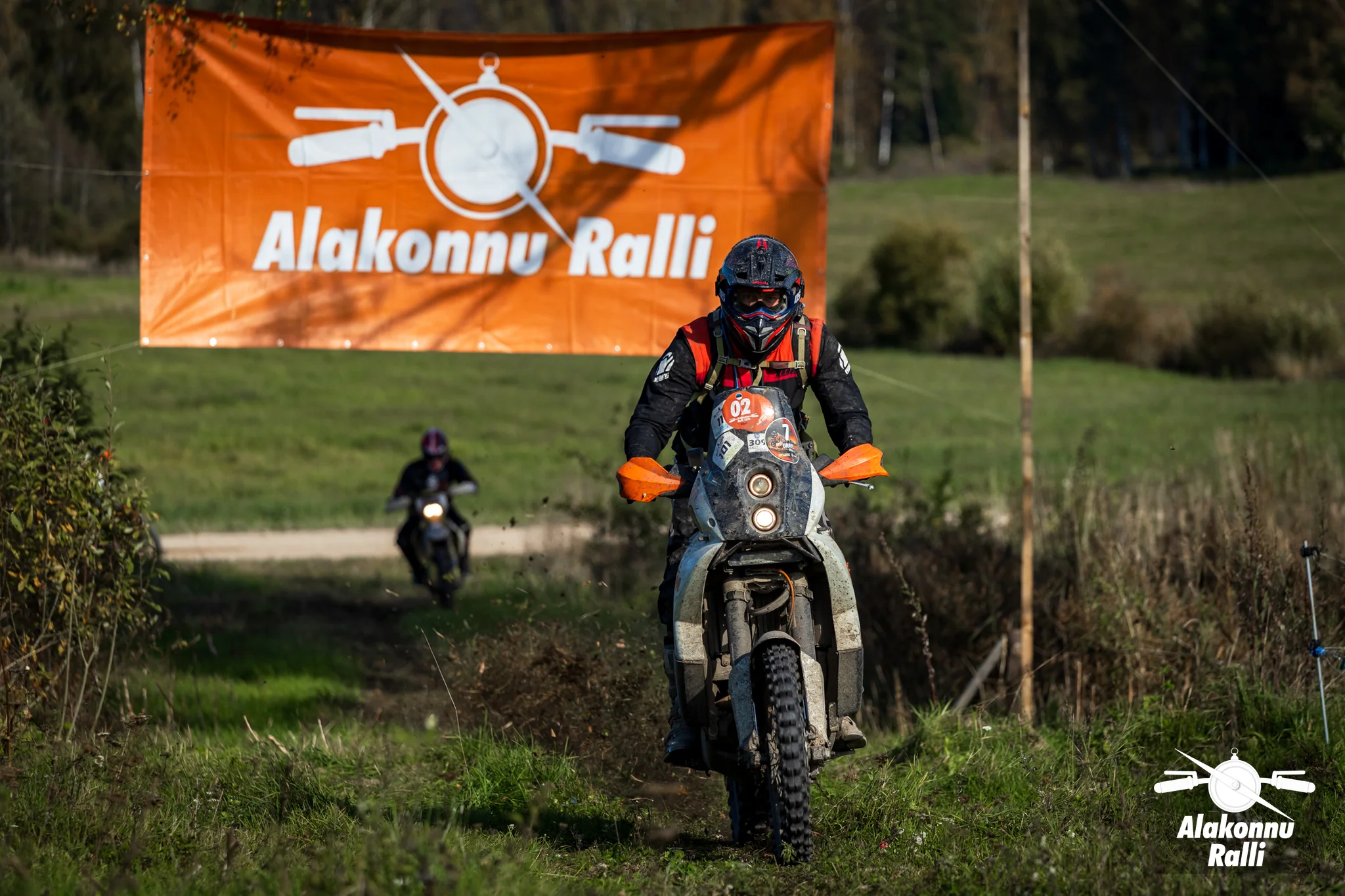
Held on the first weekend of October, Alakonnu Ralli celebrated its fifth edition with 105 riders from seven countries, including five women. The rally has grown steadily since its beginnings, attracting both experienced rally riders and those looking to improve their roadbook navigation skills.
The competition consisted of three stages, starting with a night stage on Friday, followed by two longer stages on Saturday. Riders also had the option of taking part in a voluntary prologue on Friday afternoon to familiarise themselves with the terrain and navigation.
Riders navigate using a roadbook containing symbols, distances and instructions to guide them through the terrain. The trip meter allows them to keep track of distances and check when to turn or follow the next instruction. Along the route are also designated waypoints, predefined checkpoints that riders must pass and which are recorded by their navigation equipment. Everything is tracked digitally, allowing spectators to follow the riders’ progress live, albeit with a slight delay.
Speed limits apply to selected sections of the route, particularly near residential areas. Missing waypoints, exceeding speed limits and other rule infringements can result in time penalties that affect the final standings.
The rally is based at Kaagjärve Mõis, a manor house in southern Estonia. This is also where it all began, when one of the people behind the event came up with the idea of using the surrounding land for something fun. Since then, the rally has grown and attracted increasing numbers of participants, including riders from other countries.
Eight Swedish riders taking part
The Swedish contingent consisted of Anders Kulin, Rebecca Rickardsson, Joel Jedström, Christer Borking, Torbjörn Fagré, Jens Svedholm, Christian ‘Chippen’ Svensson and Peter Wernerheim. Andreas Lilja was also part of the group, although he competed under the Norwegian flag. For all of them, it was their first Alakonnu Ralli.
For several of the riders, simply getting to Estonia was an adventure in itself.
Rebecca and Anders transported their motorcycles from Dalarna to Nynäshamn, left their car there and continued their journey on two wheels, taking the ferry to Latvia before riding on to southern Estonia.
Chippen, Andreas and Joel also chose to ride their motorcycles to the event. Using the Stegra.io navigation app, they followed adventurous back roads and trails, treating the journey as a warm-up for the rally. Along the way, they also launched a fundraiser for the Swedish Childhood Cancer Fund. It wasn’t the first time they had used one of their motorcycle adventures as an opportunity to raise money for charity.
Straight into the darkness
On Friday afternoon, riders had the option of taking part in a voluntary prologue to get a feel for the terrain and navigation. Then, as darkness fell, it was time for the first competitive stage, with a sense of nervous anticipation in the air.
The start took place in the square of the city of Valga. One by one, riders were called up to the start ramp, where their names and nationalities were announced. Accompanied by music, smoke and fireworks, they were sent off at precisely their allocated start times.
The starting order was determined by a draw, with a couple of hours separating the first and last departures.
But navigation and darkness were not the only challenges facing the riders. In places, thick fog made visibility extremely difficult. Anyone who has ridden a motorcycle in darkness and fog will know the feeling. It’s almost like riding straight into a wall.
‘We knew we had 44 kilometres ahead of us, but we had no idea how long it would take or what we’d encounter along the way. You were out there in the darkness, in your own little bubble,’ says Jens, who particularly enjoys both roadbook navigation and night riding.
From technical forest trails to fast gravel roads
Saturday’s first riders set off at nine o’clock. The opening stage was 110 kilometres long and would prove to be one of the day’s toughest challenges.
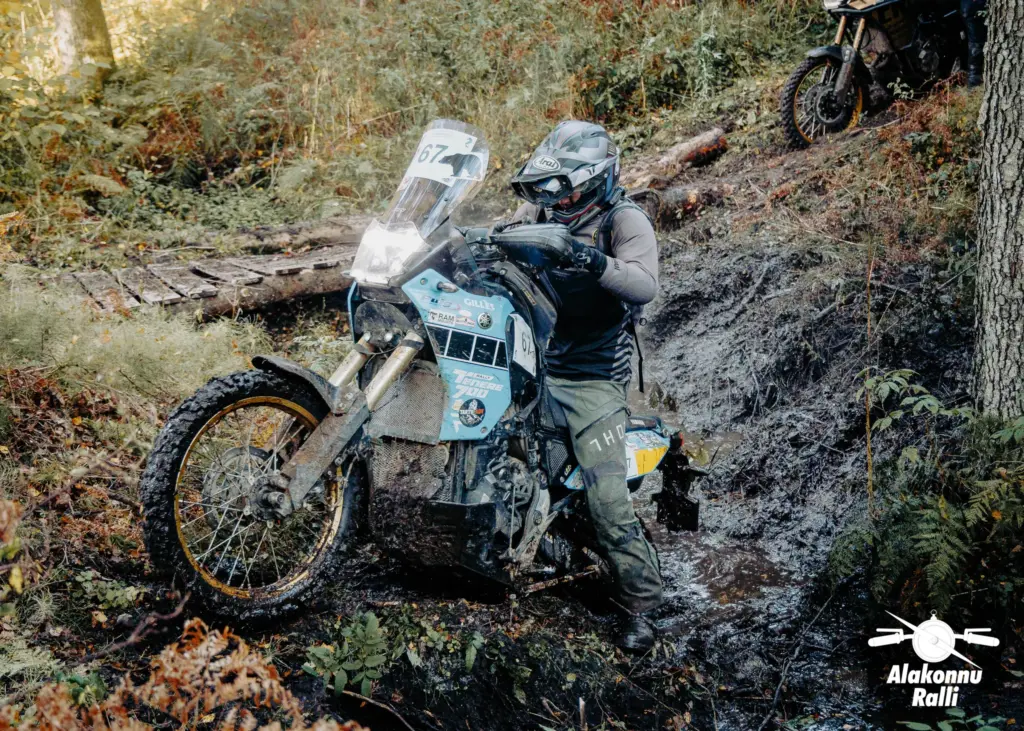
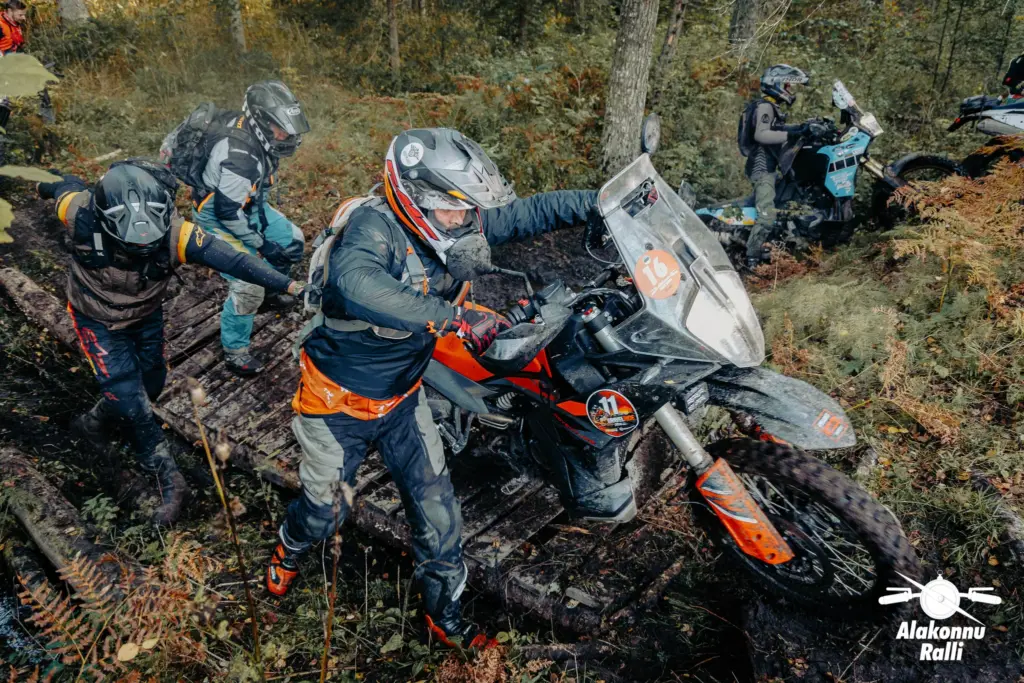
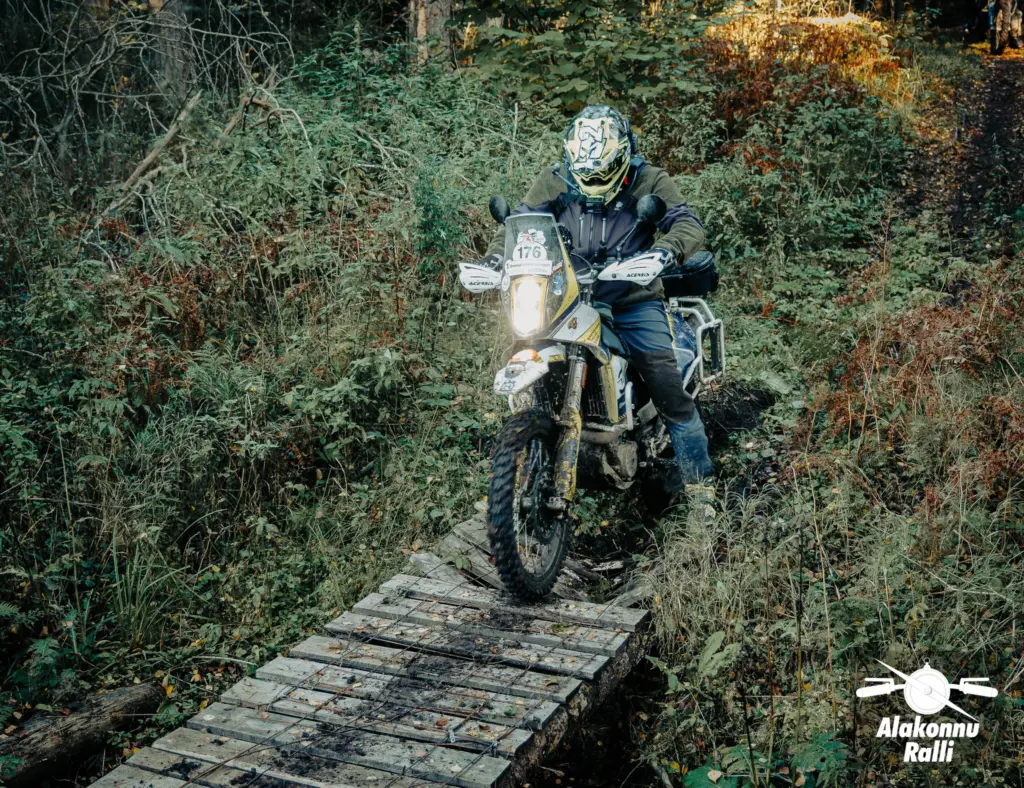
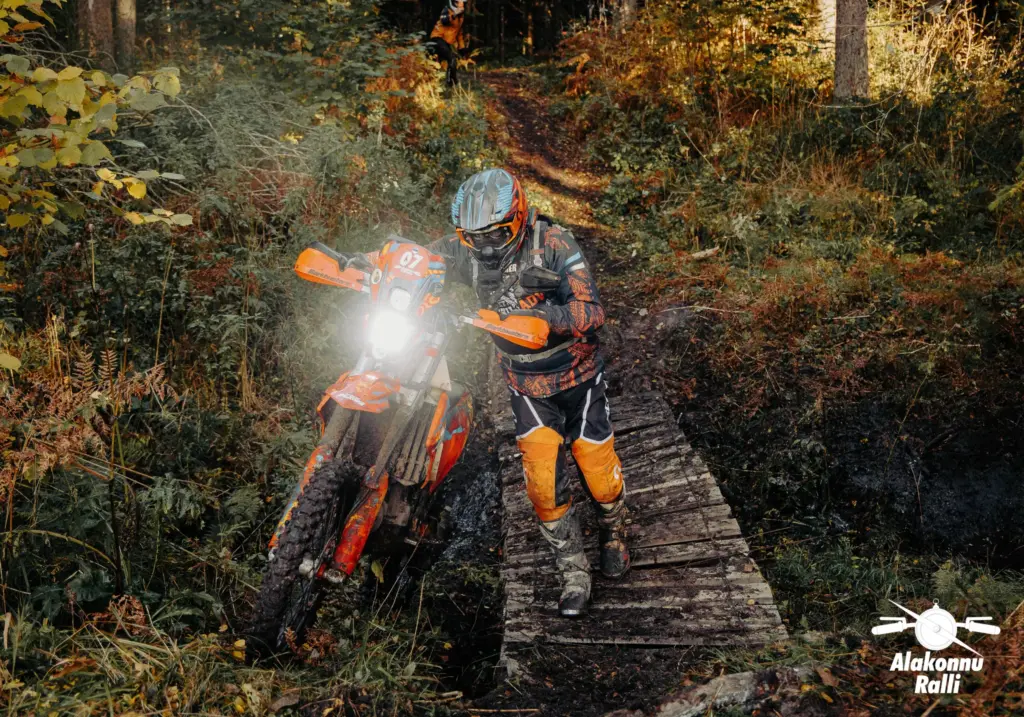
Technical sections, muddy tracks and difficult terrain meant that many riders needed around four hours to reach the lunch stop. One particularly troublesome obstacle was a sloping, slippery bridge, where riders had to stay focused to make it across without mishap.
It was also possible to ride around it, but the mud was so deep that several riders became stuck.
Whichever option they chose, it was both a technically and physically demanding crossing.
Lunch was served in the square of the small town of Antsla, where riders gathered as they emerged from the forest.
Meat soup and pastries were available to buy, while a small grocery shop on the other side of the square offered alternatives such as sandwiches and slices of pizza.
Music was playing, and everywhere small groups stood discussing the morning’s riding.
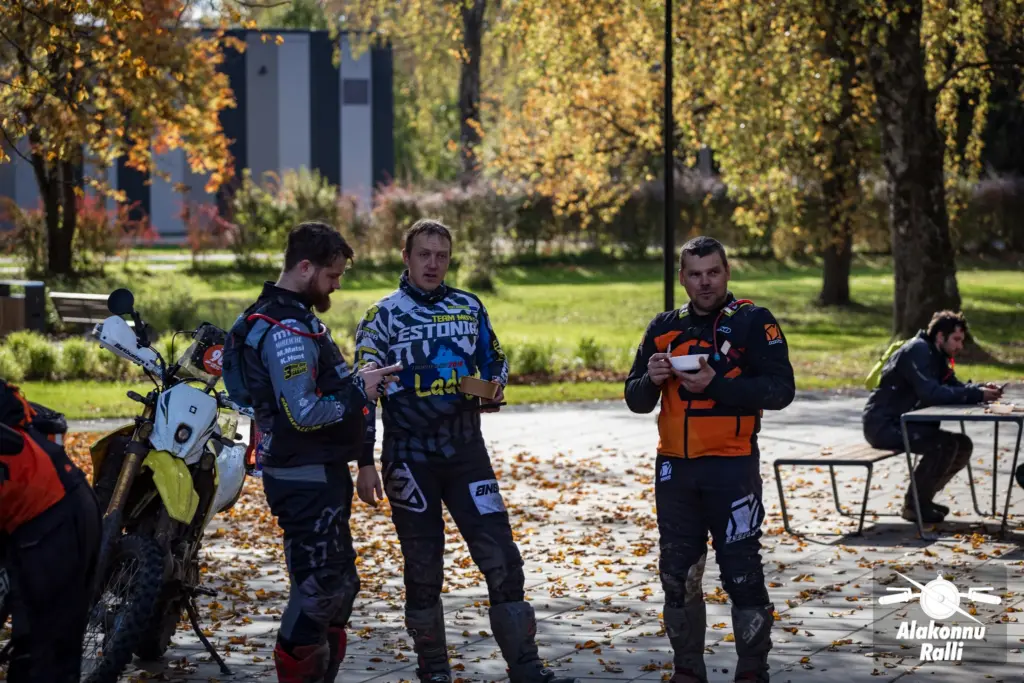
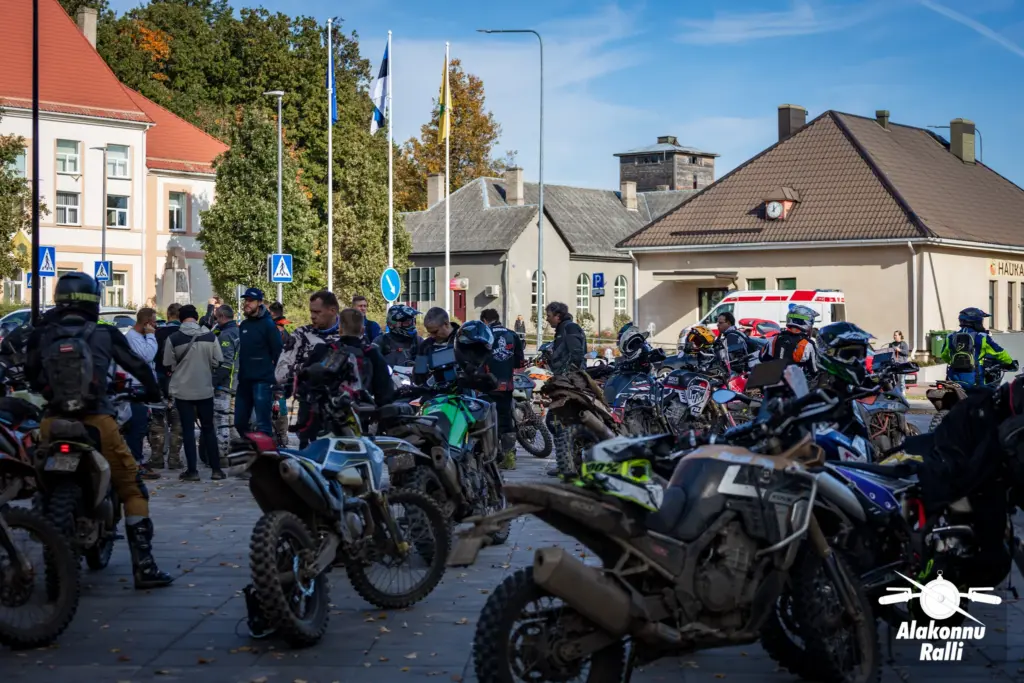
Some had become stuck in muddy holes, while others talked about tricky navigation decisions or sections they had particularly enjoyed.
It was a welcome opportunity to refuel, catch up with one another and gather some energy for the afternoon. From one o’clock onwards, riders were free to set off again whenever they felt ready.
After lunch, the route offered a varied mix of fast gravel roads, forest tracks and more technical sections.
‘It’ll probably be dark before we finish, considering how long this morning’s 110 kilometres took, and now we’ve got another 200 kilometres to go.’
One participant particularly appreciated the thought that had gone into the roadbook from a safety perspective. The numerous navigation instructions demanded constant attention and helped keep speeds down.
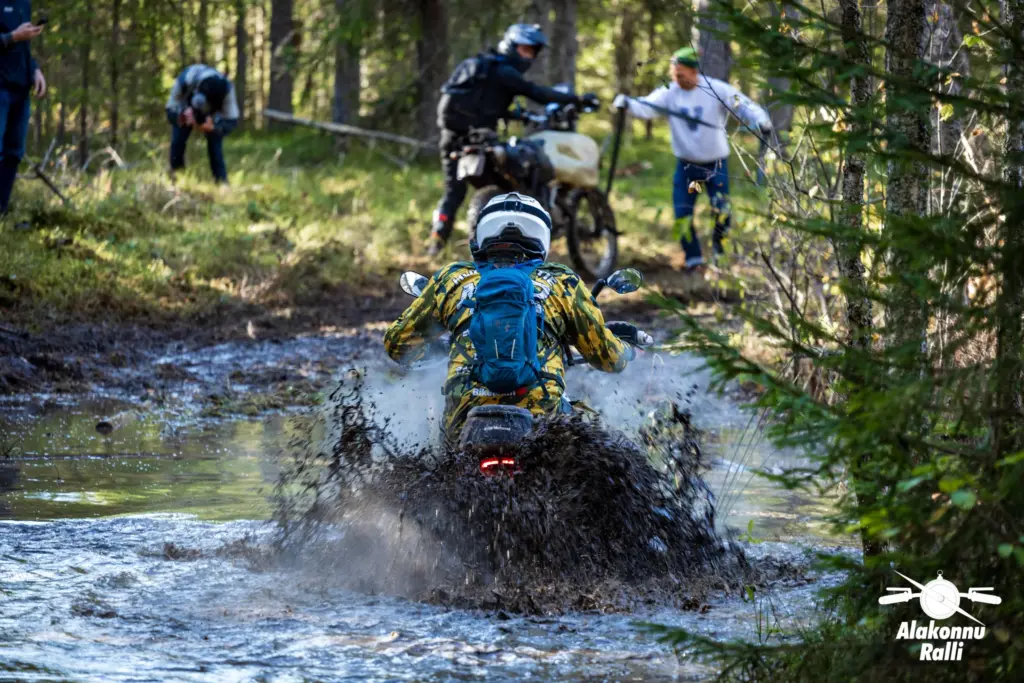
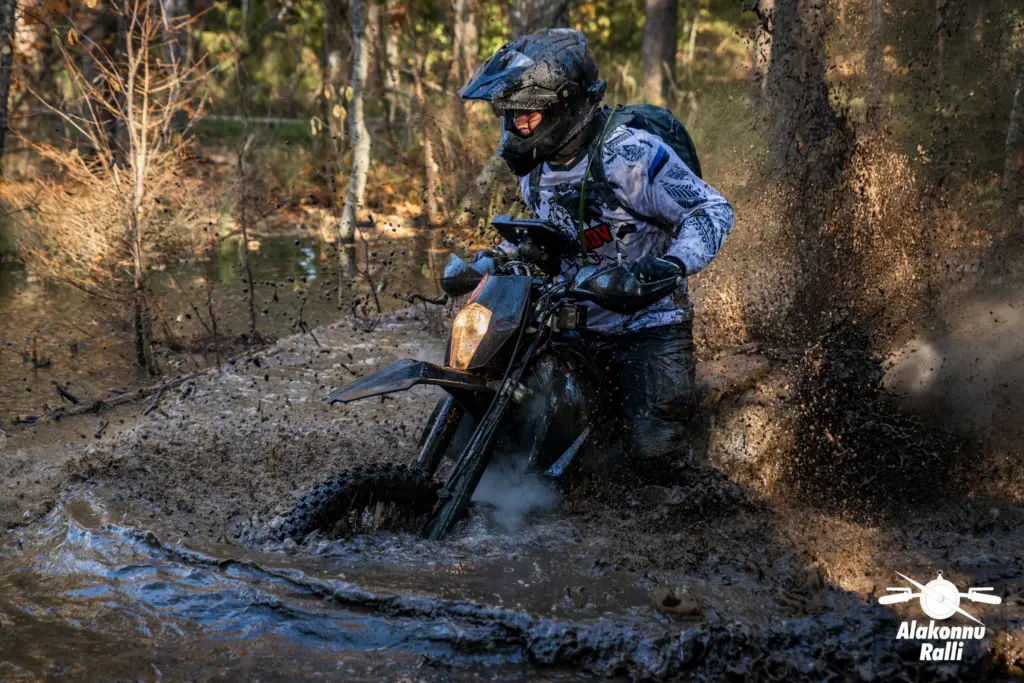
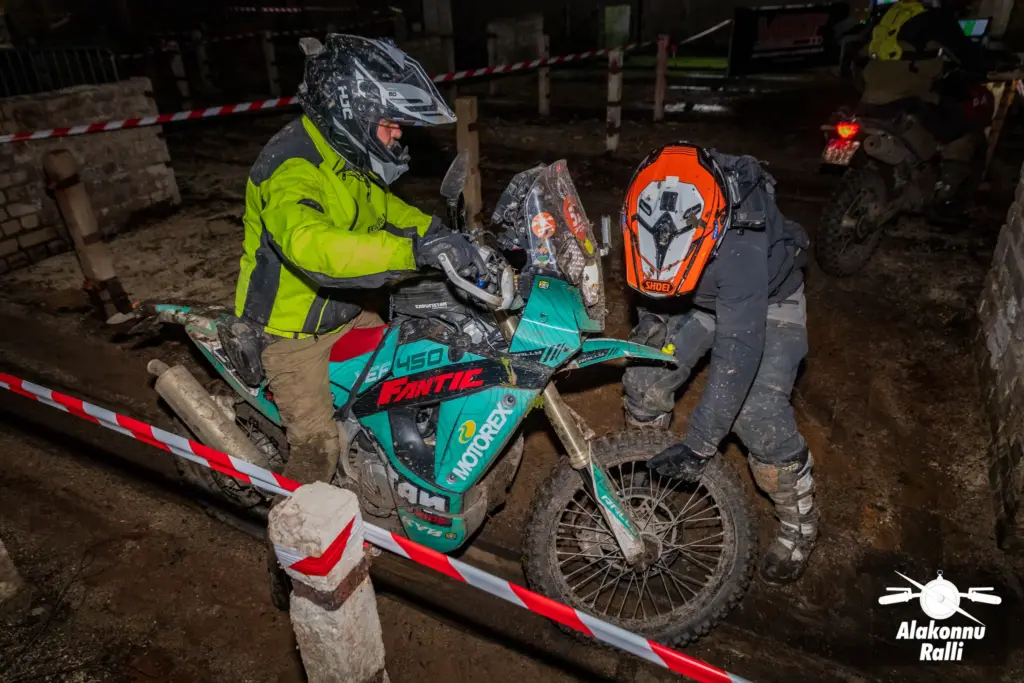
The afternoon route also included a substantial water-filled hole, where the best way through was far from obvious.
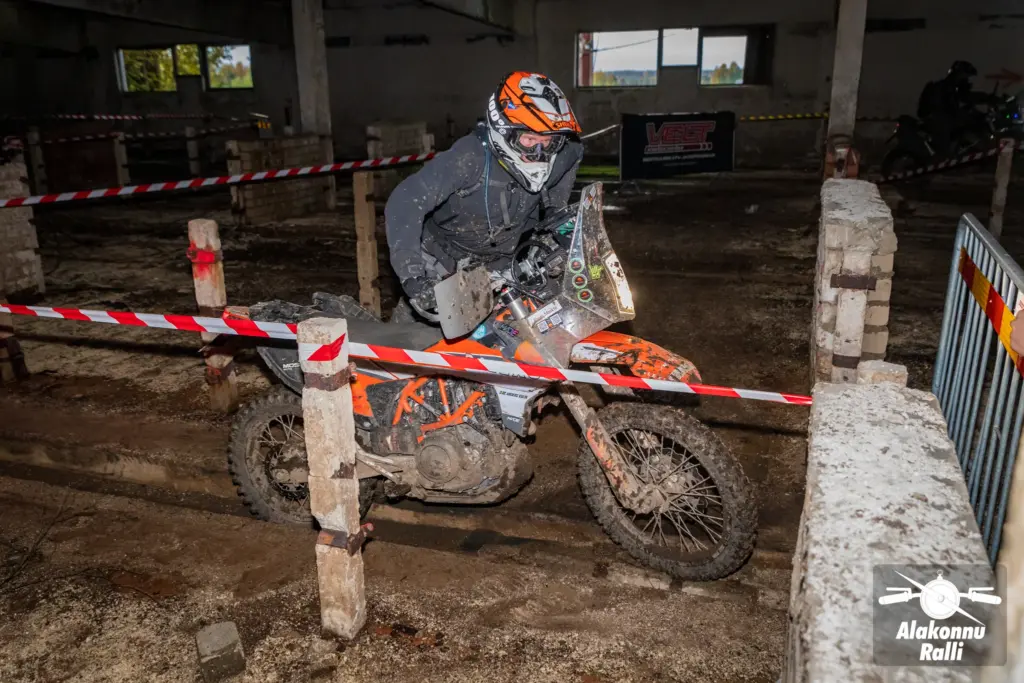
One of the final obstacles took the riders straight through a barn, where darkness, tricky sections and slippery ground demanded concentration before they could continue towards the finish.
When the reporter loses her bearings
I wasn’t competing myself, but I had brought my little two-stroke motorcycle so I could travel between different photography spots along the route. The organiser had given me a map and suggested some good locations. My plan was to follow Arvo Meeks, an Estonian photographer, but his Yamaha Ténéré 700 had a considerably longer fuel range than my little Beta 200cc, so I decided to head off on my own.
Things didn’t go particularly well at first. By the time I finally found my way to the first photography spot, there were only two riders left to come through. After lunch, I had better luck and a rider who had retired from the competition helped me find another location where the competitors would pass.
But right in the middle of taking photos, my phone died. Not only did I miss the chance to film the remaining Swedish riders, I also found myself somewhere in the Estonian countryside with no navigation and a limited amount of fuel in the tank.
After taking a chance on a few turns, I decided it would be wiser to ask for help and stopped at a farm. The couple who lived there, Mati and Külli, were incredibly helpful, even though they didn’t speak a word of English.
At first, they thought I was a British competitor who had retired from the rally, so they called the organiser, whom they knew well. After a few explanations, it became clear that all I really needed was to charge my phone so I could find my way back.
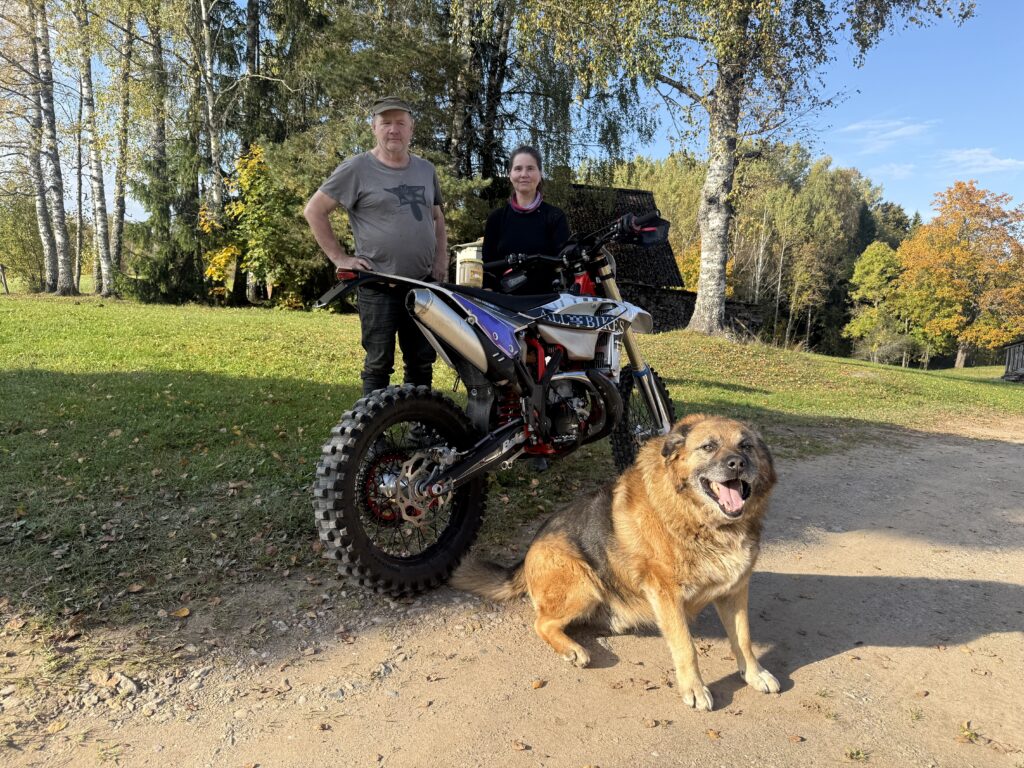
While it was charging, Mati and Külli showed me around their farm, where they also run the accommodation Karula Stay. There was a sauna, accommodation for guests and their own beehives. When I set off again, I had not only a working phone but also a jar of their own honey to take with me.
Not quite what I’d expected when I set out to photograph the rally, but it turned into my own little adventure and a lovely memory to take home.
Helping hands and camaraderie along the way
For the Swedish riders, Alakonnu Ralli was a new experience, and there was quite a lot to get to grips with at first. But the organisers were incredibly helpful, doing everything they could to answer questions and assist with the practical details.
That same willingness to help was evident out on the rally route. Whenever someone became stuck in the mud or had trouble with their motorcycle, it rarely took long before another rider stopped to lend a hand. Sometimes a rope was needed to pull a bike free. At other times, it was simply a matter of helping each other with navigation or riding together for a while. No fuss, no hesitation. Everyone simply helped one another, regardless of nationality or position in the standings.
That sense of camaraderie continued after the finish. In the evening, participants gathered for the prize-giving ceremony and some more time together. There was a sauna, a hot tub and a beer tent for anyone who fancied a drink. When registering, everyone had received a lovely beer glass engraved with Alakonnu Ralli, along with a sticker to write their name on so the glasses wouldn’t get mixed up.
The organisers had also put together an impressive selection of prizes donated by sponsors. In addition to awards for the leading riders, numerous prizes were raffled among all participants, regardless of their finishing positions. It was a much-appreciated touch that gave more people a chance to share in the celebrations.
The five female participants were also each presented with a jar of rally honey, a lovely gesture from the organisers.
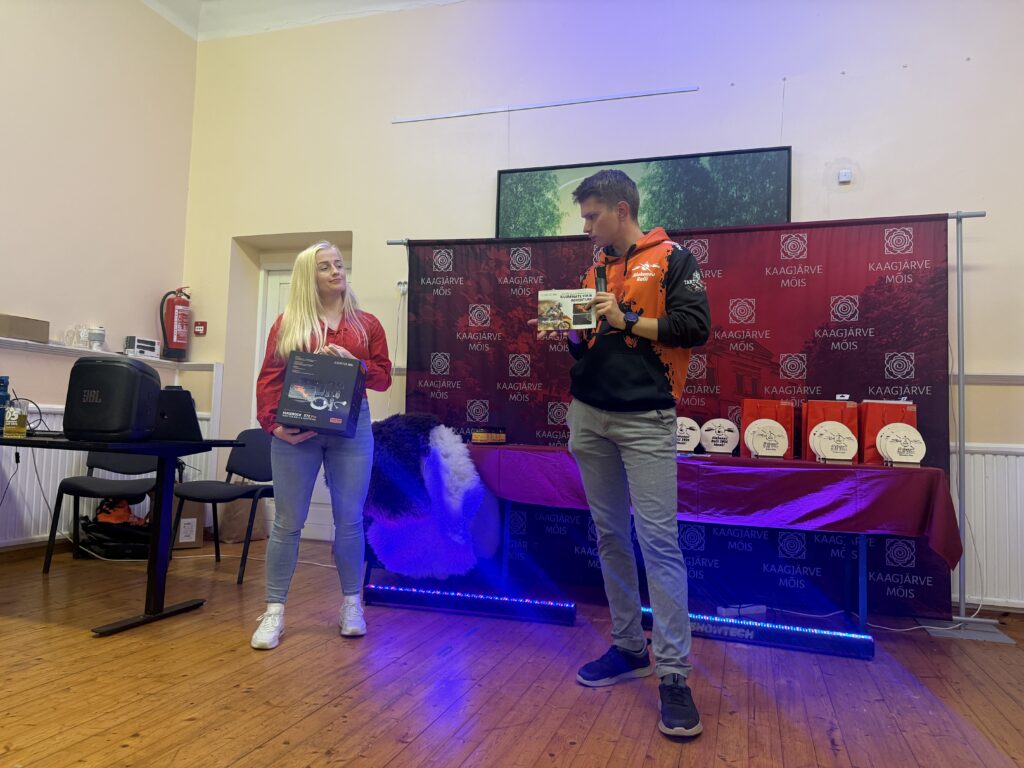
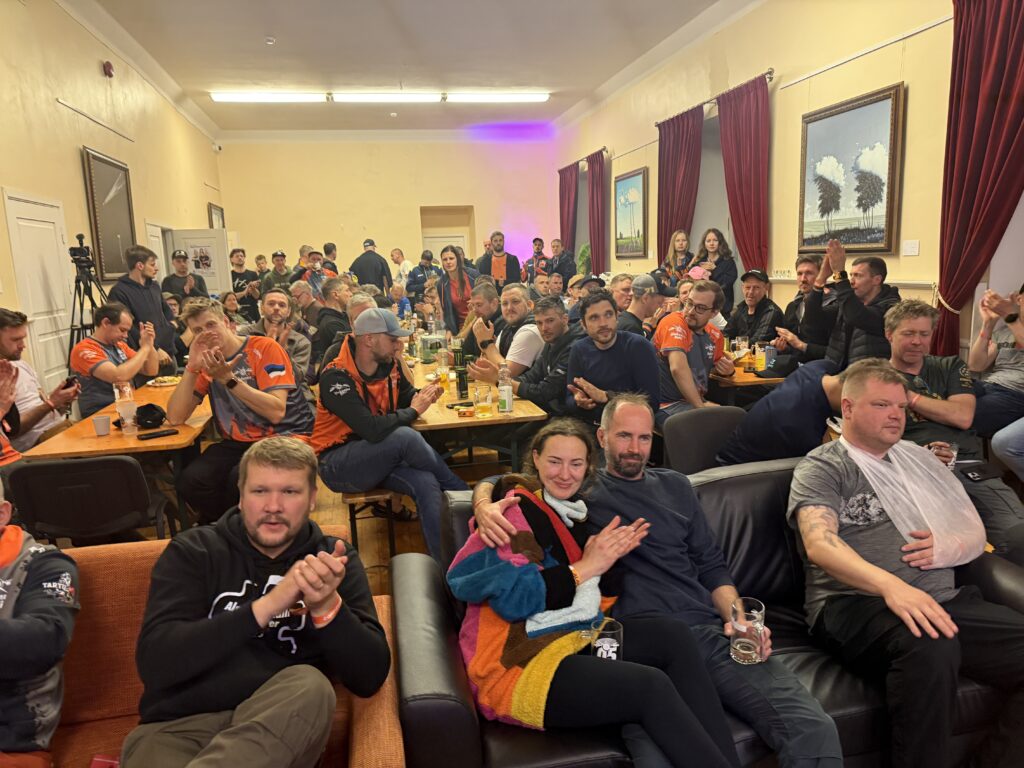
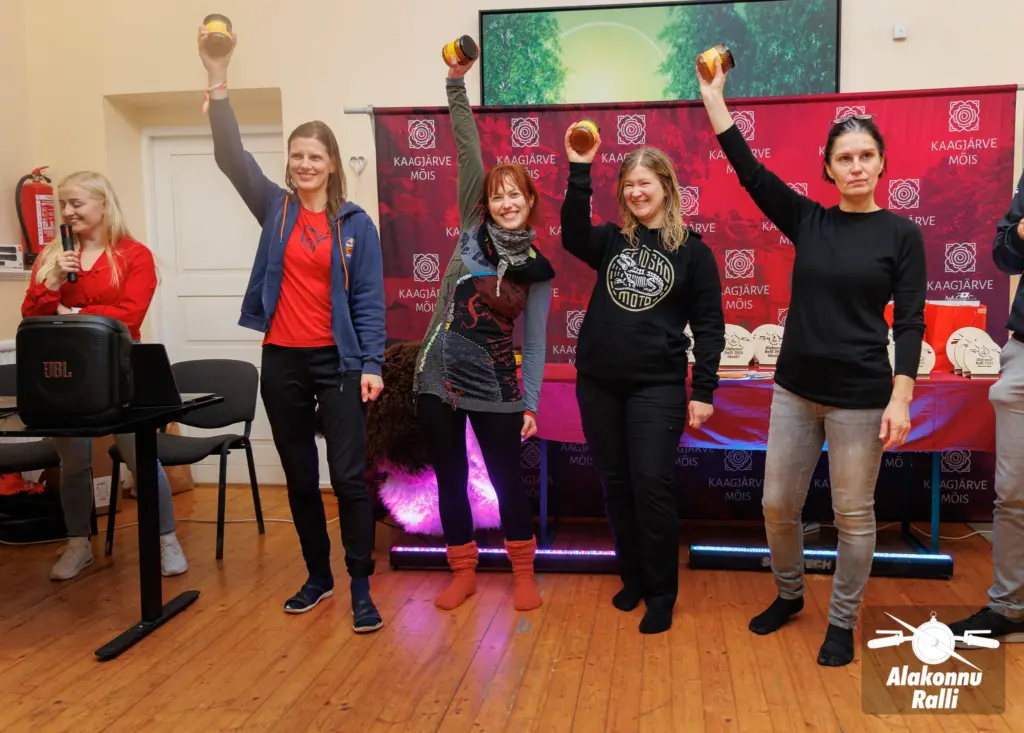
It was one of those evenings when the camaraderie mattered just as much as the results. Whatever their nationality, experience or finishing position, everyone shared something in common: the joy of riding motorcycles and the experiences of a couple of intense days in the Estonian forests.
More than just a competition
For the Swedish group, the weekend brought both challenges and memorable experiences. Unfortunately, things didn’t quite go to plan for everyone. Andreas Lilja crashed during Saturday morning’s stage and broke his collarbone. Despite his injury, he remained in good spirits and received help arranging transport home for both himself and his motorcycle.
Alakonnu Ralli delivered a weekend full of challenging riding, fantastic weather, beautiful scenery and unexpected encounters. And mosquitoes. An absolutely ridiculous number of mosquitoes. Some of the bites are still itching, just to remind me of my Estonian adventure..
Watch more footage from the rally: Arvo Meeks – Alakonnu Ralli 2026
Results – Alakonnu Ralli 2026
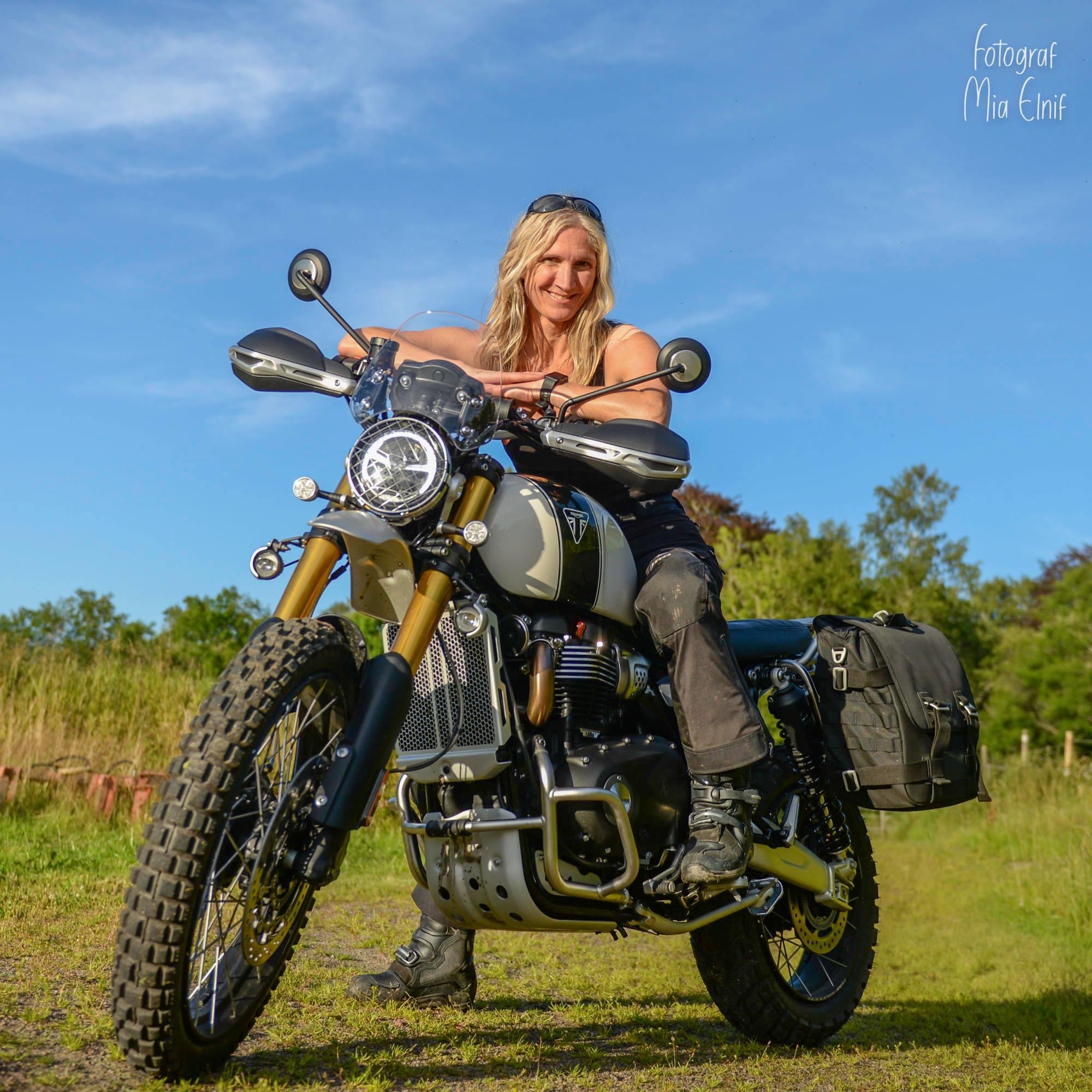
Anna Haglund