

Your first bike — how to get it right
This guide is divided into two parts. First, we walk you through the EU licence categories and which motorcycles are suitable for practising and taking your test on. Then we help you work out which type of bike suits you best.
The guide is intended to support you in buying a motorcycle — wherever you are in the journey. If you’re working towards your licence, there are technical details worth knowing, and hopefully you’ll find the answers here. If you already have your licence and are thinking about a new bike — same goes.
The motorcycles we highlight are examples — there are of course many more models out there that could suit you just as well or better. Take the suggestions as a starting point. And when all the boxes are ticked and every requirement is met — don’t forget that it’s also perfectly fine to choose a motorcycle simply because you love the look of it.
Part 1 — Licence categories and bikes to learn on
Across the EU, motorcycle licences are divided into three categories for two-wheeled motorcycles, defined by the Third Driving Licence Directive. Holding an A1 or A2 licence also entitles you to ride the vehicles covered by the AM category (mopeds).
When upgrading from A1 to A2, or from A2 to A, a new practical riding test is always required — but no new theory test. Whether mandatory safety training needs to be repeated depends on your country and when you took your original licence. Rules can change — always check current requirements with your national licensing authority before starting your upgrade.
A1 — Light motorcycle
Max 125 cc · Max 11 kW · From 16 years (may vary by country)
Requires a valid learner’s permit, mandatory safety training, theory test and practical riding test. Exact requirements vary by country — always check with your national licensing authority.
Requirements| Minimum age | 16 years (may vary by country) |
| Engine capacity | Max 125 cc |
| Power output | Max 11 kW |
| Power-to-weight ratio | Max 0.1 kW/kg |
A2 — Mid-range motorcycle
Max 35 kW · Max 0.2 kW/kg · From 18 years (may vary by country)
Requires a valid learner’s permit, mandatory safety training, theory test and practical riding test. If you already hold an A1 licence, only a practical test is required. A motorcycle whose original power output exceeds 70 kW cannot be used for A2, regardless of the restricted output. Requirements vary by country.
Requirements| Minimum age | 18 years (may vary by country) |
| Power output | Max 35 kW (47 bhp) |
| Power-to-weight ratio | Max 0.2 kW/kg |
| Original power (if restricted) | Max 70 kW |
Several popular models are A2-approved as standard. Others can be restricted — always verify with your dealer before your test.
A — Unrestricted motorcycle
No power limit · From 24 years, or 20 with two years on A2
When upgrading from A2, only a practical riding test is required — no new theory test. Direct access at 24 requires a full theory and practical test. The practical test must be conducted on a motorcycle of at least 50 kW and 595 cc. Requirements vary by country.
Requirements| Minimum age | 24 years, or 20 years with at least 2 years on A2 |
| Engine capacity & power | No restriction |
If you rode a restricted A2 motorcycle, you can now ride it in its original, unrestricted form — no need to change bikes.
As a general rule, it’s worth visiting different dealers and trying out various bikes — and ideally bringing someone along who can help you with your training rides. Choose a bike that’s easy to handle and suitable for your test — you can always upgrade later.
Part 2 — What type of bike suits you?
Once you’re standing there with your licence in hand — how do you choose the right motorcycle from all the options out there? The bike you passed your test on may not be the one you want to continue your journey with.
The answer doesn’t start with model names. It starts with you.
How do you plan to use your motorcycle? Short trips — commuting to work, popping to the shops, a quick ride out for an ice cream on a summer evening? Or are you thinking of riding to work every day, whatever the weather? Maybe you’re drawn to longer touring trips across Europe, with luggage packed and no rush to get anywhere. Or perhaps it’s the feel of a custom or cruiser that appeals — laid-back riding and a low seat. And for those who want to venture onto gravel roads and explore a bit further, there’s the ADV option.
There’s no right or wrong answer. But your answer will determine which type of motorcycle actually suits you.
New or used?
One question many new riders face is whether to buy new or used. There are arguments for both — but one thing often overlooked is that it’s now possible to buy a new motorcycle at a reasonable price, and many manufacturers offer warranties of up to five years.
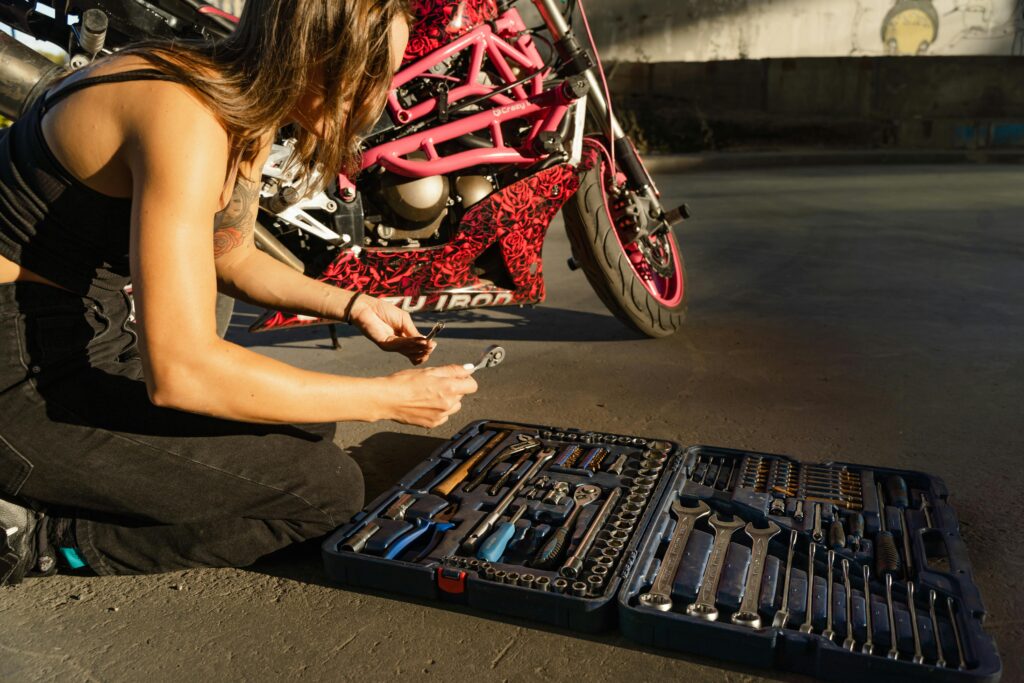
If you’re not used to working on bikes yourself, a new machine with a warranty may turn out to be the cheaper option in the long run. Unexpected repair costs on a used bike can quickly eat into any initial savings.
On the other hand, buying used often means you get more bike for your money — provided you know what to look for, or bring someone who does.
Don’t forget insurance
Before making your decision, check what your dream bike will cost to insure. It’s an expense that varies significantly between models and can have a major impact on your overall budget. A bike that seems affordable to buy can turn out to be expensive to own.
Find your category
Naked
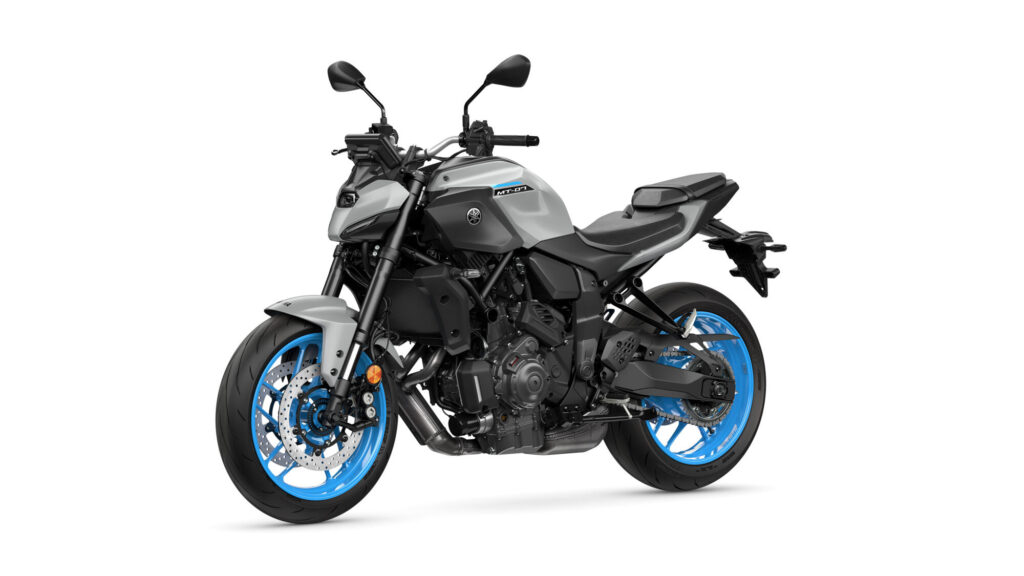
An upright riding position, neutral ergonomics and manageable weight make the naked category the most common recommendation for new riders. You sit naturally, have good visibility and maintain strong control at low speeds.
It works just as well for urban commuting as it does for weekend rides on country roads — and it’s that versatility that makes it so popular.
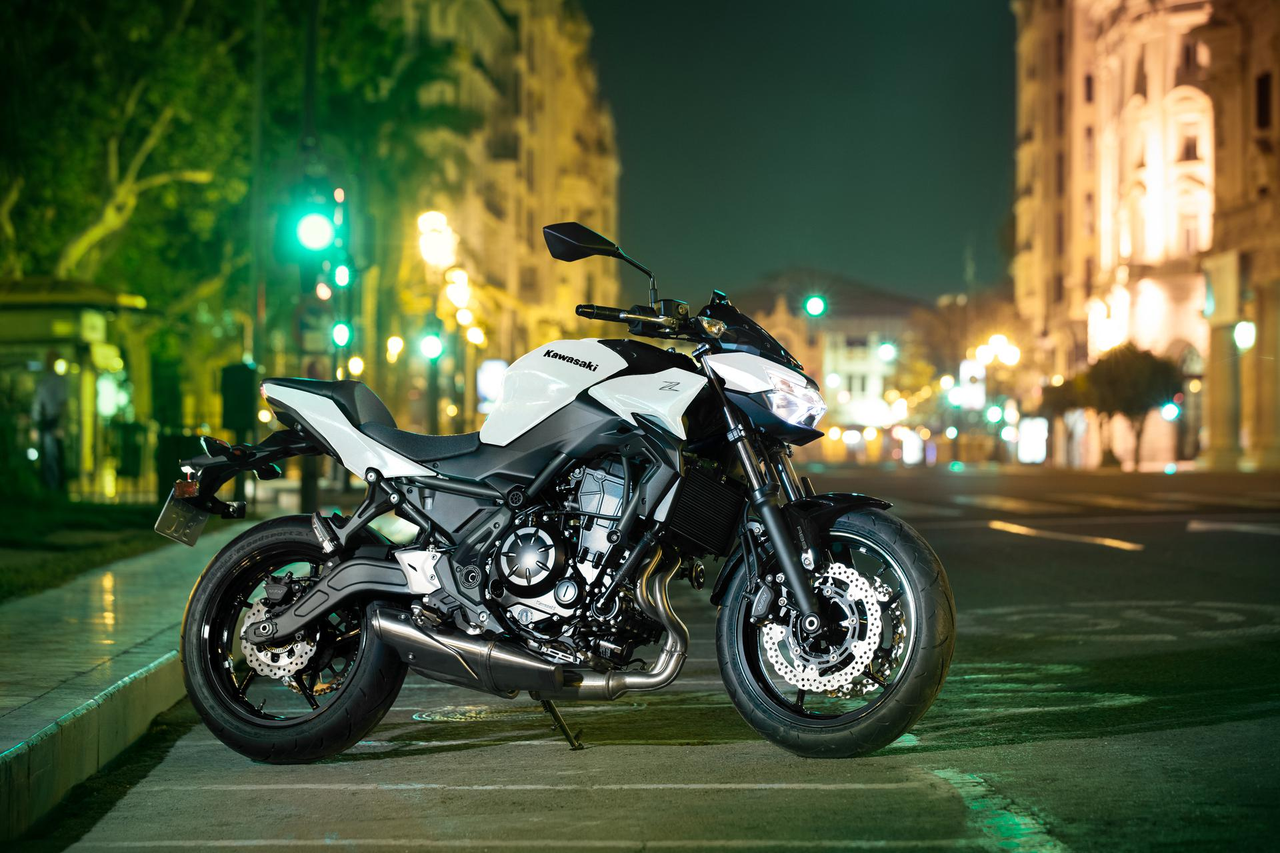
Popular choices: Yamaha MT-07, Kawasaki Z650, KTM 390 Duke, Honda CB500F
Cruiser — low seat, relaxed pace
Cruisers are defined by a low seating position, forward-set foot pegs and a laid-back riding style. The centre of gravity is low, which makes them surprisingly manageable despite their often large appearance. Ideal for riders who prefer a calmer pace and aren’t in a hurry to get anywhere.
— “I’m only 160 cm tall and really appreciate the low centre of gravity — it makes the bike easy to manoeuvre.” — Harley-Davidson Nightster owner
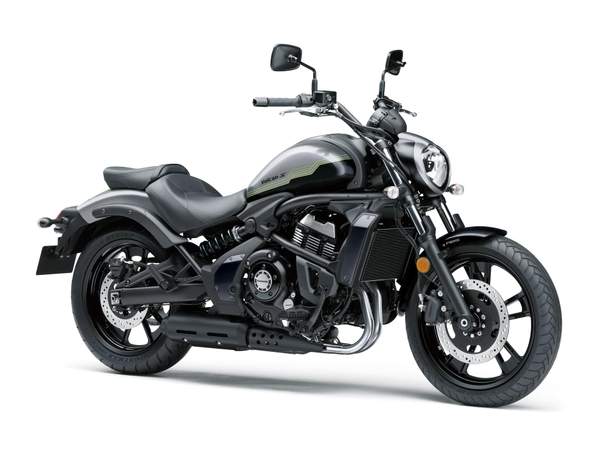
Popular choices: Honda Rebel 500, Kawasaki Vulcan S, Royal Enfield Meteor, Harley-Davidson Nightster
Lightweight sport
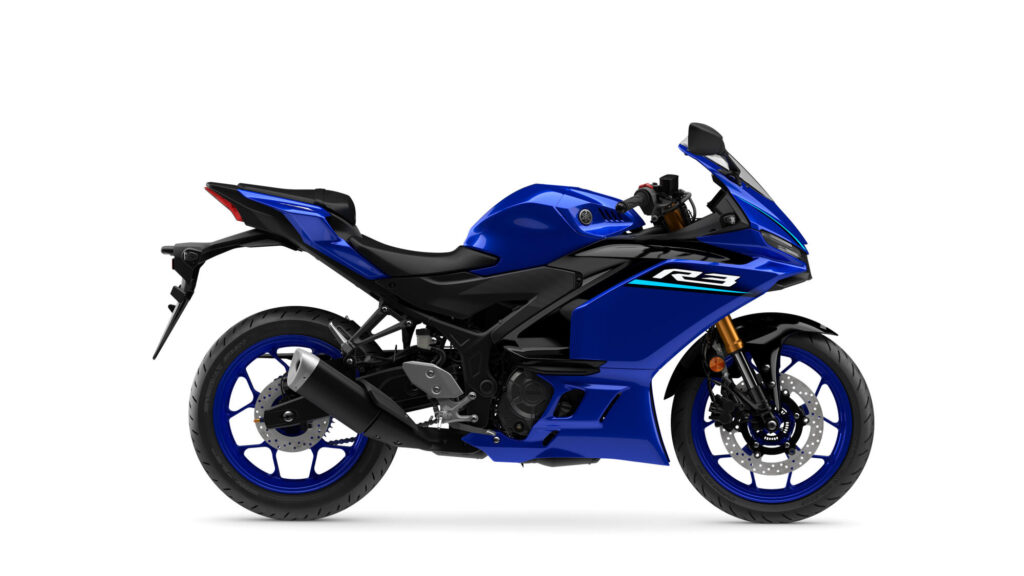
Fairings, a more aggressive riding position and a sharper feel — without the engine or weight becoming overwhelming.
Lightweight sport bikes suit riders who are drawn to the sporty character but still want something forgiving and manageable. Many in this category are also popular on track days for those looking to take things further.
Popular choices: Kawasaki Ninja 500, Yamaha R3, Honda CBR500R
Lightweight ADV / Dualsport
For those who don’t want to be limited to tarmac. ADV bikes are designed to handle both road riding and light off-road use, often featuring a more upright riding position and longer suspension travel than a typical naked bike.
Perfect if you want to combine everyday riding with a bit of weekend adventure.
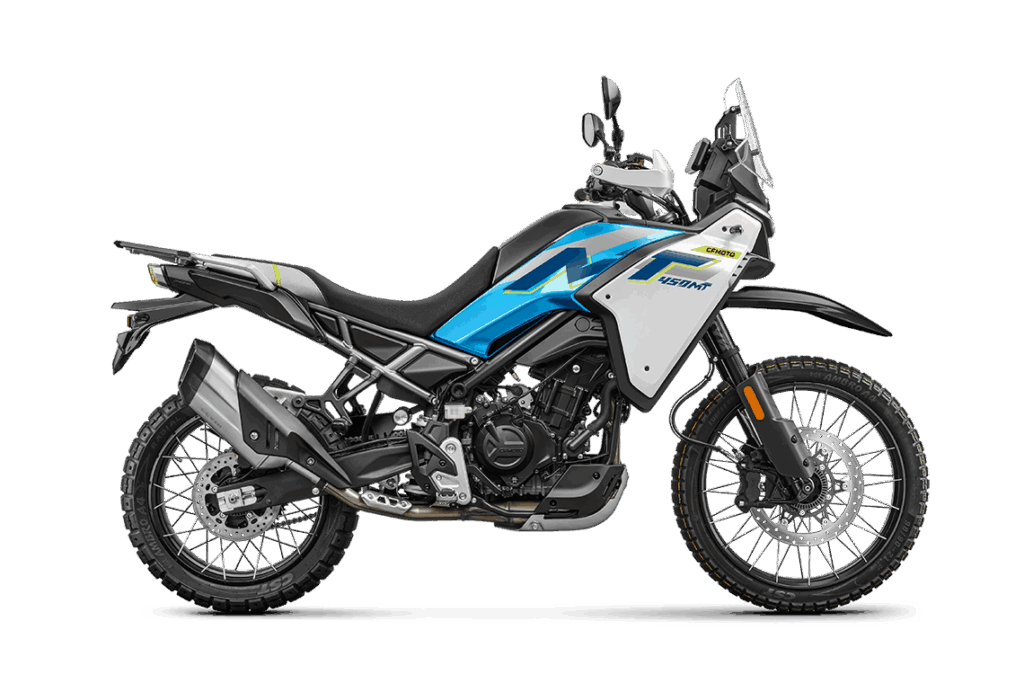
Popular choices: Royal Enfield Himalayan 450, KTM 390 Adventure, Honda CRF300L, CFMOTO 450MT
Seat height, fit and centre of gravity
It’s easy to get fixated on seat height when choosing a bike. But the number alone doesn’t tell the whole story. A bike with a low centre of gravity and a slim midsection is often easier to handle than a lighter bike with a higher centre of gravity.
That said, it’s something you get used to. The more you ride, the more confident you’ll feel on a taller bike — even if you can’t quite get both feet flat on the ground. Don’t let your height limit you; take the time to try different options and see what works for you.
| Inseam length (floor to crotch) | Recommended seat height |
| Under 76 cm | 66–71 cm |
| 76–81 cm | 71–76 cm |
| 81–86 cm | 76–80 cm |
| Over 86 cm | 80+ cm |
Always sit on the bike — don’t let the numbers decide. Seat shape and the bike’s centre of gravity both play a big part in how it feels. Many manufacturers offer low-seat options or lowering kits. Always try the bike wearing the boots you’ll actually ride in.
Hopefully, this guide has given you some direction — wherever you are on your motorcycling journey.
Anna Haglund