

Riding in Japan –
everything you need to know
A practical guide for anyone planning to ride a motorcycle in Japan. Based on real-world experience from a tour in April 2026.
Navigating traffic in Japan
Most people imagine the Japanese as orderly, rule-abiding folk – but that perception doesn’t always extend to the roads. Speed limits are set low: typically 40–50 km/h in towns, 50–80 (occasionally 100) on what we’d call dual carriageways or motorways, and rarely more than 40–50 on minor rural roads. Try to stick rigidly to these limits and you’re liable to get rear-ended.
Traffic routinely flows 15–20 km/h above the posted limit – sometimes more. Lorries are supposed to cap out at 80, just as in Sweden, but many are doing 90–110. Police do pull people over, though it feels rather like a lottery. As a foreign rider, it pays to be extra cautious – you stand out and attract attention.
Roads are packed with traffic lights; roundabouts are virtually non-existent. Don’t brake hard for amber – nobody stops until it turns red, even if the rules technically say otherwise.
Japan drives on the left. It’s easy to forget on mountain roads where you’re riding alone with no lane markings to guide you. Be especially alert after stops and fuel breaks.
Overtaking is prohibited on much of the road network where there’s only one lane in each direction – usually marked by a solid yellow line, sometimes combined with a sign. In practice the issue mainly arises when you find yourself behind a military or police vehicle. On mountain roads you’re often alone, and anyone you do catch up with will typically pull aside to let you past. Also bear in mind that vehicles can stop or park almost anywhere, including around blind bends – hazard lights are the usual warning.
Mandatory stops
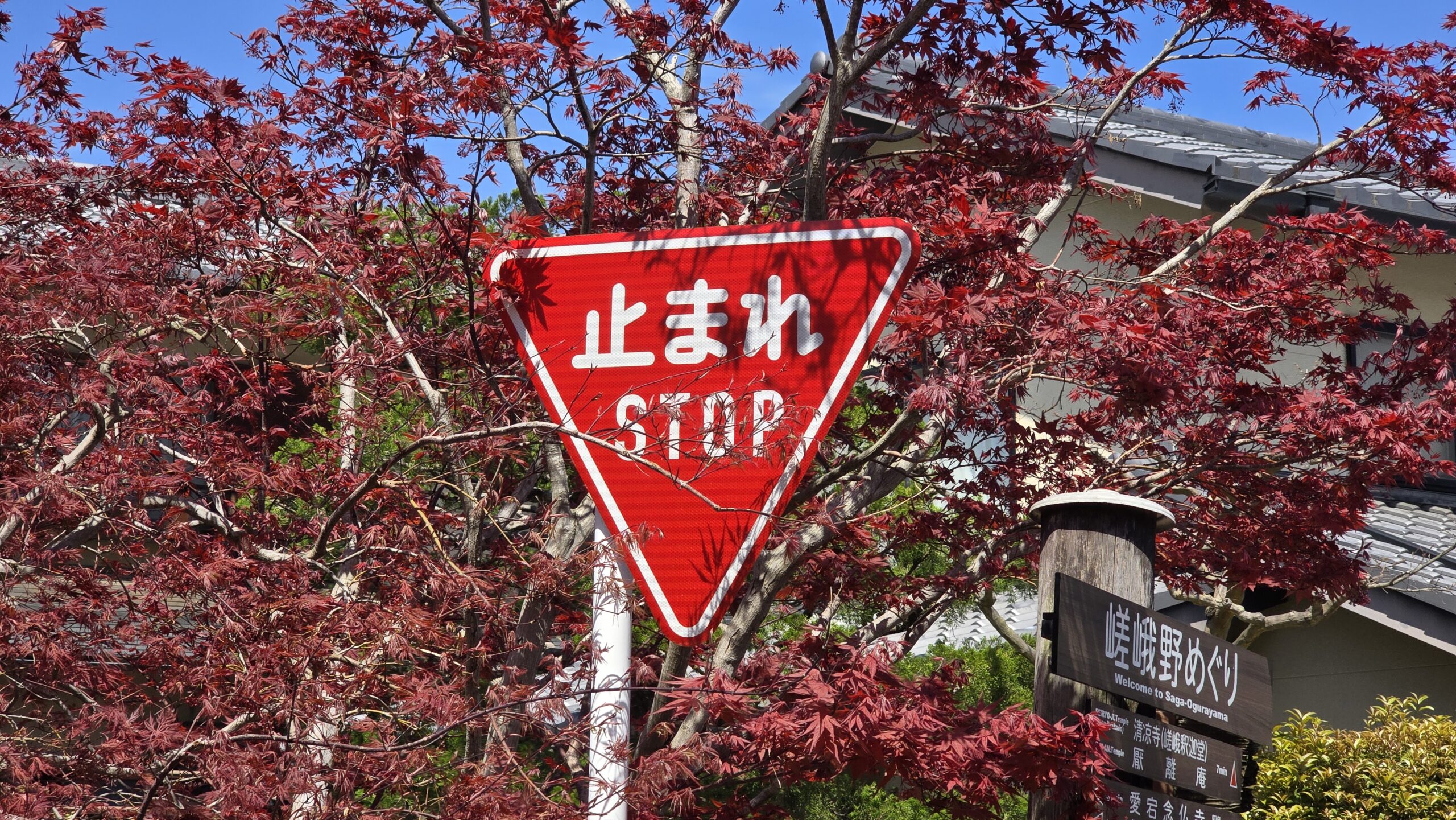
At a stop sign (a red inverted triangle) you must come to a complete standstill, regardless of whether there is any text on the sign. You must put your feet down. The same applies at every level crossing – with or without barriers – where a full stop and sight check are compulsory every single time.
Not everyone follows these rules, so brake early and make your intention clear to the vehicle behind. Failing to stop at a stop sign or level crossing will result in a fine if caught.
Daytime lights
In Japan it is recommended to ride with dipped headlights during the day, though many riders don’t bother. It’s also common to see vehicles travelling without lights in fog and poor weather – yet this is an absolute legal requirement in those conditions. During the tour, numerous lorries were spotted running without lights in rain and mist. Stay alert and don’t assume you’ll be seen.
Driver markings
Japan uses a system of vehicle stickers to highlight drivers who may need extra consideration on the road – both newly qualified motorists and elderly drivers.
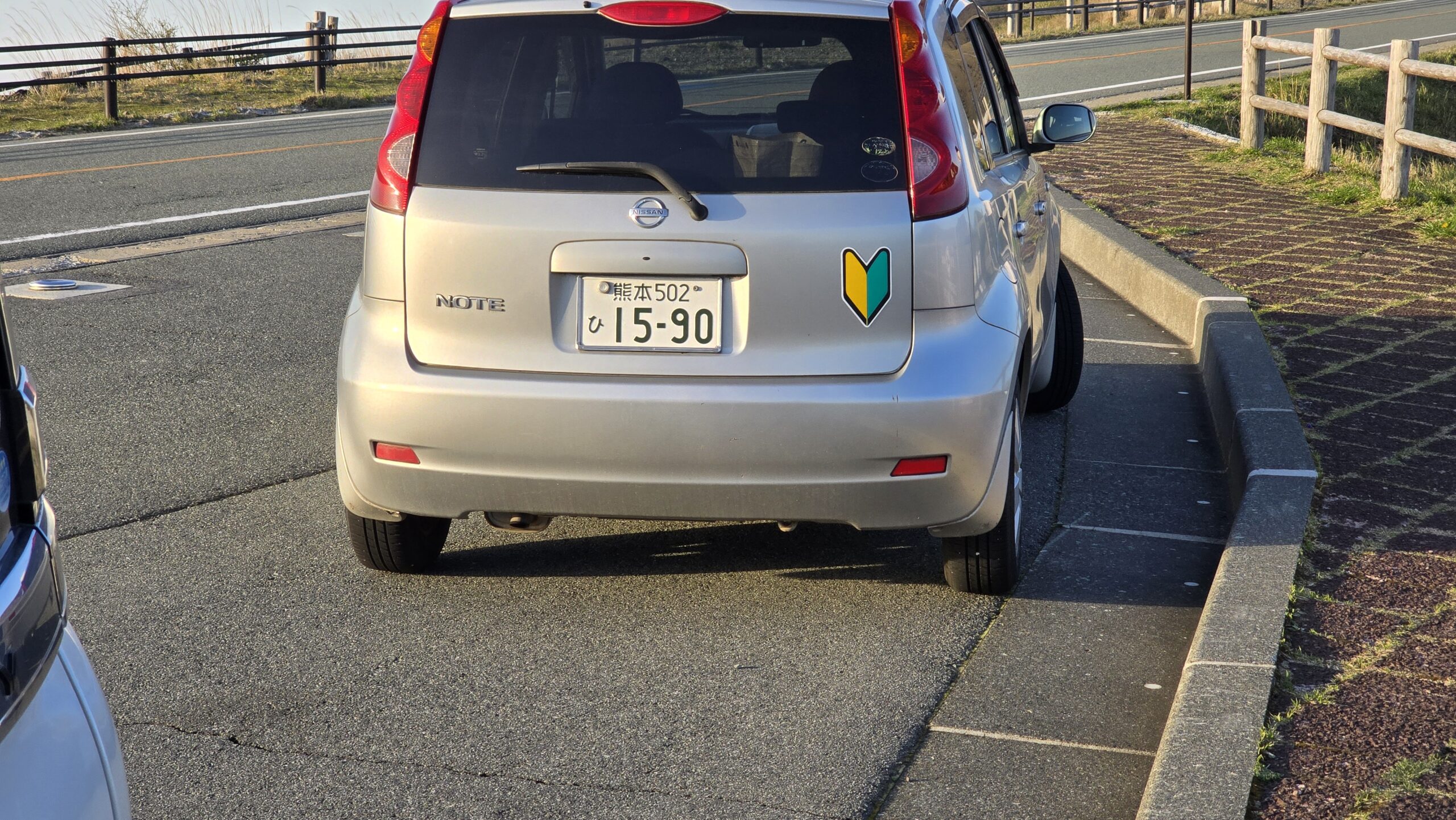
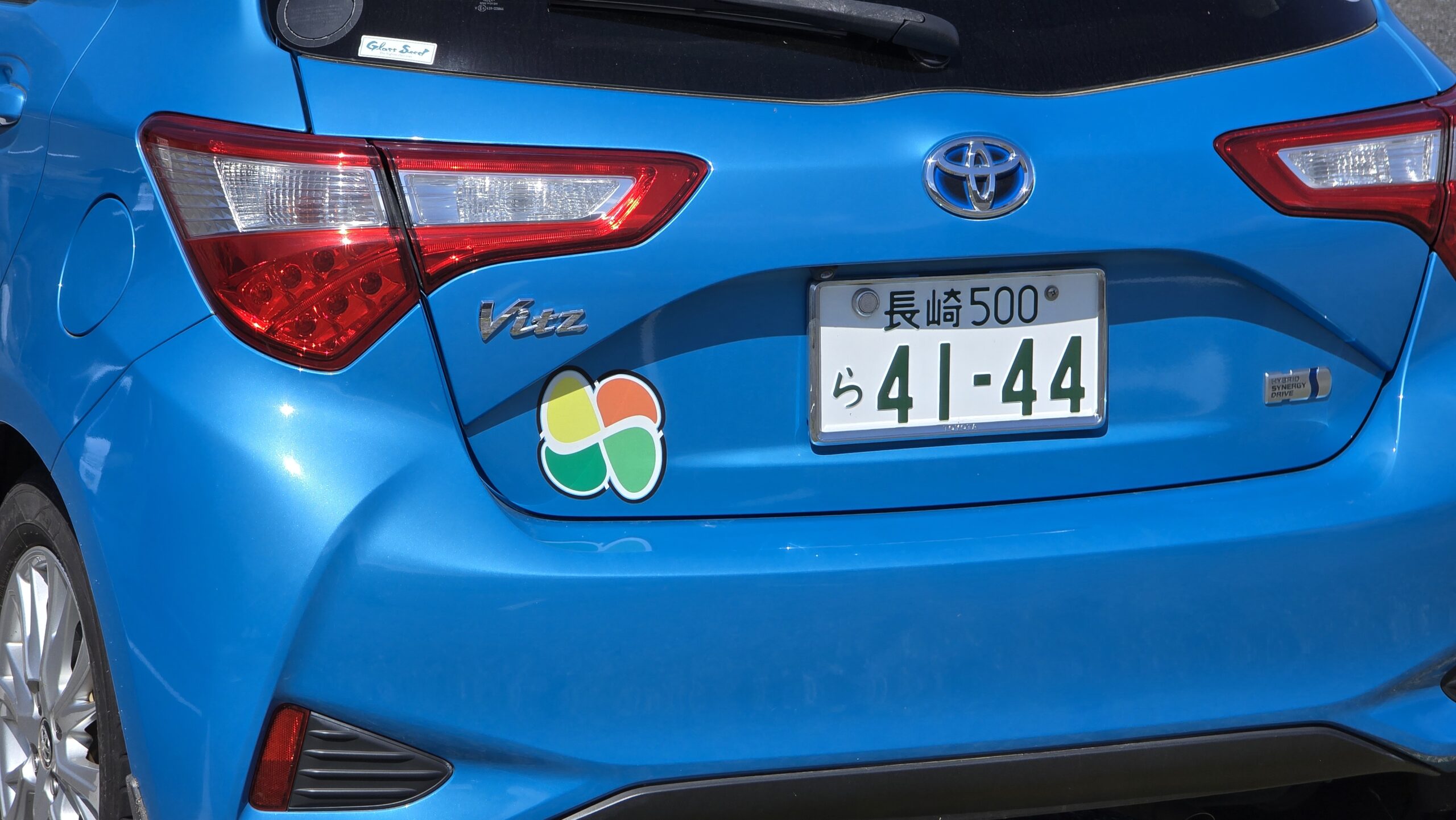
The system works well in a society where respect for older people runs deep. The new-driver sticker applies during the first year after passing the test – but not to motorcycles.
Fines – what will it cost you?
Most common fines fall between 500 and 1,500 SEK, though serious offences can push the figure considerably higher. The table below lists typical cases and approximate amounts based on the April 2026 exchange rate.
| Offence | Amount (SEK) |
|---|---|
| Speeding up to 20 km/h over the limit | 500–1,000 |
| Speeding 30–40 km/h over the limit | 1,800–2,400 |
| Serious speeding | up to 6,000+ |
| Running a red light | 400–1,200 |
| Using a mobile phone whilst riding | 400–1,200 |
| Minor parking violation | 400–1,200 |
ETC and toll roads
Most major expressways in Japan charge tolls via the ETC system. The simplest approach is to have an ETC card and reader fitted to the bike – everything is then handled automatically at each gantry. When hiring a bike, ask for an ETC card to be included. When you return the bike, you simply pay for the tolls you’ve used.
A week of riding with a fair amount of expressway use – mainly to cut through and bypass cities, and to cross a few major bridges – came to around 700 SEK in total. Without expressways through cities, progress can be painfully slow given the sheer number of traffic lights.
Note that small motorcycles under 125 cc are not permitted on expressways, and certain expressways in major cities such as Tokyo and Osaka are closed to motorcycles altogether. Restrictions on carrying a pillion passenger may also apply – worth checking in advance.
Parking
Motorcycles are not supposed to use car parking bays, and dedicated motorcycle spaces are usually marked where they exist. Outside cities this is rarely a problem – if there are plenty of empty car spaces, nobody tends to mind. In larger cities, competition for spaces is fiercer.
You can park among bicycles, which is one reason small bikes are so popular in city centres.
If you spot a bay marked “バイク” (Baiku), it’s a designated motorcycle space – you’re good to go.
Urban residents often park some distance from their home – be prepared to walk or take the metro to reach your space.
Hiring a bike
There is a good range of hire companies offering all sizes and classes of motorcycle. One of Japan’s largest is Rental819, with outlets across the country – Osaka alone has at least four. A Suzuki V-Strom 650 proved an excellent choice for the job: manageable in every respect. The hire cost came to around 6,000 SEK for a week, plus ETC charges.
To hire a motorcycle you will need an international driving permit issued under the 1949 Convention. There is also a 1969 Convention – that version is not valid in Japan. In Sweden, international permits can be obtained through Motormännen.
All the paperwork for the hire can be completed online from home before you travel, which makes the collection and return process quick and straightforward. Think carefully about where you pick up the bike in relation to where you’re headed – riding across a major city like Osaka can eat up a surprising amount of time.
Money and payments
Japan uses the yen – in April 2026, 100 JPY was roughly 6 SEK. Cash is accepted virtually everywhere. Most larger establishments also take cards, but foreign cards don’t always work reliably. The Japanese typically tap to pay, and that method can fail with overseas-issued cards.
Where possible, insert your card into the reader rather than tapping – it tends to be more reliable for foreign cards.
Always have cash on you to avoid getting stuck when a card payment fails.
If you’re using trains and the metro regularly, pick up a top-up transit card at the station and tap in at each journey.
A taxi journey of around an hour through Osaka (avoiding the expressway) came to approximately 450–500 SEK.
Fuel
Fuel is reasonably priced at between 9 and 11 SEK per litre. Petrol stations are plentiful in cities but thin out considerably in rural areas. Most stations close early – often by 18:00 or 19:00 – and there are no self-service card pumps available outside opening hours, which is something most visitors find unexpected.
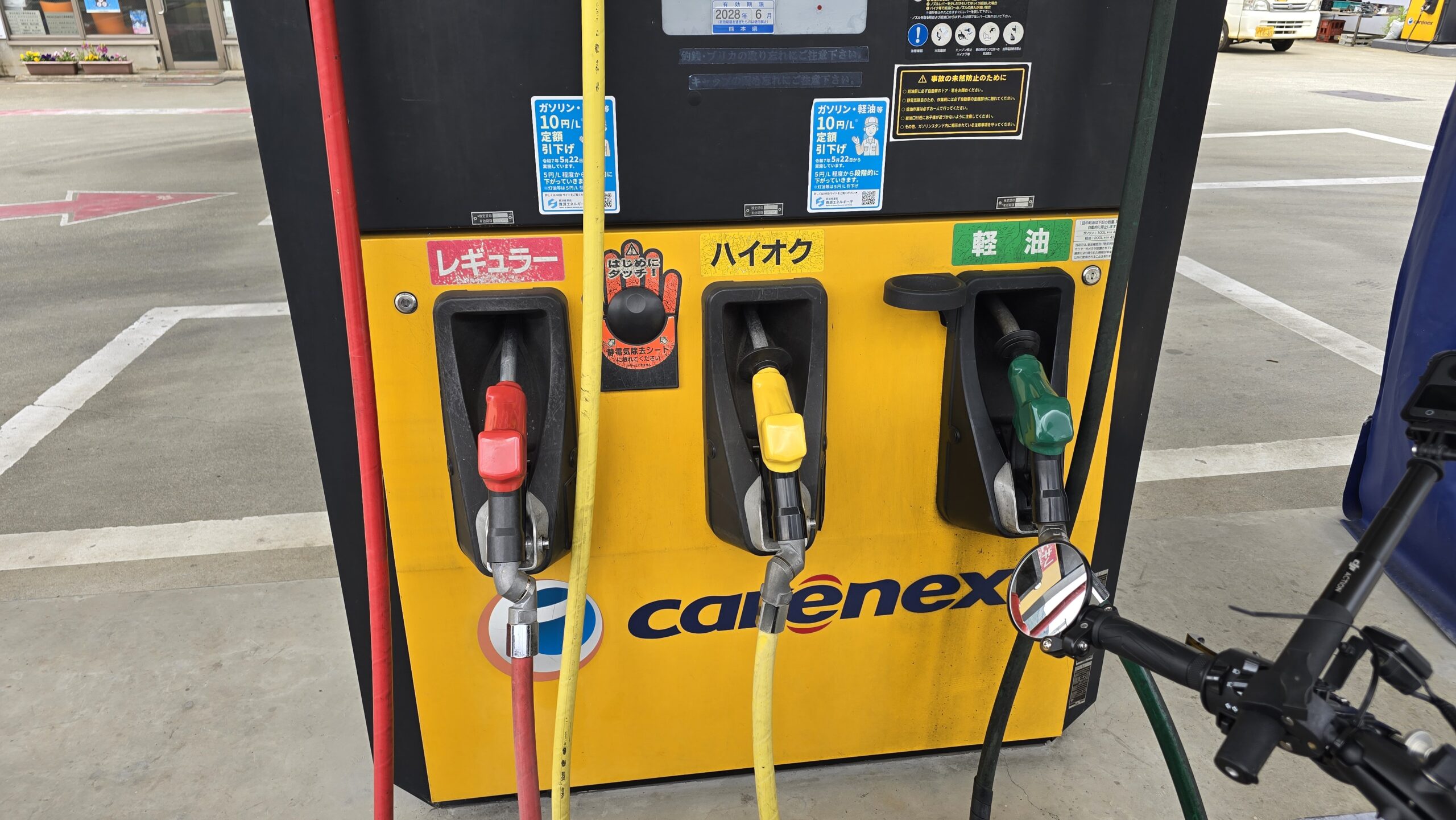
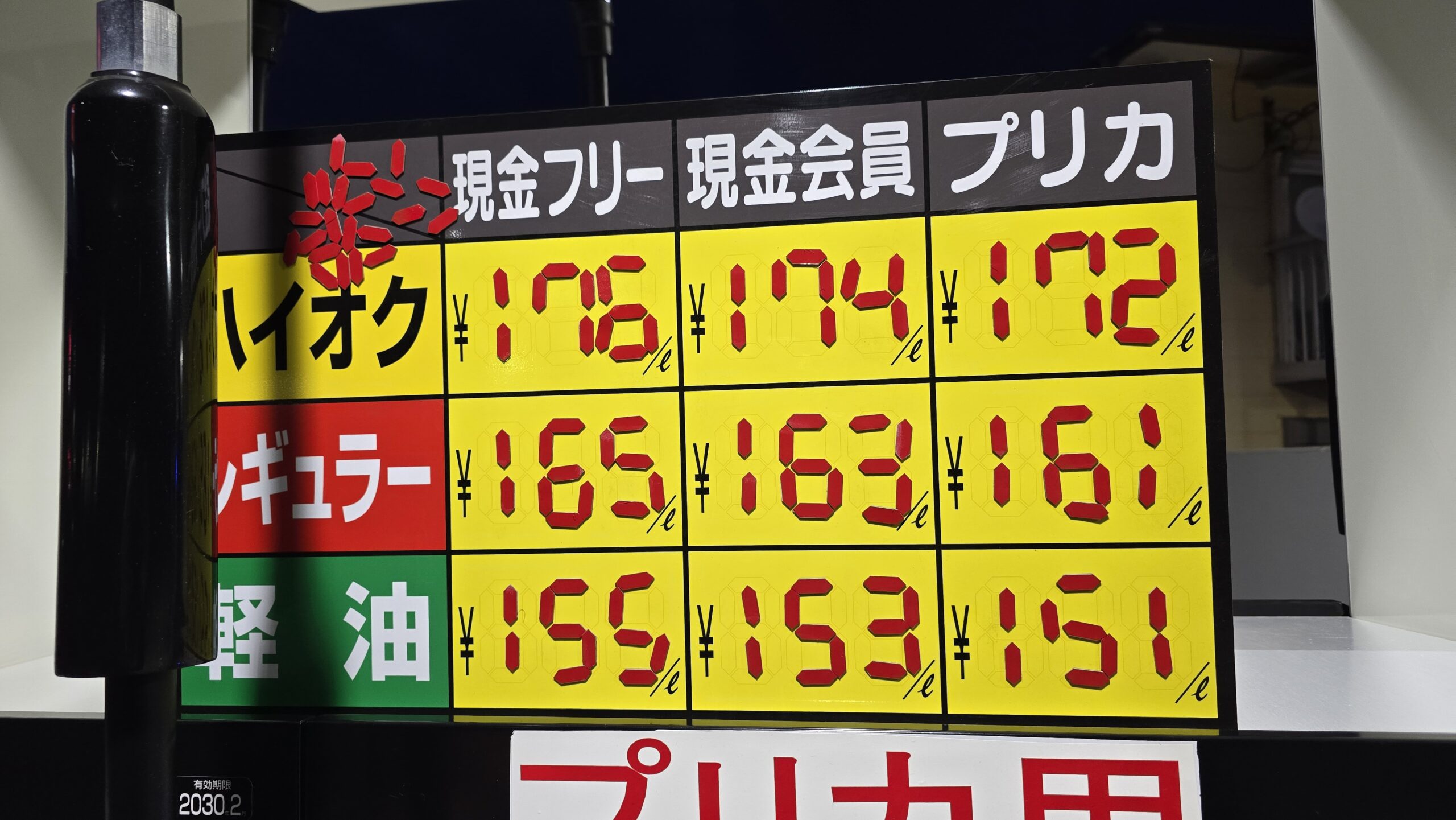
Red nozzle. Called レギュラー (Regyurā). Equivalent to 95-octane unleaded – the standard choice.
Yellow nozzle. Called ハイオク (Haioku).
Petrol stations are virtually non-existent in the mountains. Given how far you can travel without seeing civilisation, it’s worth planning ahead and topping up even when you don’t strictly need to.
Accommodation
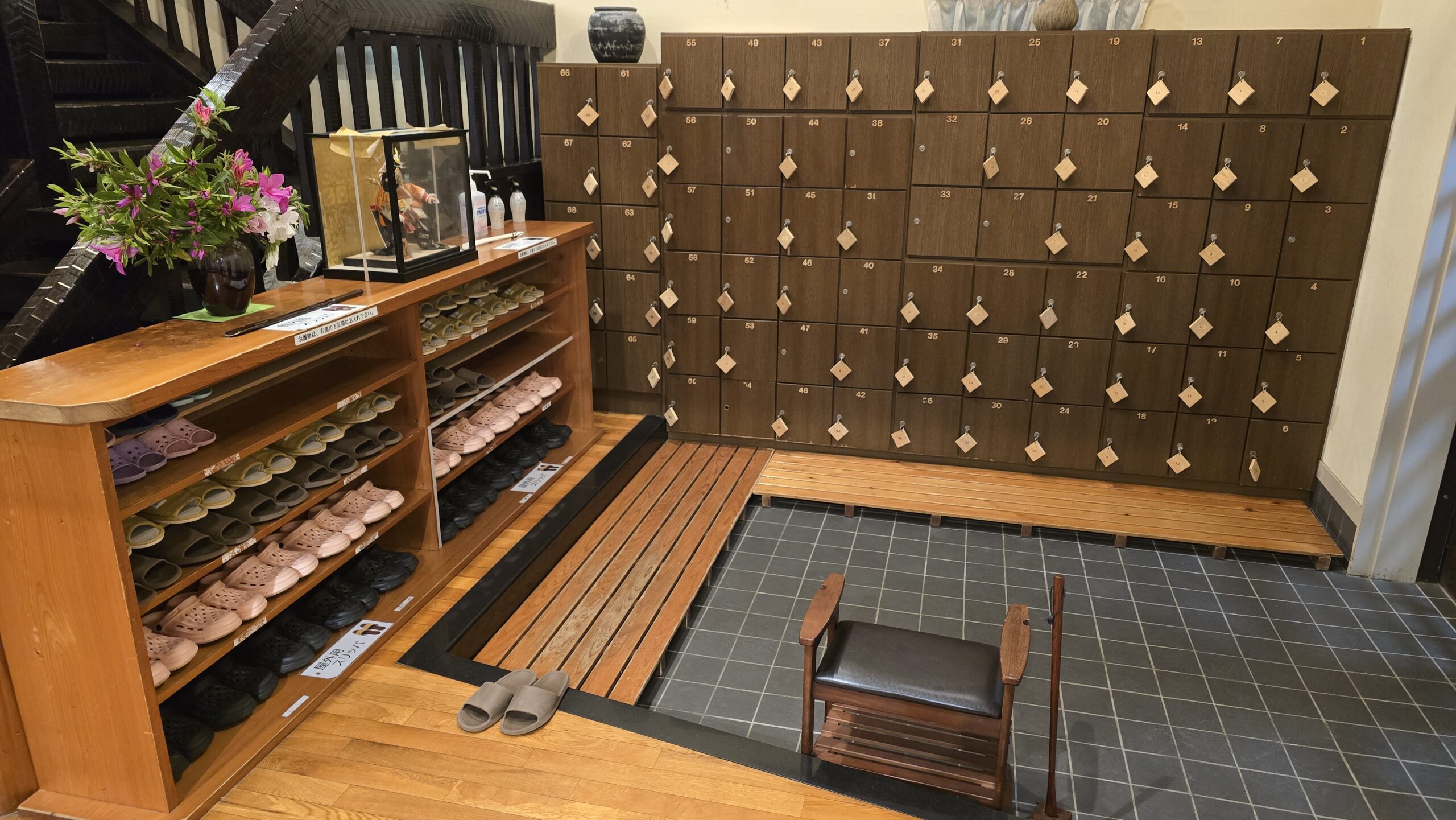
Hotels were the choice for this trip – so you don’t have to lug your own bedding and towels. Japanese hotels almost always include a toothbrush, shampoo, soap, a hairbrush, and a yukata or other clothes for visiting the baths.
The standard of accommodation varied. In the mountains we stayed in more traditionally Japanese style – which means sitting on the floor and unrolling a futon for the night. Harder than you might be used to; a simple inflatable camping mat kept the hips happy. Pillows are often rock-hard and filled with something grain-like – an inflatable camping pillow is a smart addition to the packing list.
In cities, rooms were often Japanese-inspired but with a sprung mattress directly on the floor – sometimes on a slightly raised platform. There was usually both a firm and a soft pillow to choose from.
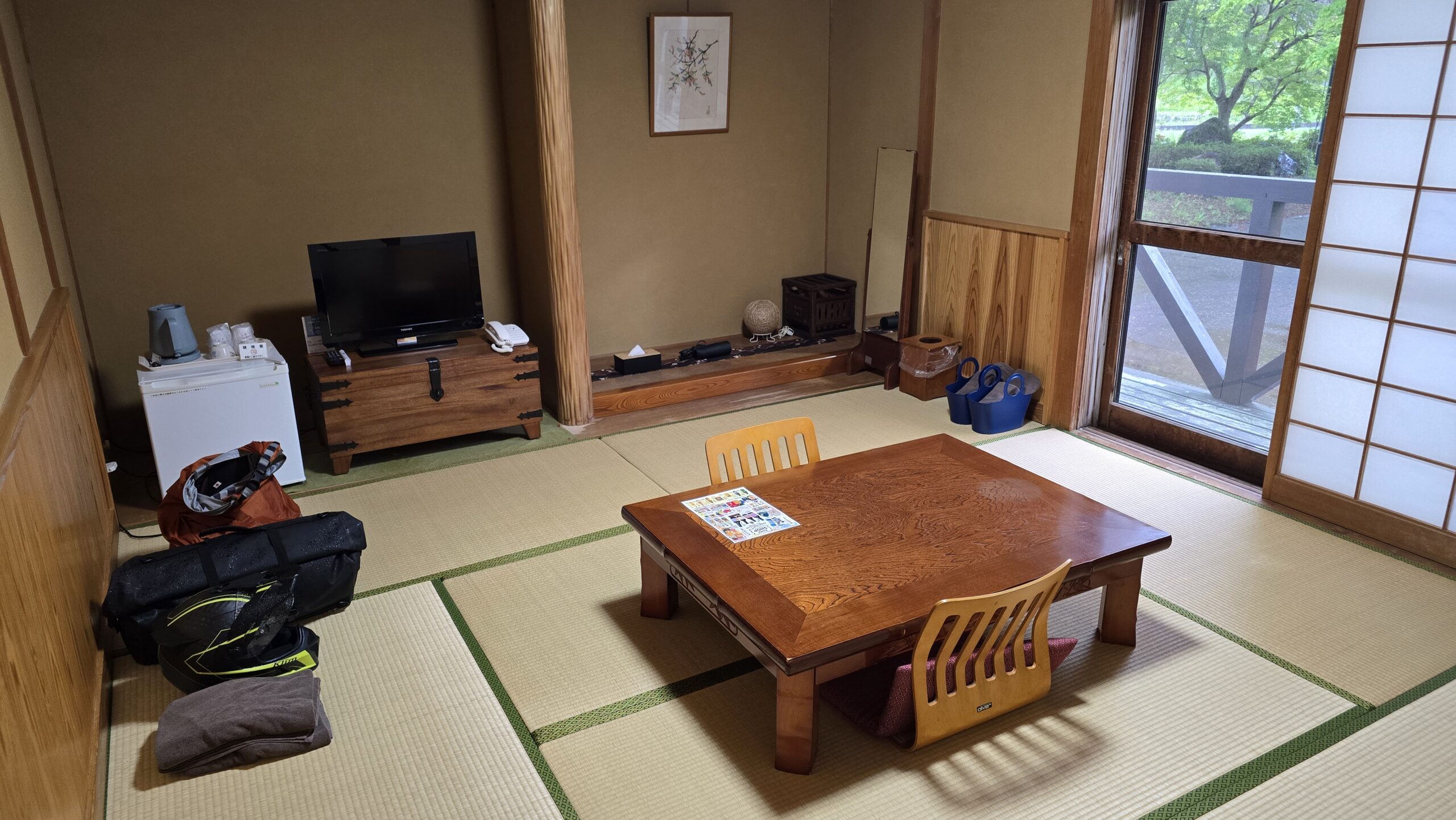
In traditionally Japanese establishments, outdoor shoes are left at the door and you wear the slippers provided. In the most traditional hotels, shoes come off in the entrance lobby. There are separate slippers for the bathroom and for the toilet – and woe betide you if you forget to swap back when leaving the loo. When visiting Japanese temples, remove your shoes before stepping onto the interior wooden floor.