

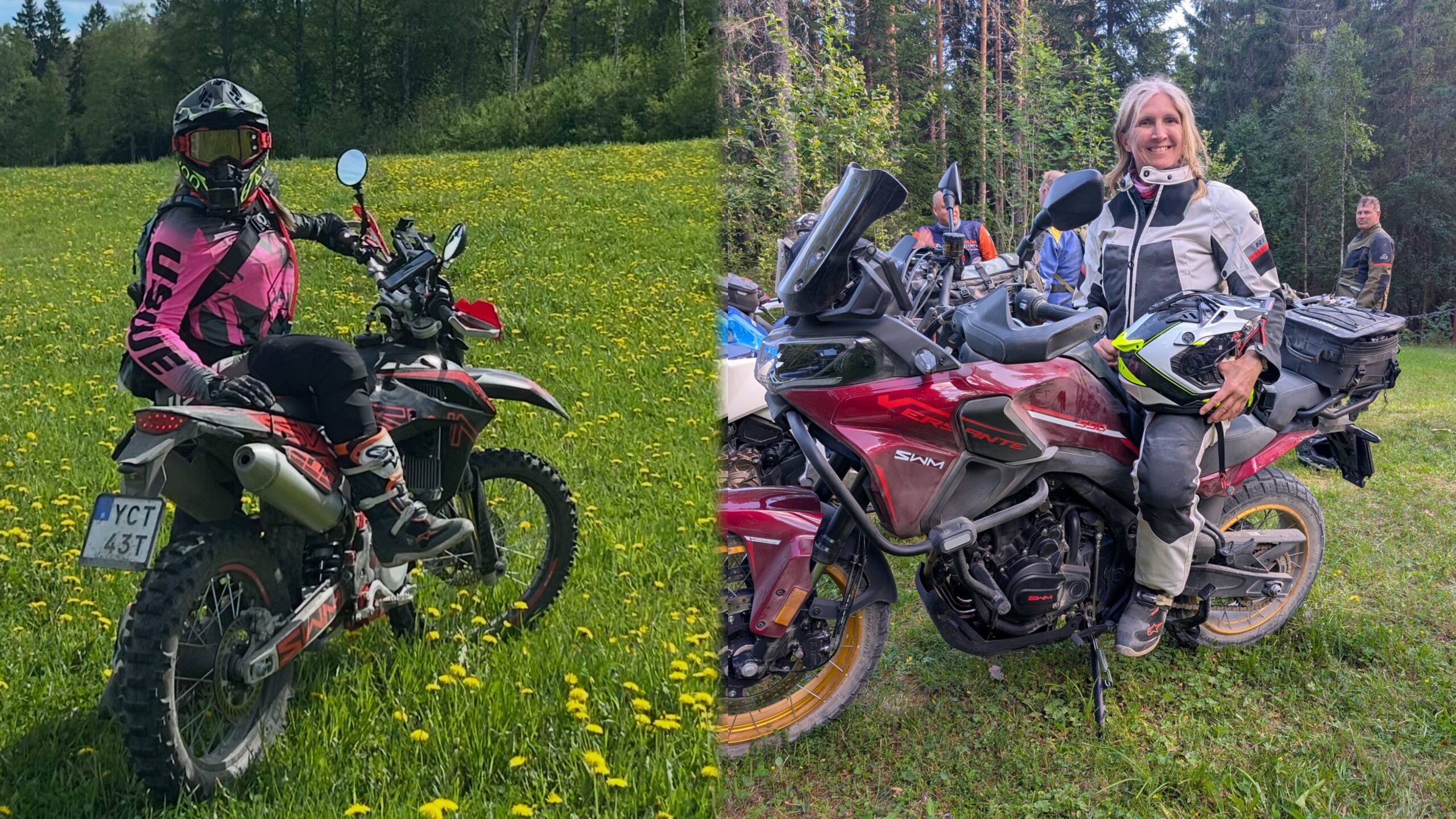
SWM RS 500 R and Versante 550 – different characters, same brand
A brand with a long off-road history
SWM may not be a name every rider is familiar with, but behind those three letters lies more than fifty years of motorcycle history.
The brand was founded in northern Italy in 1971 by Piero Sironi and Fausto Vergani, two riders with a shared passion for off-road riding. SWM quickly became known for its enduro, motocross and trial machines, building a strong reputation in off-road competition throughout the 1970s.
The name has its roots in the founders’ names and the place where the company began: Sironi, Vergani, Vimercate and Milano. The original designation was SVVM, but this was later simplified to SWM to work better internationally. Over the years, the letters have also been interpreted as Speedy Working Motors, a description that captures the spirit of the brand just as well as the original name.
As the market changed during the 1980s, SWM eventually disappeared from the scene. But in 2014, the brand was revived, this time led by Italian engineer Ampelio Macchi, whose background includes Cagiva, Husqvarna and Aprilia, with financial backing from the Chinese Shineray Group.
Production was established in Biandronno in northern Italy, at the factory previously used by Husqvarna.
And perhaps it is precisely SWM’s background that makes the combination of the RS 500 R and Versante 550 so interesting. One sits close to the brand’s traditional off-road roots, while the other represents a broader and more modern adventure direction. The same logo on the tank, but two very different ideas of what a good day on a motorcycle can look like.
The roads and the tyres
I rode both bikes with Nora as my starting point, a couple of months apart. I tested the RS 500 R over a weekend in May, covering around 450 kilometres in varied terrain: gravel roads of every kind, from fast and open sections to technical trails, sand and some properly rough going.
I rode the Versante on similar roads, covering around 300 kilometres on gravel, with a few additional miles on twisty tarmac.
The difference in character between the two bikes is clear. But it is not simply down to the engine, weight and chassis. The tyres also reinforce their different focus. The RS 500 R was running Michelin Enduro Medium tyres, with a coarse tread pattern and substantial knobs, while the Versante was fitted with Pirelli Scorpion Rally STRs, a more versatile adventure tyre designed to work on both gravel and tarmac.
SWM RS 500 R
At heart, the RS 500 R feels every bit like an enduro bike. I have never ridden one of the larger-capacity Husqvarnas of old, but somehow I imagine that those who have may recognise something familiar here.
This 500cc single has plenty of power, particularly lower down the rev range. It is the strong low-end torque that makes it so much fun to ride.
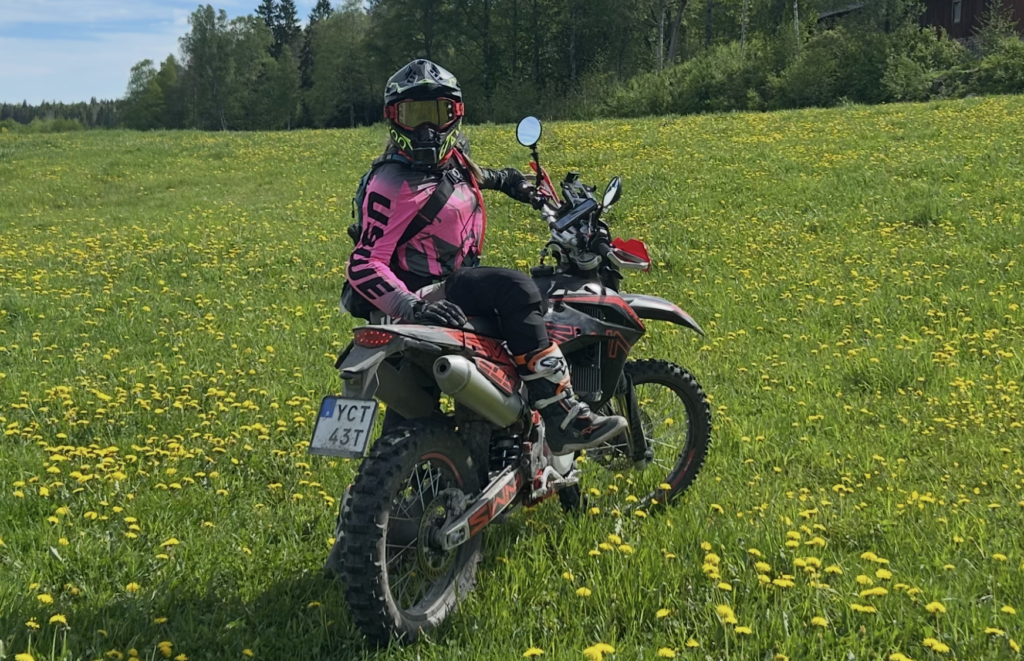
Twist the throttle and it simply puts a smile on your face. The engine responds immediately and the bike feels lively and playful. As the terrain becomes more technical, the RS 500 R seems even more at home.
The 2026 RS 500 R has a seat height of 955 mm, so this is certainly not a low motorcycle. I noticed that more and more as the day went on. For riders who would prefer to be a little closer to the ground, a lowering kit is available that reduces the height by 4.5 cm.
At first, swinging a leg over was no great problem, but as the hours passed and tiredness began to creep in, it became increasingly like a small gymnastics exercise. Once I was on the bike, however, the height was far less of an issue.
Pure riding pleasure
The motorcycle weighs around 137 kg ready to ride, and that relatively low weight makes it feel nimble and easy to manage even if you cannot get both feet perfectly flat on the ground.
I did, however, need to fold the side stand away before getting onto the bike. Once seated, I simply could not reach down far enough to kick it up.
Sand, stones, narrow forest tracks and more technical sections never became much of a problem. Or rather, those were the sections where I had the most fun.
I thought the suspension worked well, and it can be adjusted both front and rear if needed.
The Brembo brakes front and rear felt good. The clutch and brake levers were comfortable and protected by substantial handguards with aluminium braces. The mirrors are foldable and can easily be moved out of the way when required.
One thing I did notice was that I sometimes wanted to be able to hold onto each gear for a little longer. Whether that comes down to the gearing or the engine mapping, I would not want to say.
Perhaps the best compliment I can give it is that I found it rather difficult to hand back at the end of the weekend. This is a genuinely fun motorcycle at a sensible price.
Versante 550
The Versante 550 takes you into a completely different world. This is no longer a bike optimised for technical terrain, but a crossover built for covering distance, with a pleasant twin-cylinder engine that willingly coped with the occasionally demanding riding I put it through.
The 494cc parallel twin has a smooth, progressive throttle response and delivers its power in a much calmer manner than the RS 500 R. It does not have the same strong low-down punch and does not feel as explosive when you open the throttle.
But that does not mean it lacks pace or riding enjoyment. It is simply different.
On the wider gravel roads, the Versante feels very stable and reassuring. It flows nicely through the bends, is easy to place and the smooth throttle response makes it easy to maintain a steady pace.
When the going gets tougher
As the terrain became more technical, the differences between the bikes became more obvious.
The Versante went everywhere I asked it to go, but I had to work considerably harder than on the RS 500 R. This is a larger and heavier motorcycle, yet surprisingly nimble for its 200 kg.
Conditions were dry, which meant the Versante’s tyres worked well even when we left the wider gravel roads behind.
Had it been wet, muddy or particularly loose, I would have preferred a more off-road-focused tyre.
With a seat height of 81 cm, it is neither particularly tall nor particularly low for my 172 cm height, but it was reassuring to be able to remain seated and paddle the bike backwards when necessary. I could get a reasonable amount of both feet onto the ground.
It may sound like a small detail, but being able to move the bike forwards or backwards without having to get off makes quite a difference.
Twisty tarmac
It was on twisty tarmac that the Versante 550 really surprised me. It feels stable yet easy to manage.
It does not merely cope with tarmac. It enjoys it.
After a few miles on winding roads, that was probably the side of the Versante that stayed with me most.
The Versante has two riding modes, Normal and Sport, but no dedicated off-road mode. I rode in Sport throughout the test. After all, there is nothing wrong with keeping things a little sporty in the forest too.
The traction control was easy to switch off when I wanted a little more freedom on the gravel. The ABS, however, required a bit more fiddling and was not quite as intuitive to operate. It is not a major criticism, but a dedicated off-road mode that grouped the relevant settings together would have made the bike even easier to adapt as the surface changed.
Stefan’s impressions: 450 kilometres on the road
Stefan Lundin, who writes for the Swedish Armed Forces’ magazine, rode the Versante 550 for around 450 kilometres on tarmac, with a short stretch of gravel.
The first thing that strikes me is how light and nimble the Versante 550 feels. It quickly inspires confidence and requires very little time to get used to. The chassis feels stable and the suspension works calmly and predictably, whether the road offers fast bends or uneven surfaces. The engine is happiest when it is allowed to work a little higher up the rev range. As a result, the rider needs to make slightly more use of the gearbox than on larger adventure motorcycles, but it quickly becomes a natural part of the riding experience.
On the road, the Versante 550 feels very much at home. The chassis is reassuring, the brakes offer good feel and the suspension leaves little to be desired.At 183 centimetres tall, I quickly found a comfortable riding position. If I were to change anything, I would probably position the footpegs two or three centimetres lower. That would create a slightly more open knee angle and provide even greater comfort on really long rides. Otherwise, the ergonomics feel well thought out and natural, with a riding position that works equally well for everyday commuting and longer adventures.
Two different characters
What makes riding these two motorcycles in such similar conditions particularly interesting is just how clearly their different personalities emerge.
The RS 500 R is the more uncompromising of the two. Light, tall and lively, with an engine that constantly makes you want to keep going.
The Versante 550 is considerably calmer and broader in its range of use. It feels stable, smooth and easy to ride on gravel, while also revealing a particularly enjoyable side when the tarmac begins to twist and turn.
So these are not really two motorcycles that need to be placed head-to-head in an attempt to decide which one is best.
The real question is what kind of riding you are looking for. If you want the forest road to become narrower, rockier and more challenging, the RS 500 R is the more natural choice.
If you want to spend most of the day on gravel, continue onto twisty tarmac and still have a motorcycle that is comfortable and easy to live with, the Versante 550 is much more at home.
The same brand, two completely different characters, and two good examples of just how broad SWM’s range has become.
Specs: SWM RS 500 R
| Engine | Single-cylinder, four-stroke, liquid-cooled |
| Displacement | 501cc |
| Power | 32hp / (51hp unrestricted) |
| Fuel system | Mikuni electronic fuel injection |
| Gearbox | 6-speed |
| Front suspension | Adjustable KYB USD forks, 48mm |
| Rear suspension | Adjustable KYB monoshock |
| Wheels | 21in front / 18in rear |
| Fuel tank | approx. 7.5 litres |
| Kerb weight | approx. 137kg |
| Seat height | 955mm (lowering kit available, giving a 4.5cm reduction) |
| Tyres | Michelin Enduro Medium |
| Price | 89,900 SEK |
Specs: SWM Versante 550
| Engine | Liquid-cooled parallel twin |
| Displacement | 494cc |
| Power | 35kW |
| Torque | 45Nm |
| Gearbox | 6-speed |
| Front suspension | Adjustable KYB |
| Rear suspension | Adjustable KYB |
| ABS | Switchable |
| Traction control | Yes |
| Wheels | 19in front / 17in rear |
| Fuel tank | 19 litres |
| Seat height | 810mm |
| Dry weight | under 210kg |
| Tyres | Pirelli Scorpion Rally STR |
| Other equipment | TFT display, Bluetooth, navigation mirroring, USB, tyre pressure monitoring, engine guards, centre stand, luggage rack, front camera, blind-spot warning, 12V charger |
| Price | 79,900 SEK |
Anna Haglund