

Ränneslättsloppet at 40: Sun, Rain and Mud
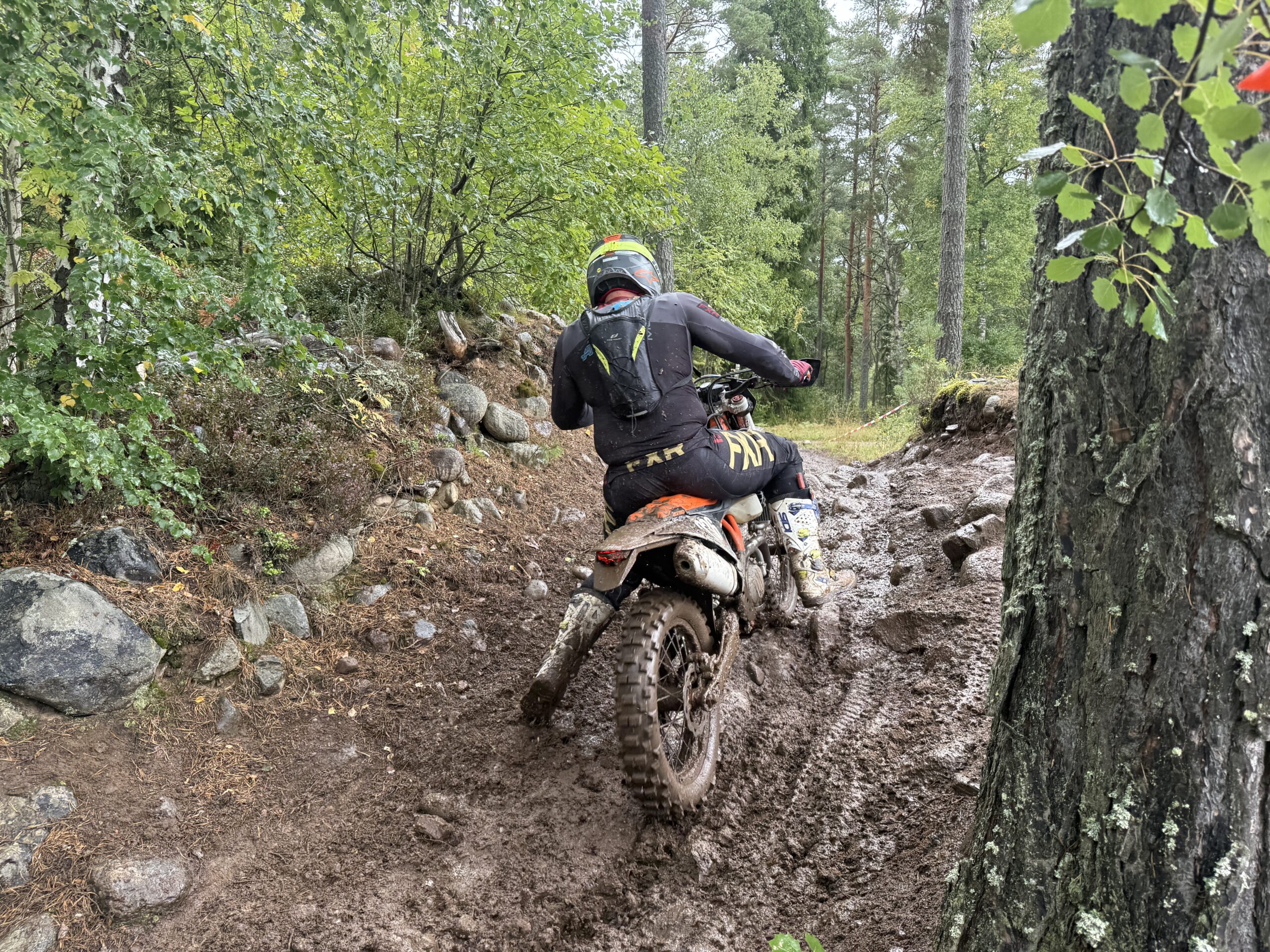
Ränneslättsloppet is one of Sweden’s classic enduro races and is held at Ränneslätt, just outside Eksjö. This year, more than 1,200 riders were entered in the event.
The course is around 20 kilometres long and is known for being both technically demanding and physically tough. Rocks, climbs and forest sections give riders very few real opportunities to rest. Ahead of this year’s race, the organisers had adjusted and prepared certain sections of the course to make them slightly easier to ride.
From a fine morning to pouring rain
Saturday’s first start got under way at 08:00, with the Veteran, Military, Electric and Adventure classes. The early riders had good conditions, and some described the course as both fast and one of the best they had ridden.
When the 50+ Amateur class started at 10:15, the weather was still good for most of the race. It was only towards the end that the rain began to make itself felt.
After that, conditions started to change. The Women’s Amateur and 40–49 Amateur classes started at 13:30, and the showers became increasingly frequent during the afternoon.
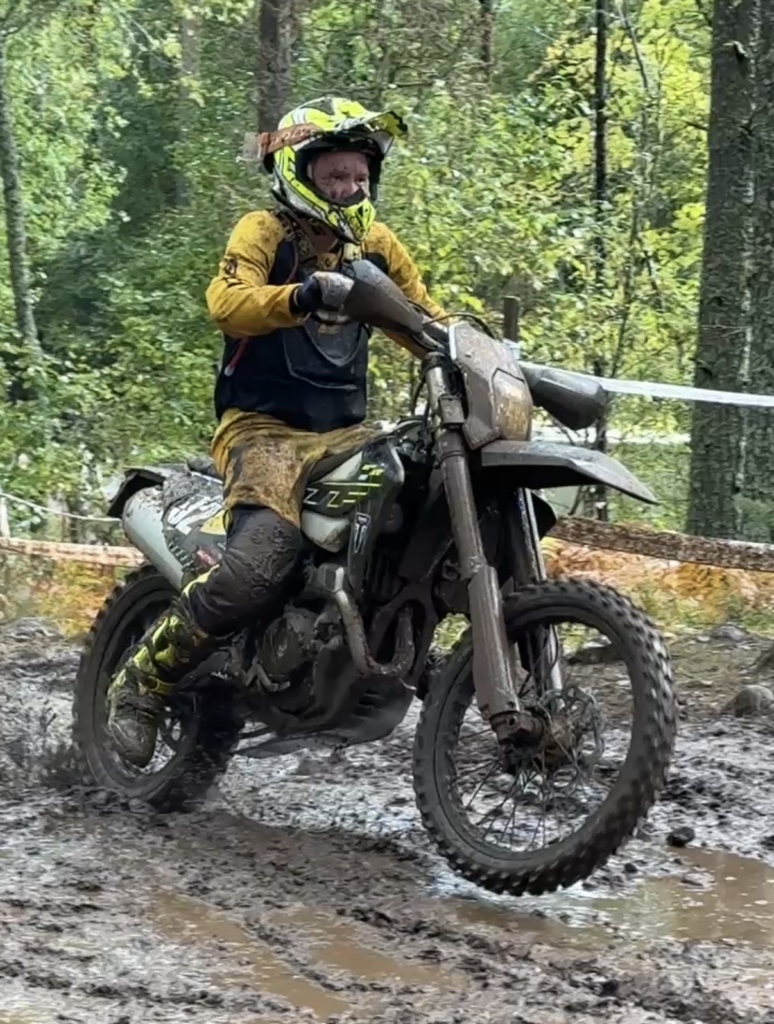
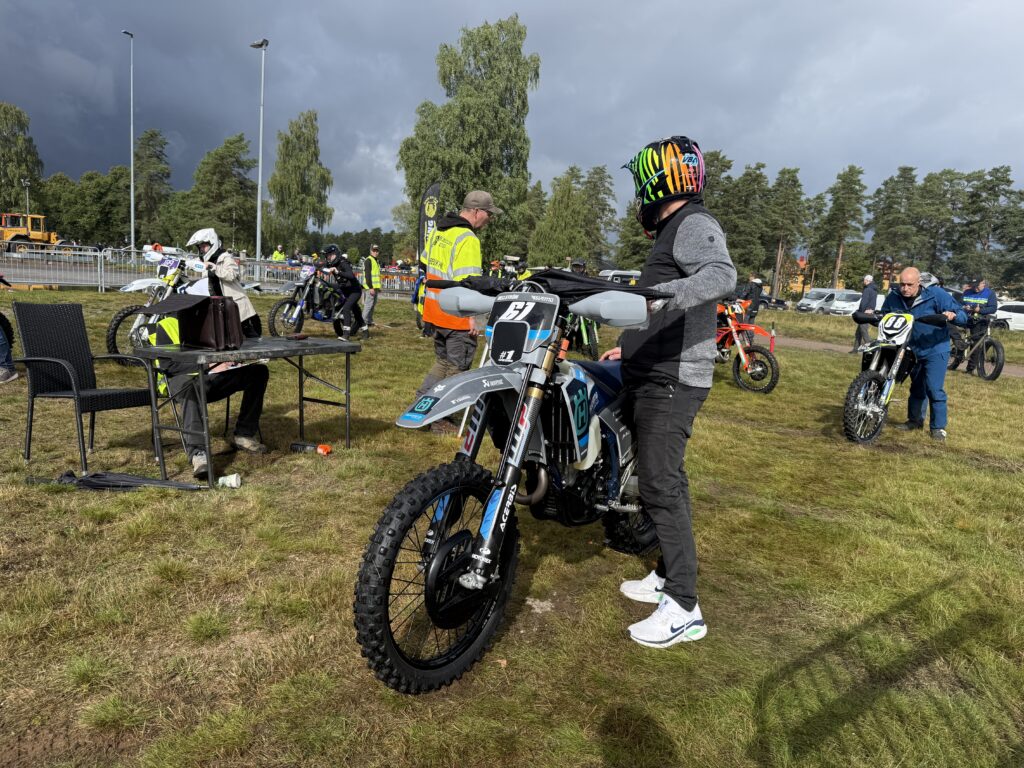
By the time of Saturday’s final start, the heavens opened and a powerful thunderstorm rolled in. Lightning struck nearby, prompting the fire brigade to respond. The storm passed just before the start, which was therefore able to go ahead on schedule. But it was not the last downpour of the day. The course became not only wetter as Saturday went on, but increasingly churned up as well, and sections that had been fast and flowing in the morning became muddier, more rutted and more technical.
Early on in the course there is a forest section that is tricky even in better conditions. This year it became seriously difficult, with riders getting stuck and needing help from marshals to get going again.
The tyres became clogged with mud, causing grip to disappear.
With muddy tyres and less traction, the steep downhill section immediately afterwards became difficult to control as braking performance deteriorated, and several riders crashed.
The results also give an indication of how the course changed over the course of the day. In the 50+ Amateur class, 94 riders completed four laps. In the following start, that figure had dropped to 30, and in Saturday’s final start only 11 riders managed to complete four laps. Of course, several factors influence how many laps riders are able to complete, but the difference between the start groups still says quite a lot about how quickly the conditions changed.
Sunday brought much better weather. The course, however, still bore clear signs of Saturday’s wet starts and looked accordingly, even though the ground had dried out somewhat in places.
A course on borrowed land
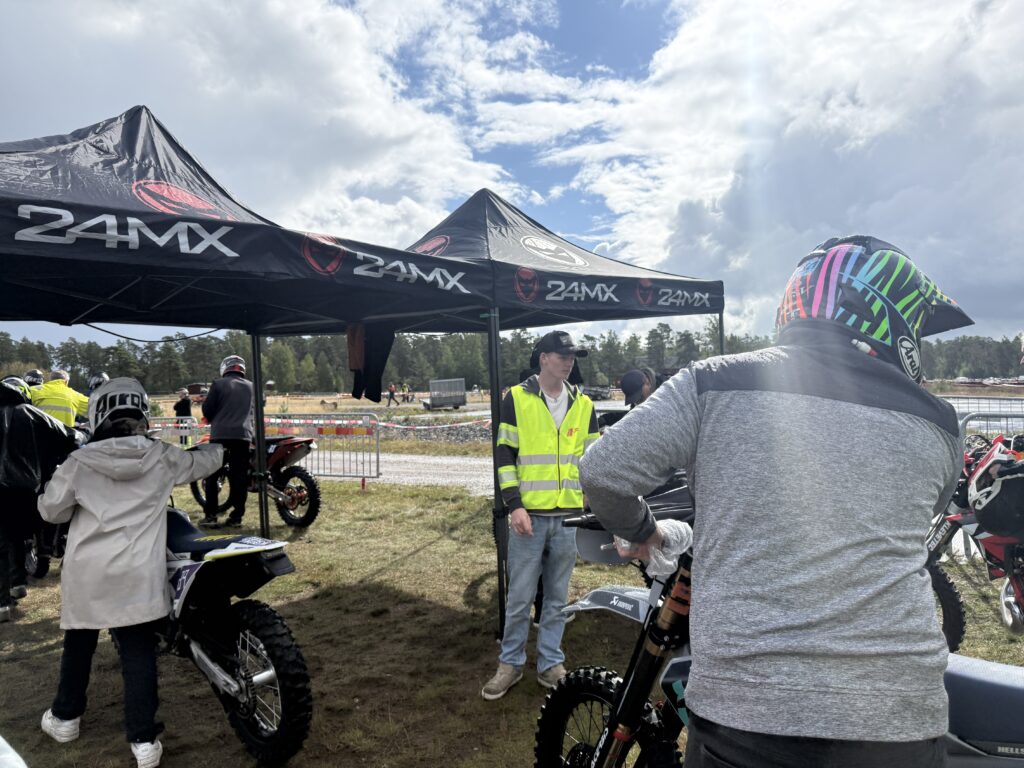
Ränneslättsloppet is held on military land, which places certain constraints on the event in ways that many spectators may not necessarily think about. In recent years, the organisers have had to reduce the total riding time in order to stay within the hours during which the land may be used for civilian competition.
Among other changes, the former so-called open track, where riders could start without a mass start, has been removed entirely. A new class called “Prova på” has, however, been introduced, giving riders the opportunity to take part outside the competition.
Berget – or the “chicken route”
At Berget, the next challenge awaited. The classic section was slippery after the rain, but many riders still chose to tackle it rather than take the alternative route, commonly known as the “chicken route”.
But the easier route was not particularly easy either. It was muddy there too, with slippery rock slabs and demanding sections.
For those who tried to make it up Berget and failed, the clock could quickly run away with them. Some riders were stuck there for quite a while, which raises the question of how much time you really gain by choosing the harder but shorter route if repeated attempts eat into your time. It also takes its toll physically. Berget is tough on both rider and bike if you come off. Full credit to those who kept battling on and refused to give up.
Part of something bigger
Ränneslättsloppet is the second of three rounds that make up the Swedish Enduro Classic, alongside Stångebroslaget and the Gotland Grand National. The Classic was established in 1994, and to complete it riders must take part in all three events within the same calendar year and meet the requirements of each race.
Around 7,500 riders take part in at least one of the three events each year, while roughly 750 complete the full Classic. Since 2023, the races have also formed part of the Swedish Enduro Series, where results from all three events are combined into an overall series ranking.
For those taking on the Classic, Ränneslätt is stage two on the road to the final round on Gotland in October.
Check out the Ränneslättsloppet results here.
Read more about the Swedish Enduro Classic here.

Anna Haglund