

Do you understand your motorcycle’s suspension?
What you can adjust yourself
Many motorcycles come with adjustable suspension, although the options vary. Some models allow you to adjust everything, while others only offer rear preload adjustment. Always start with what you have available and change one thing at a time. Test the bike on the same stretch of road so you can clearly identify what made the difference.
There is no harm in experimenting. The adjusters have a stop at either end of their range. Start by turning the adjuster clockwise until it reaches its stop. At this point it is closed, meaning very little oil can flow through the damping circuit. The less oil that flows, the firmer the suspension becomes. Turning the adjuster anti-clockwise increases oil flow and results in a softer suspension setup.
Preload is the easiest place to start and often provides the most noticeable improvement. It determines how much the spring is preloaded in its resting position and should be adjusted according to your weight. Check the owner’s manual or workshop manual for your specific model. The manufacturer may specify recommended sag values, indicating how much the suspension should compress when you sit on the motorcycle. If no such figures are available, 25-35 mm is a common guideline for many road-going motorcycles.
Compression damping controls how quickly the suspension compresses when it encounters a bump or obstacle. If the ride feels harsh and jarring, try turning the adjuster anti-clockwise to increase oil flow.
Rebound damping controls how quickly the suspension returns after a bump. By adjusting the rebound setting, you can increase or decrease the speed at which the suspension returns to its original position.
Where are the adjusters located?
On the front forks, the adjusters are usually found at the top and bottom of the fork legs, often in the form of small slotted screws that can be turned using a suitable tool. Which adjuster controls which function varies between models, but they are often marked with C (compression) and R (rebound). If you cannot find any markings, consult your owner’s manual or search for information specific to your model. That is the safest approach.
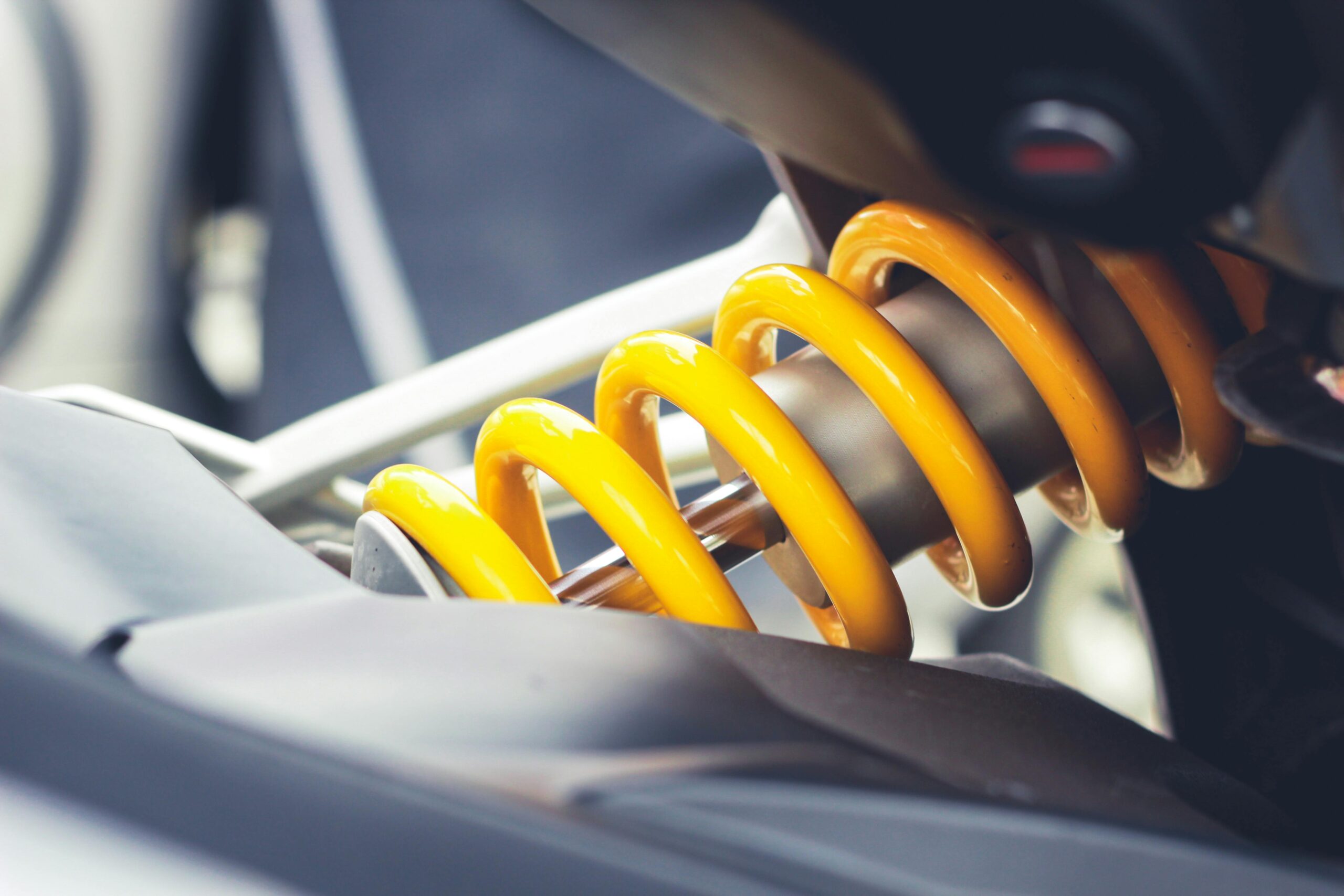
On the rear shock absorber, preload is adjusted using a collar around the shock body, which is turned with a supplied C-spanner or a dedicated adjustment tool. Compression and rebound adjusters are typically located at the top and bottom of the shock respectively. If your motorcycle only has a single rear adjuster, consult the owner’s manual to determine which adjustments are available.
If your motorcycle has no adjustment options at all, no adjusters and no preload collar, then you have a fixed suspension setup and will need to consider aftermarket alternatives if you wish to make changes.
Maintenance you can do yourself
Keeping bearings and the entire suspension linkage properly lubricated and in good condition can have just as much impact on suspension performance as any adjustment you make. To get the best from your suspension, all the moving parts of your motorcycle need to work together in harmony.
When should you visit a workshop?
Some issues are best left to a professional mechanic. Suspension servicing is often included as part of a major service, but if you frequently ride with heavy luggage or regularly tackle more demanding conditions, the suspension should be serviced at shorter intervals.
If your motorcycle is leaking fork oil, or if you suspect the springs are worn, book it in for inspection. If you have purchased a used motorcycle, it is always worth having the suspension checked by a mechanic. You rarely know how the previous owner set it up, or how much life remains in the suspension components.

Anna Haglund