

Japan: Vending machines, volcanoes and a country where I can’t read the road signs
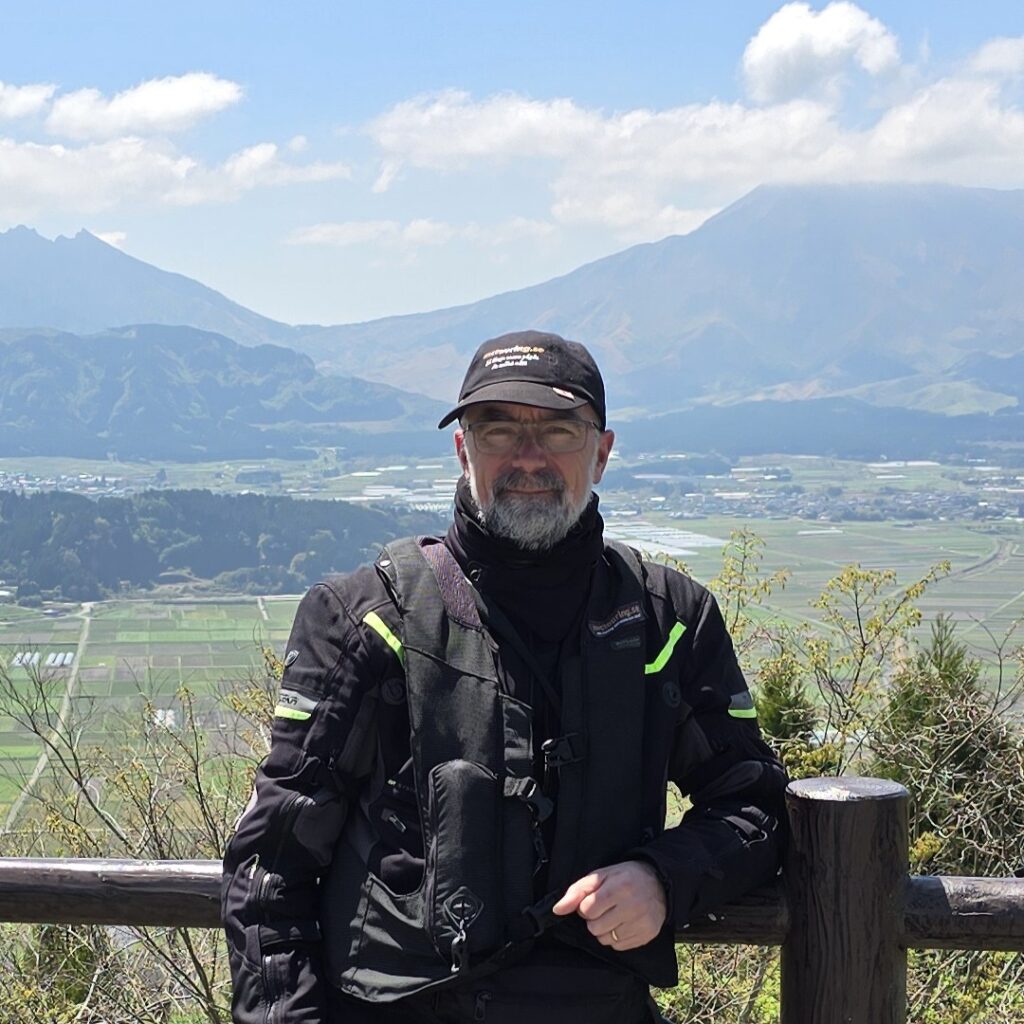
Hans Rönnegård rented a motorcycle and spent a week exploring Japan. This is his story of a journey filled with contrasts, from the urban buzz of Osaka to deserted mountain roads, active volcanoes, hot springs and tiny fishing villages.
Unable to read the world around me
There is something rather strange about travelling through a country where I cannot understand even the smallest part of the language or the written word.
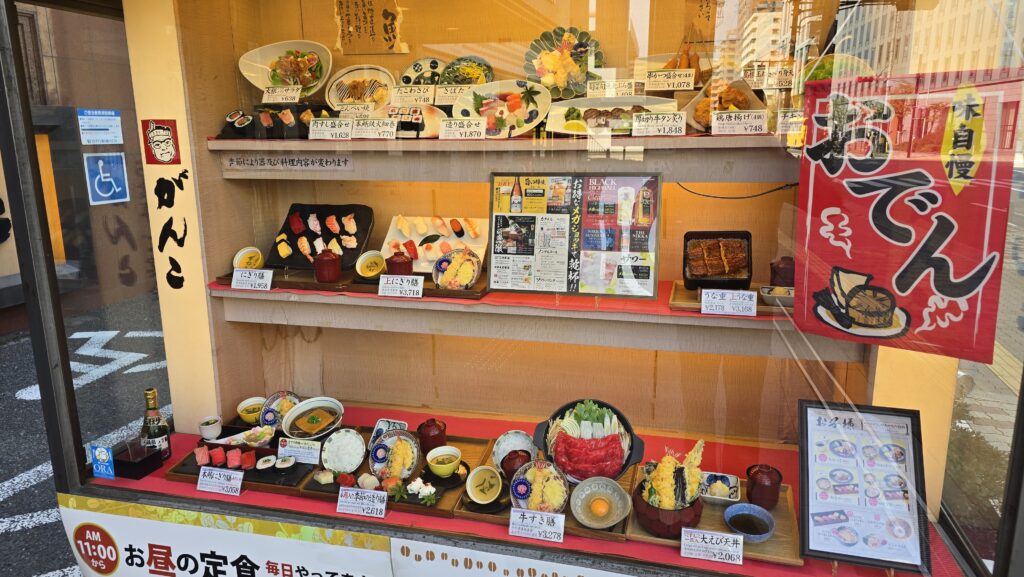
Translations do exist from time to time, written in letters I recognise, but only in places frequented by tourists. Venture away from the beaten track and there is very little help to be found that way. Instead, I have to take in my surroundings differently and ask questions whenever the opportunity arises. Fortunately, these days a smartphone can get you out of most situations.
After a day spent acclimatising and visiting the temple city of Kyoto, it is finally time to collect the motorcycle from Rental819 in Osaka.
My son, who has lived in Japan for more than fifteen years, is travelling with me and proves invaluable when it comes to language, traffic and culture, not least when English is not enough, which happens more often than you might think.
Ironically, it is often the older generations who speak some English, a legacy of the American military presence after the Second World War. Younger Japanese simply do not see the need.
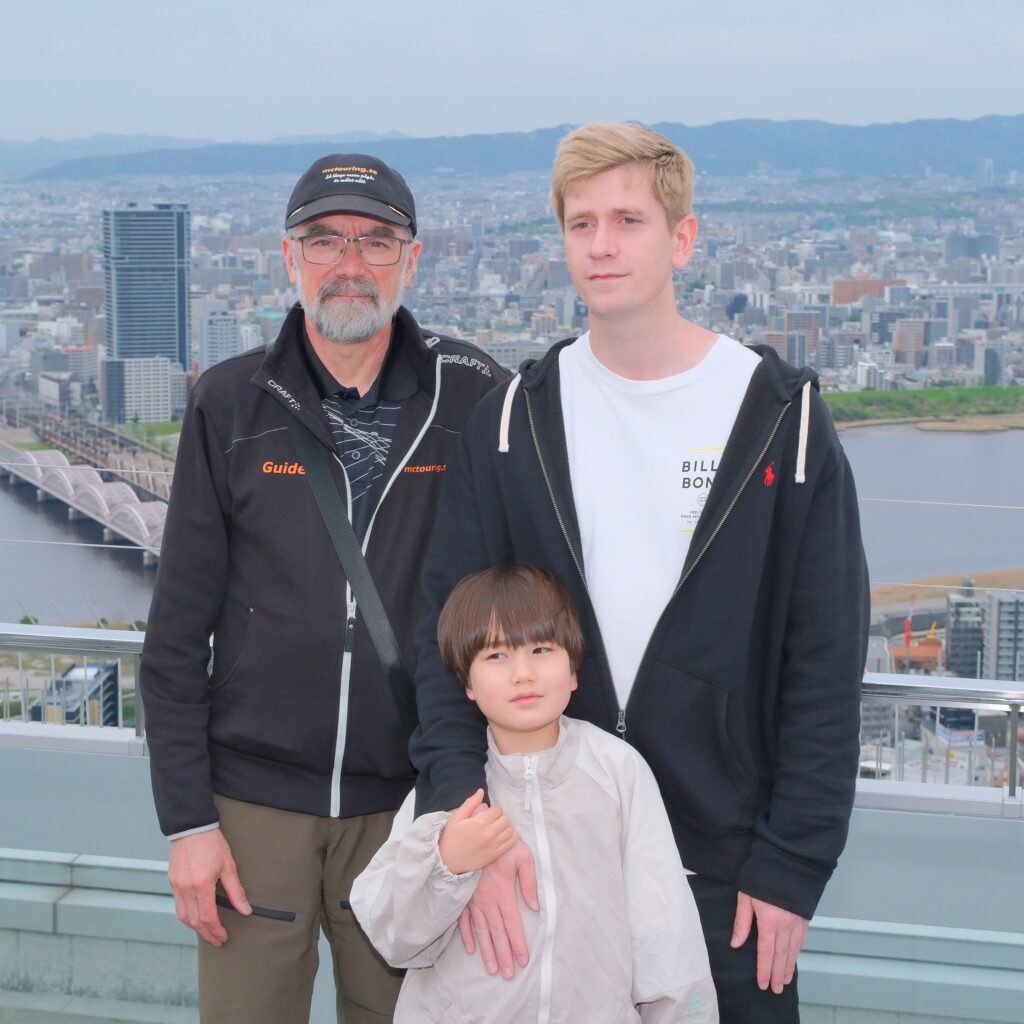
The first stage takes us straight through Osaka. Perhaps not the ideal start to a motorcycle trip, but the traffic flows surprisingly well and, once the city gradually disappears in the mirrors after an hour or two, it finally feels as though the adventure has truly begun.
A land of contrasts
What surprises me most about Japan is how quickly everything changes. One moment I am riding through urban areas with millions of inhabitants. The next, I find myself alone on a road high above the city, surrounded by wilderness, on a route that seems almost abandoned.
In fact, large parts of Japan’s mountainous regions are barely inhabited at all. The roads are simply a way of getting from one valley to another, while most Japanese drivers nowadays use the expressways that pass through the mountains in tunnels. Japan is a vast country and the differences between north and south are striking. This journey takes us around the islands in the south.
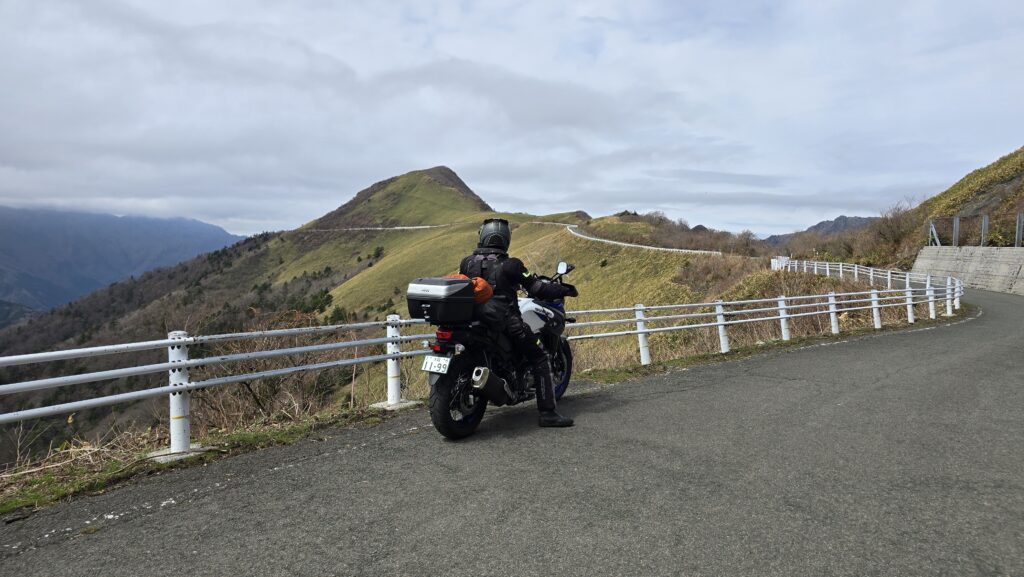
On the island of Shikoku, we head for the mountains and one of the area’s most famous roads: Kamegamori Pass, better known as the UFO Line.
According to local legend, so many unexplained phenomena have been seen in the skies here that the nickname simply stuck. Whether that is true or not, I will leave unsaid.
The road is narrow and twisting, climbing steadily higher through the forest. It had reopened for the season only a few days earlier after winter closure, so there was a certain tension as we approached the gate. But it was open.
And so we continued all the way up to around 1,500 metres.
What makes the pass so spectacular is that the road follows the mountain ridge itself, offering views in both directions. Suddenly the landscape opens up and the horizon feels infinitely larger.
A few hours later visibility is down to only a few metres as fog rolls across the next pass. And the next.
There are no grand views that afternoon, only a grey wall and wet tarmac. Japan does not always give you what you hoped for, and you simply have to accept it and keep riding. The mountain roads, however, remain just as narrow and just as twisty.
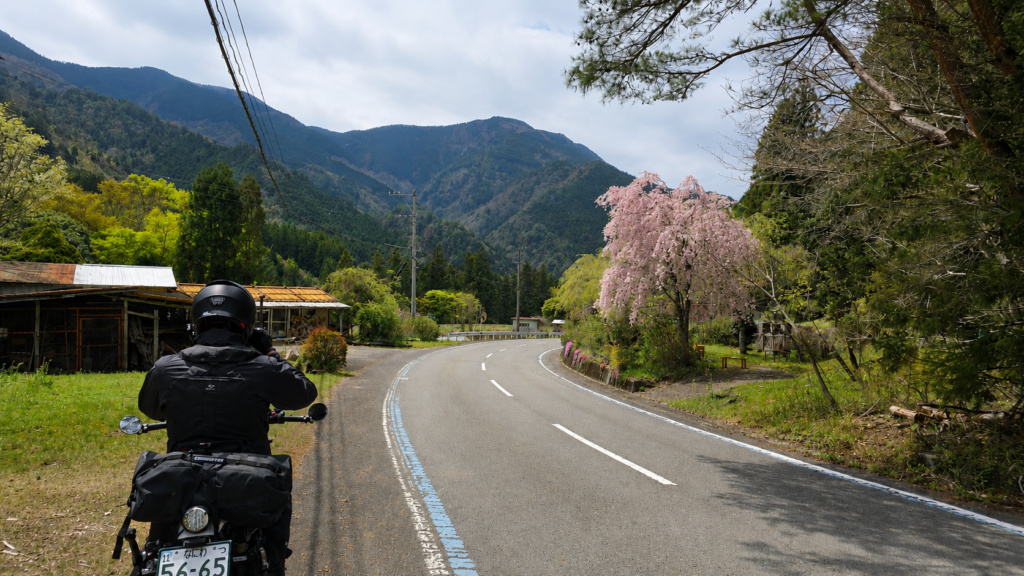
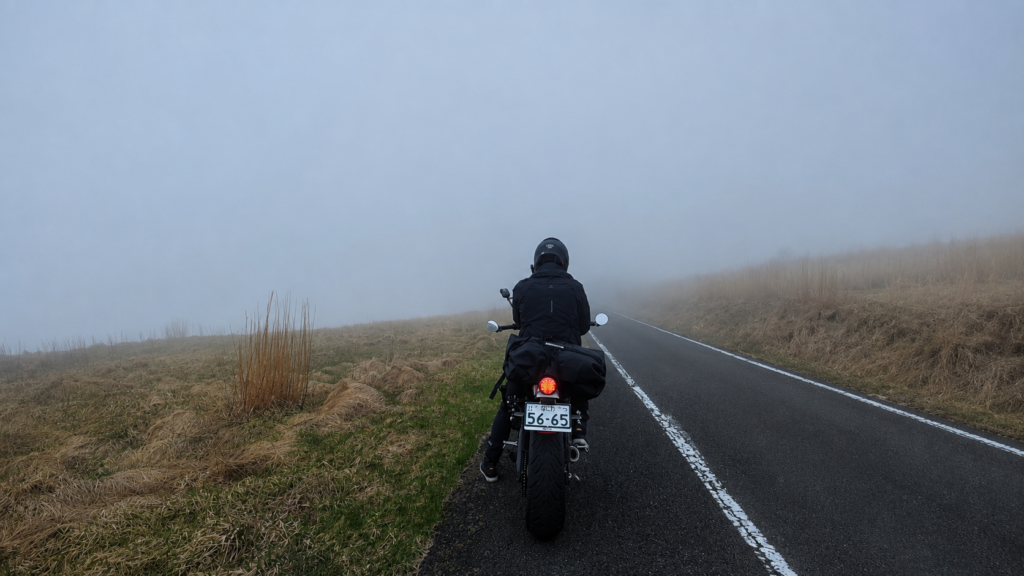
Rain becomes a frequent companion during the week. One entire day along Shikoku’s south-west coast is spent in drizzle and mist, created by the humid warmth.
Yet the day ends beautifully, with sunset viewed from the ferry to the island of Kyushu.
Roads that reward you
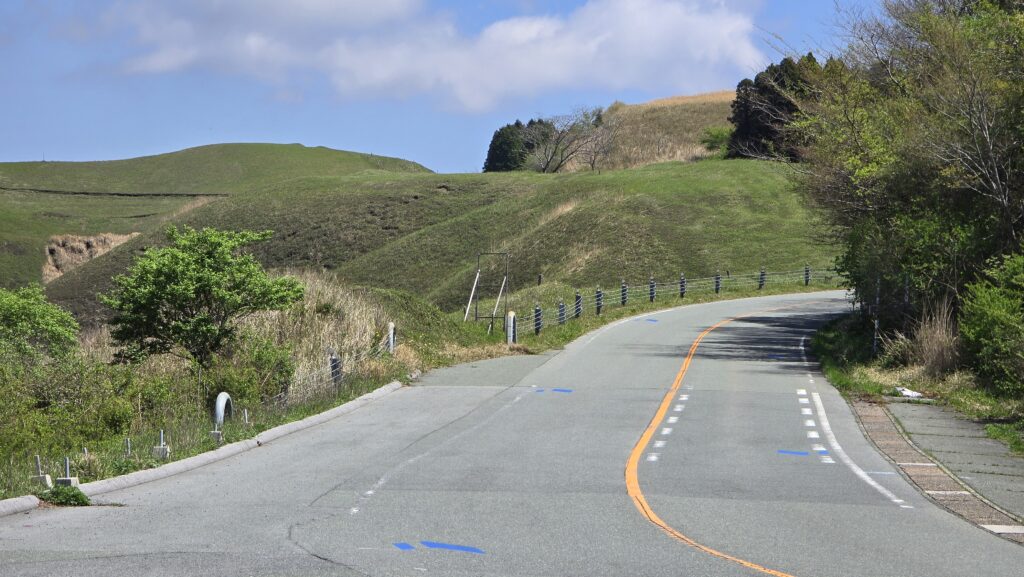
Japan drives on the left and it takes a while to retrain the brain. Oddly enough, cities and major roads are the easiest places to ride, thanks to clear lane markings and arrows. The most difficult places are the mountain roads, where there are no centre lines, no markings and very little traffic. That is where it is easiest to forget yourself. But it is also where the riding is at its very best.
We avoid the expressways whenever possible. Along Shikoku’s south-west coast we follow the shoreline instead, passing through countless small fishing villages on a road that is anything but straight. It takes time, of course, and daily distances need to be kept reasonable.
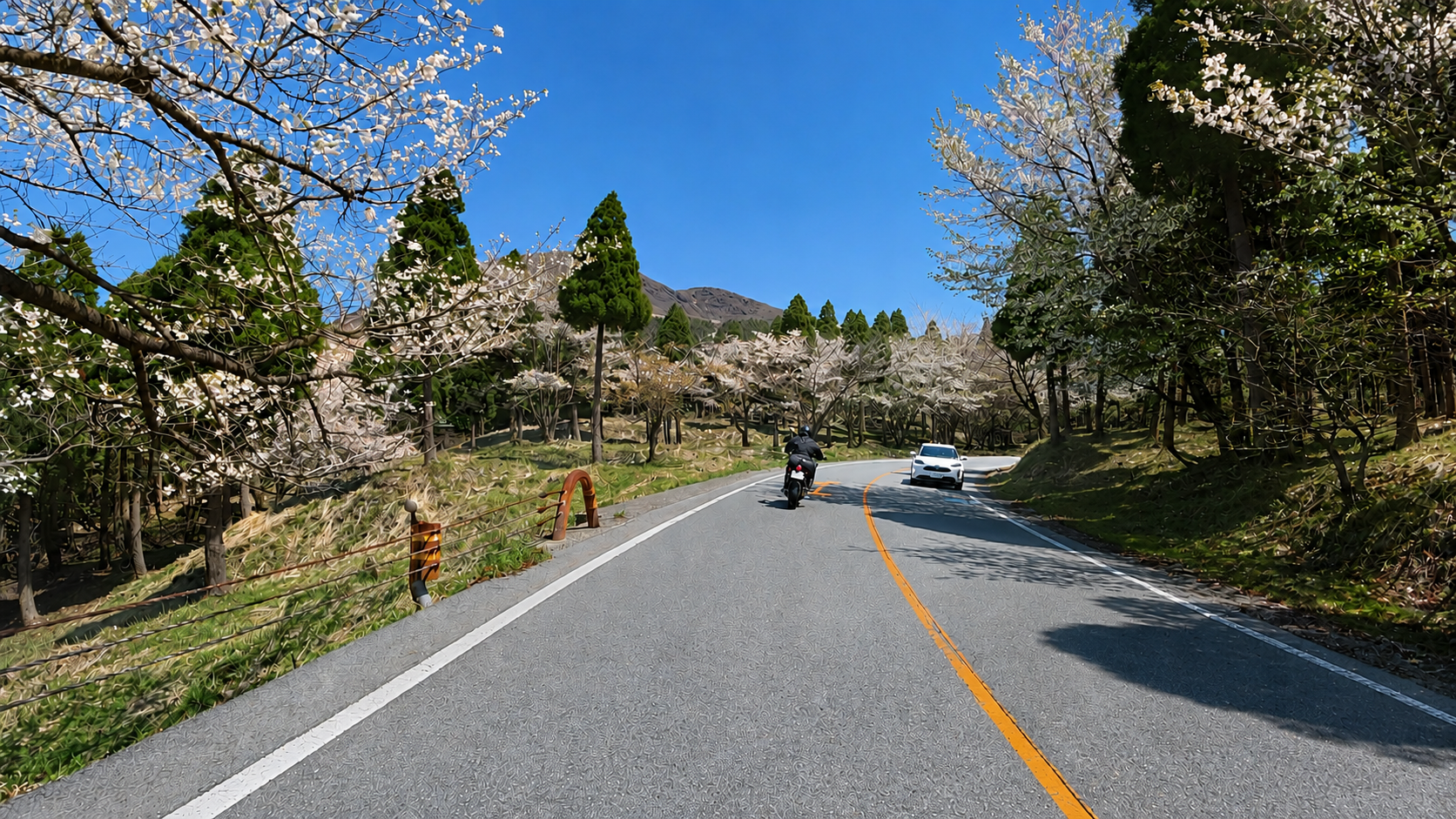
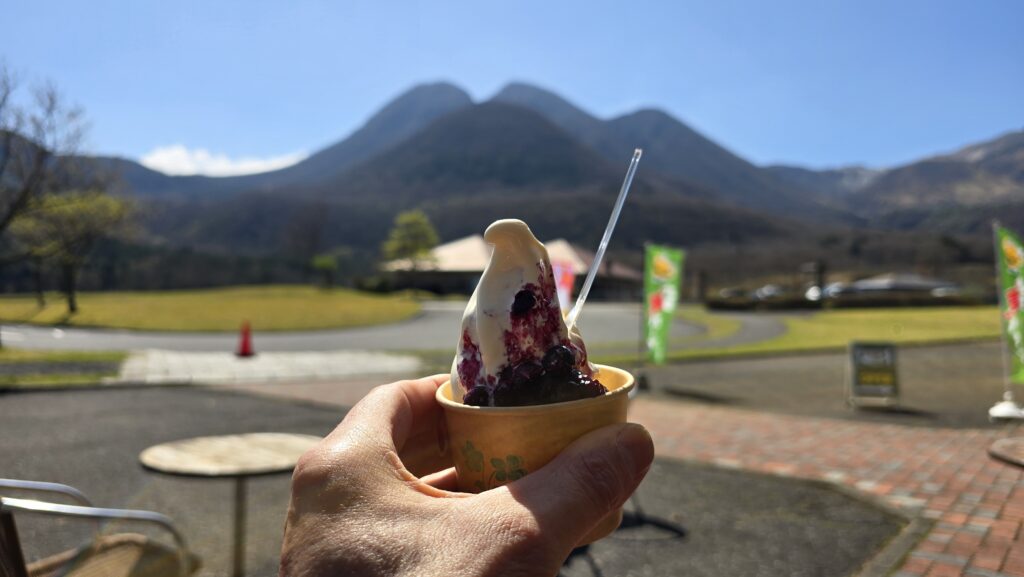
But these are the roads you remember. After the ferry crossing we arrive on Kyushu, Japan’s southern island, where the landscape feels even more open. For two days we ride through the famous Aso volcanic region, following winding roads along the rims of ancient craters. The sun is finally shining.
There are more tourists and more traffic around the volcanoes, but the moment we turn onto roads leading through forests and mountains, both people and cars disappear again. The roads seem abandoned. Yet somebody must have built them. And for a reason.
The journey ends not on a motorway but at sea. From the port of Beppu on Kyushu, we take the overnight ferry back to Osaka. Think of it as a Scandinavian ferry, only with a distinctly Japanese buffet. The motorcycles rest in the cargo hold while we enjoy a beautiful sunrise over Osaka as we arrive.
As it turns out, we are not the only ones with this idea. The BMW club from Kobe is on board as well.
Unexpectedly familiar
Strangely enough, there are several moments during the trip, especially on Kyushu, when I feel as though I have ridden these roads before. Not in Japan, of course. But back home in Sweden.
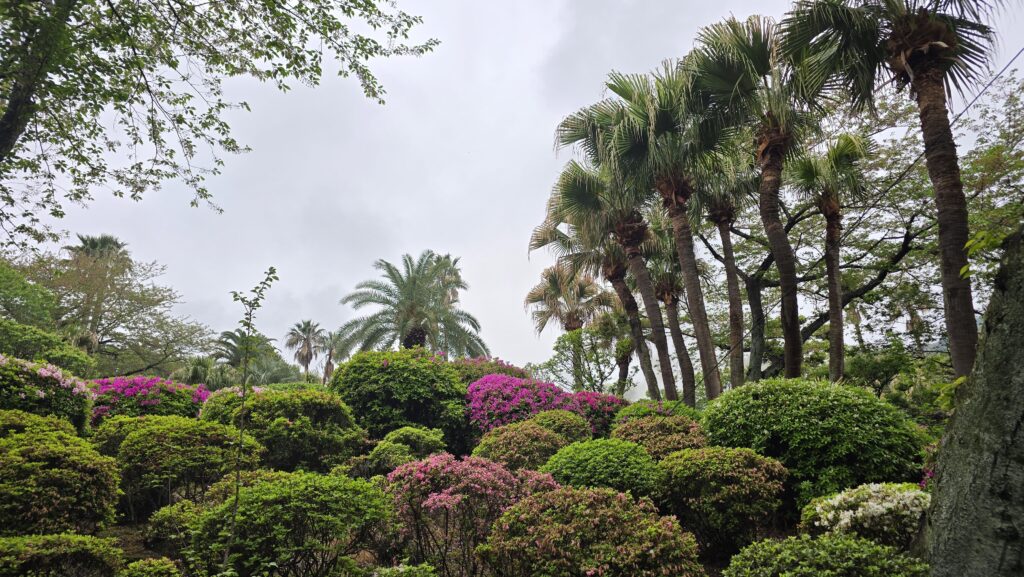
On the way to Aso we pass through an area that reminds me strongly of Österlen in southern Sweden: winding roads weaving between grassy hills dotted with small groves of trees. A little later the road descends into conifer forests, occasionally opening up to flowering meadows beside narrow, twisting lanes.
Now it feels like Småland. Not quite what I expected to find among Japan’s volcanoes. Around Aso itself I could almost believe I was in Iceland instead.
Volcanic landscapes, open plains and sulphurous steam rising from the earth. High above it all towers the crater, constantly venting steam into the sky. Sadly, the road to the crater is closed that day following a helicopter accident. We have to settle for a magnificent sunset from the mountain’s edge.
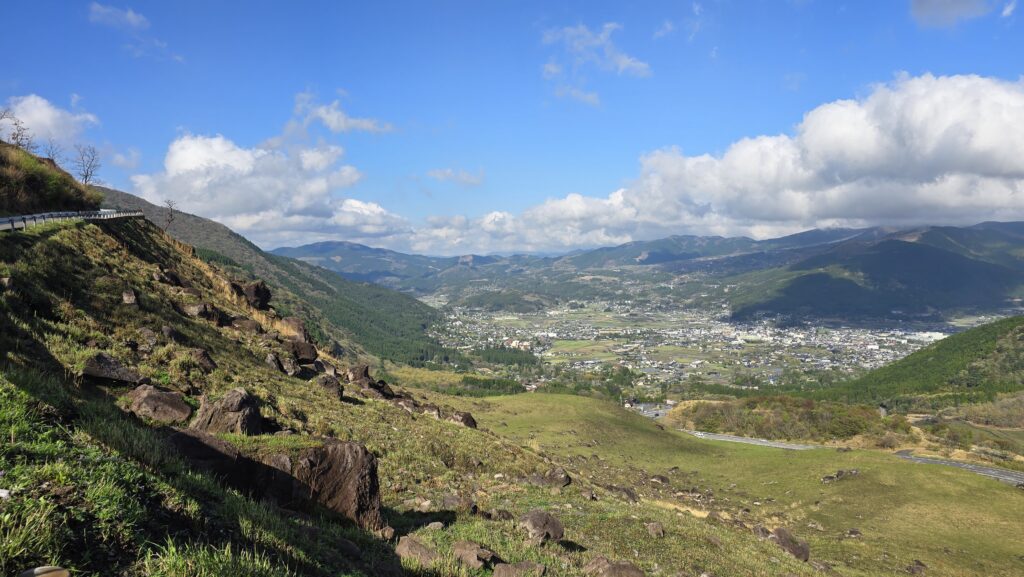
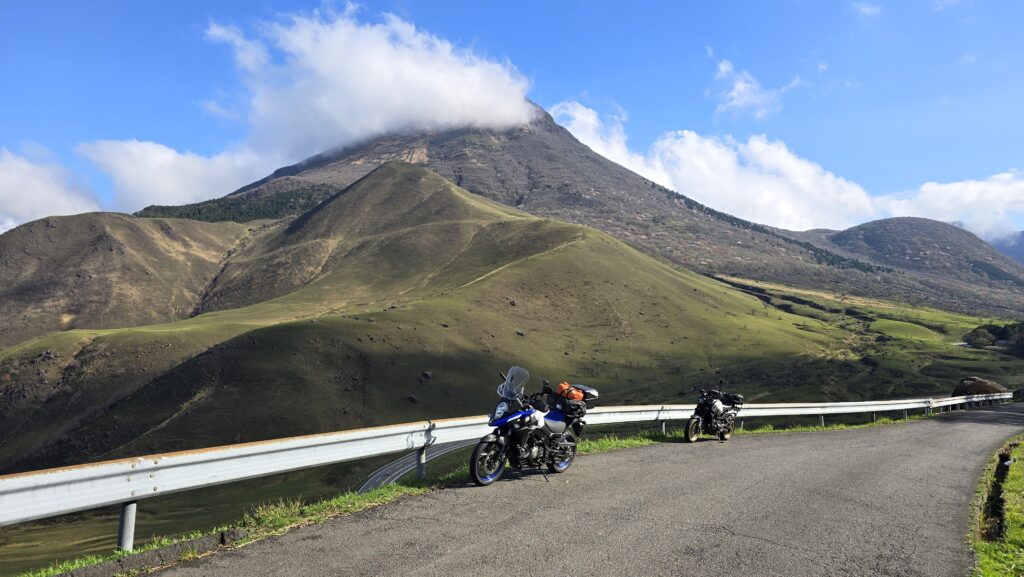
Kyushu always seems to have another landscape waiting around the next corner.
Vending machines, slippers and hot springs
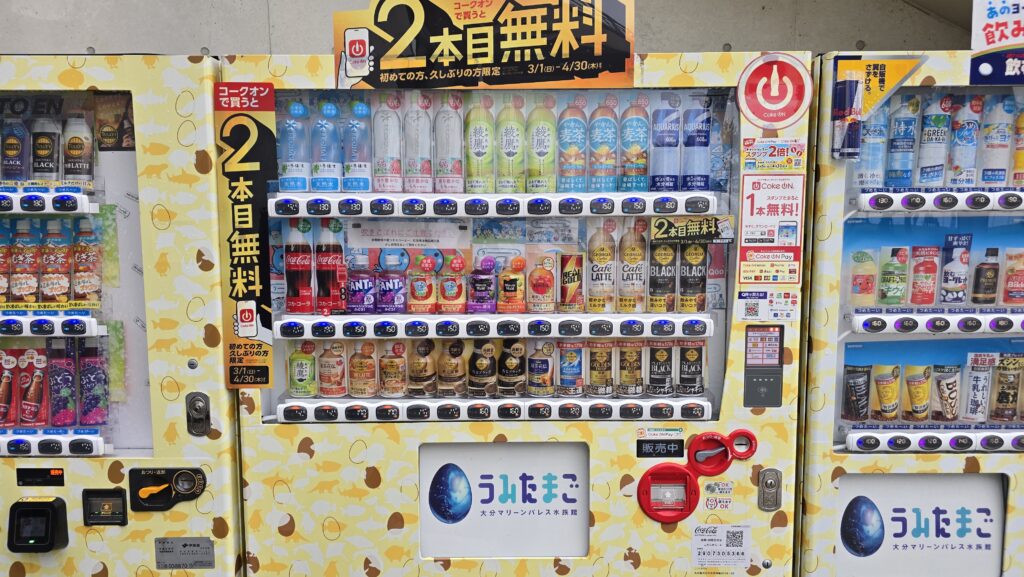
Almost wherever I am, high up in the mountains or in the middle of a city, I am never far from a vending machine selling cold drinks. Coffee is available hot or cold, though perhaps never piping hot. Surprisingly, it tastes remarkably good, despite having sat warming inside a machine halfway up a mountain for days, perhaps even weeks.
The Japanese are masters at making sure drinks are always within reach. And toilets.
If there is a place to stop, there is almost always a toilet, and the standard is often astonishingly high, with heated seats and warm-water bidet functions, which are now more or less the norm in Japan.
After several hours riding in the rain one day, it is also rather pleasant to sink into a proper hot bath (Onsen).
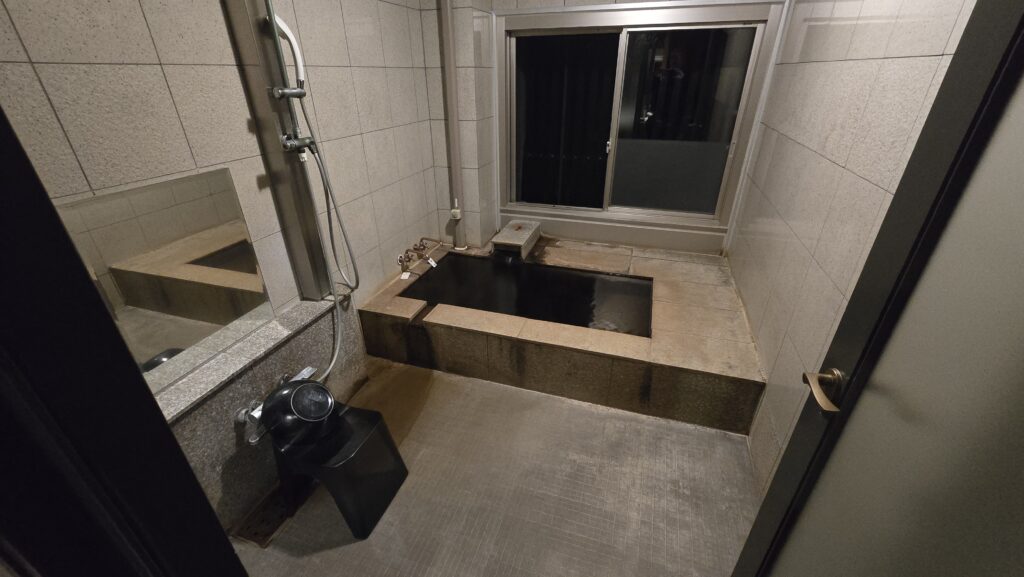
An onsen, a bath fed by naturally heated spring water, is often around 43 to 45 degrees Celsius, unnecessarily hot in my opinion.b But after a long day on a motorcycle, one does not complain.
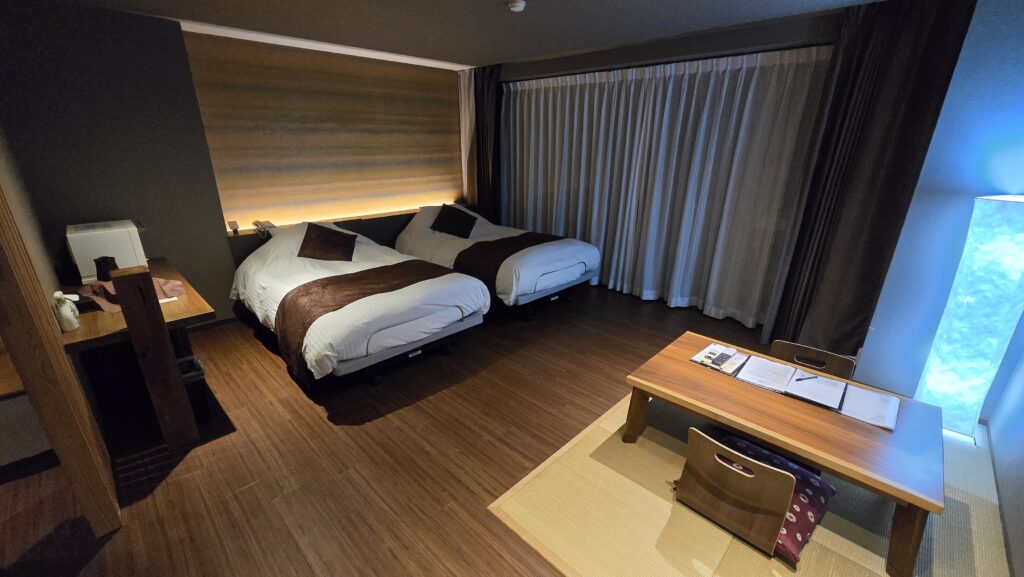
One of our hotels turns out to be what was probably once a Love Hotel, the kind of place traditionally used for romantic encounters. It has the largest room of the entire trip. And the cheapest price. Each room has its own private onsen, supplied with natural hot spring water flowing continuously, day and night.
And then there are all those little details that constantly remind me I am in Japan. Indoor slippers. Special slippers for the toilet. Rules about where shoes should be removed and where they are allowed to stand. Forget to change slippers when leaving the toilet and, well… Then it is time to feel embarrassed.
More than just a motorcycle trip
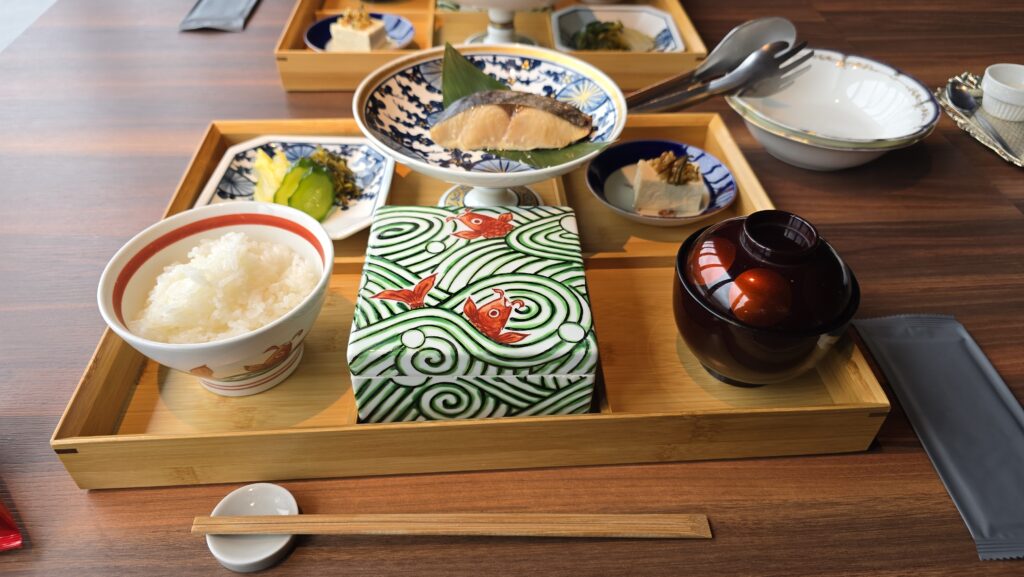
It is easy to think that it is the roads, the views or the volcanoes that will remain strongest in my memory. And of course they do. But this journey is equally about encountering a society, a culture and a cuisine that function in completely different ways from those back home.
It is about navigating without being able to read a single sign. About realising that sometimes a nod and a smile take you further than any language ever could. And after a long day in the saddle, there is something wonderfully comforting about slipping into a hot onsen. Somehow, it all fits together.
The motorcycle has been the key to the experience. From the saddle, the contrasts become sharper, the distances shorter and the encounters more frequent. You reach places no public transport ever will. Japan is a country well worth exploring. But it requires planning. Having somebody with you who understands the language, the traffic and the culture makes the journey easier and gives you a far deeper understanding of why things are the way they are.
And perhaps that is exactly what makes it so fascinating.
Hans Rönnegård