

Solid-state-batteries: A gamechanger for electric motorcycles?
The battery race enters a new phase
Over the past decade, electric vehicle technology has advanced rapidly. Electric motors have become more efficient and electronics more sophisticated. Yet one component continues to impose clear limits on how far we can travel and how quickly we can recharge: the battery.
Weight, energy density, charging time and cost remain among the major challenges. For the car industry, this means, among other things, achieving longer range and shorter charging stops. For the motorcycle industry, the challenge is particularly clear, as every additional kilogram affects a motorcycle’s balance, riding feel and handling.
Attention is now increasingly turning towards batteries with a fundamentally different design from today’s conventional lithium-ion batteries. One of the most widely discussed technologies is the so-called solid-state battery.
How do solid-state batteries differ from conventional batteries?
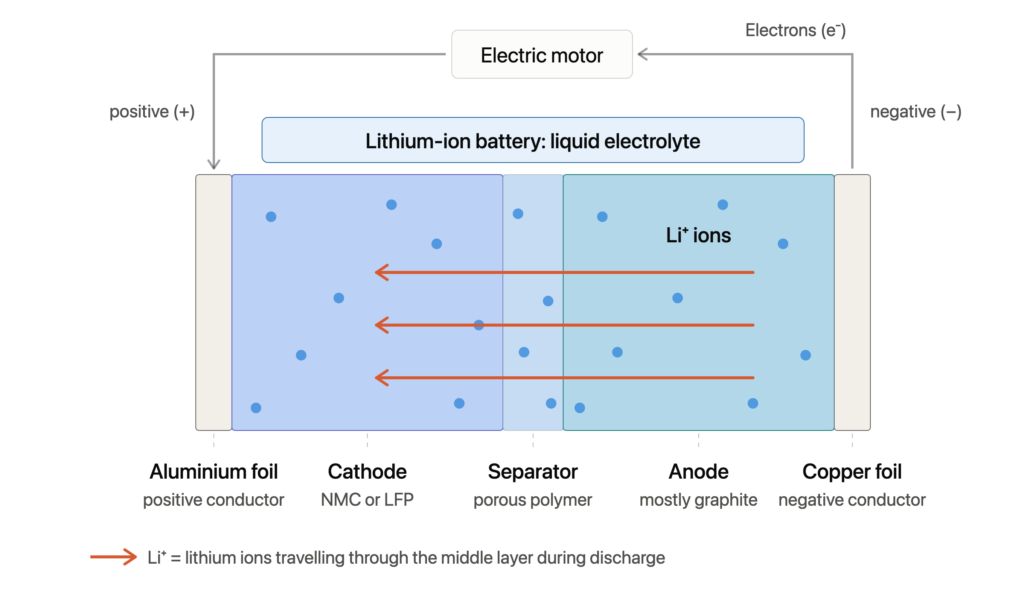
In a conventional lithium-ion battery, lithium ions move between two electrodes, the anode and the cathode, through an electrolyte that is usually liquid. During charging and discharging, the ions move in opposite directions, allowing electrical energy to be stored and released.
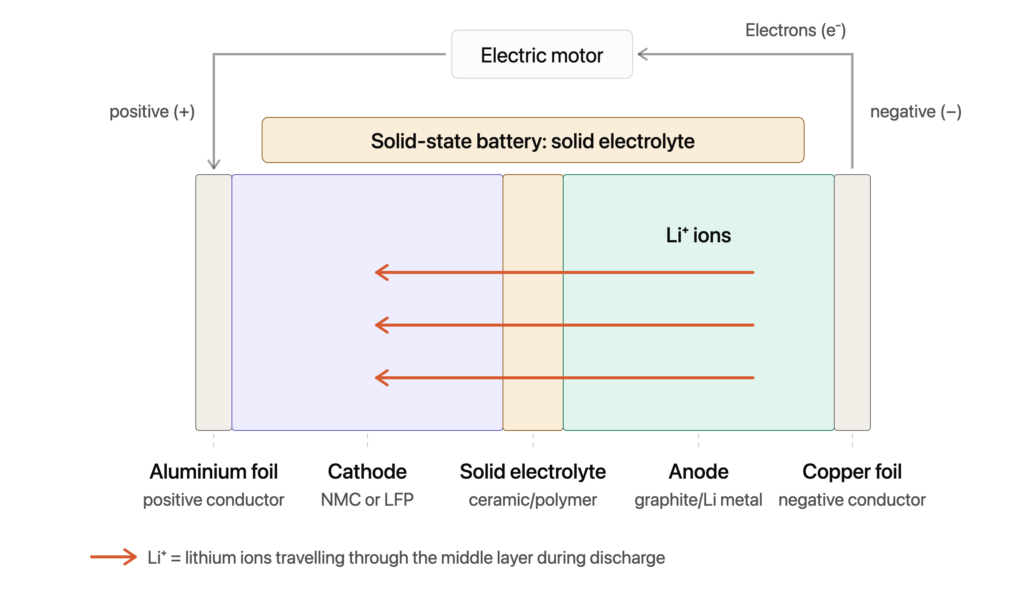
In a solid-state battery, the liquid electrolyte is replaced by a solid material that conducts lithium ions between the electrodes.
This new design offers the potential for higher energy density, allowing more energy to be stored without making the battery larger or heavier.
Another advantage of solid-state batteries is the potential for faster charging and improved safety. By using solid electrolytes that are less flammable than the liquids found in today’s lithium-ion batteries, the risk of battery fires is reduced.
However, this does not mean the technology is entirely risk-free. Properties vary depending on the materials and designs used, and the risk of faults and overheating remains.
One of the major technical challenges is establishing and maintaining good contact between the battery’s different solid materials. As the battery charges and discharges, the materials can change in volume, causing mechanical stress and potentially affecting performance.
Getting the technology to work in individual laboratory cells is therefore only one step. For solid-state batteries to be used in production vehicles, they must also be manufactured in large volumes, with consistent quality, a long service life and at a reasonable cost.
The battery lifecycle – from raw materials to recycling
An important question is how future batteries will be manufactured and what happens when they reach the end of their useful life. Today’s lithium-ion batteries contain lithium and, depending on the battery chemistry, nickel and cobalt. Extracting and processing these raw materials requires considerable resources and can have a significant environmental impact.
Solid-state batteries do not automatically solve these problems. The new technology also relies on materials that must be extracted, processed and eventually recycled. At the same time, new battery chemistries, more efficient manufacturing methods and improved ways of recovering valuable metals are being developed.
Battery lifespan is equally important. The ability to monitor a battery’s condition, repair or replace individual components and recover materials at the end of its useful life could make a significant difference to both the environment and the total cost of motorcycle ownership.
The EU has adopted stricter regulations covering the entire battery lifecycle, including requirements for recycling, traceability and recycled materials. These rules are being introduced gradually over the coming years. However, for next-generation batteries to become a truly sustainable alternative, manufacturers will need to consider the entire process, from raw material extraction to recycling.
A Ducati with next-generation batteries
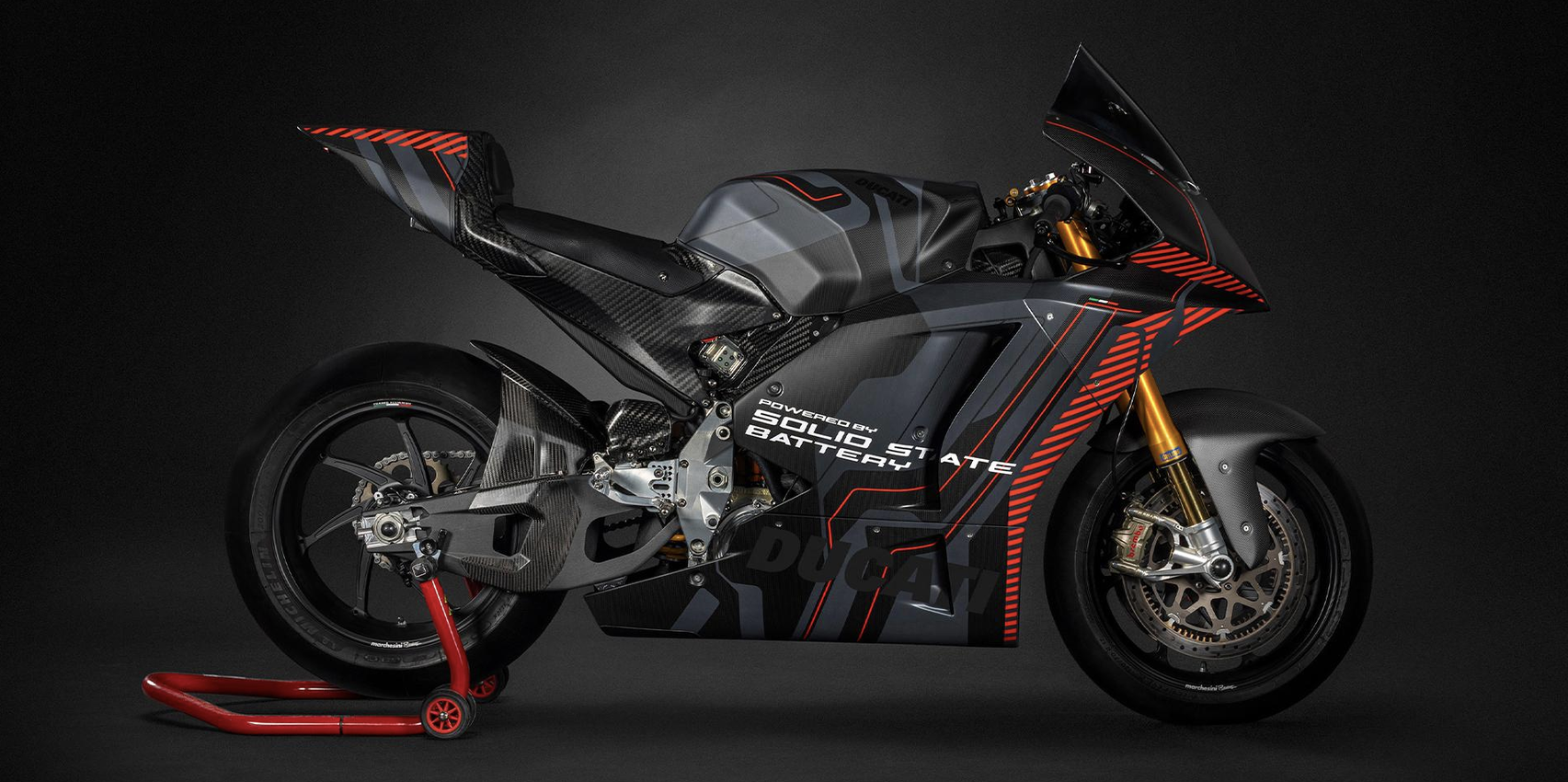
In September 2025, QuantumScape and PowerCo unveiled a modified Ducati V21L, Ducati’s electric racing motorcycle, equipped with a battery system based on QuantumScape’s new QSE-5 cells.
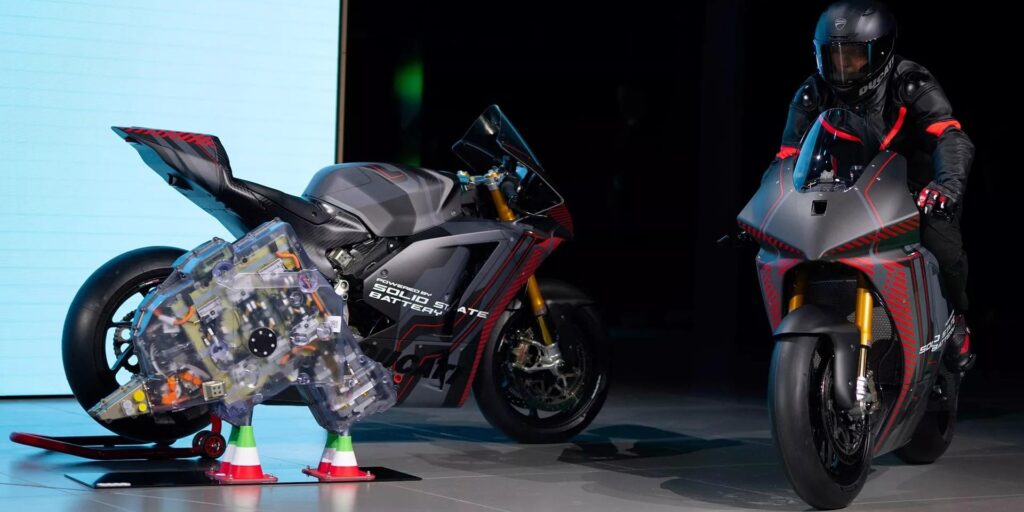
The motorcycle was ridden onto the stage at IAA Mobility in Munich, making it the first electric vehicle to publicly demonstrate QuantumScape’s solid-state technology.
The development project was a collaboration between Ducati, Audi, PowerCo and QuantumScape.
The choice of a motorcycle for the demonstration is particularly interesting. Unlike a car, a motorcycle has limited space for batteries and cooling systems, while the demands for low weight and high power output remain considerable.
The demonstration marked an important step from the laboratory to a functioning vehicle. However, it does not mean that the technology is ready for mass production or that the same charging performance has been achieved in a complete motorcycle.
QuantumScape and PowerCo are still developing the manufacturing technology and entered into negotiations during autumn 2026 over the structure of their future collaboration.
Verge TS Pro – from Finnish newcomer to battery pioneer
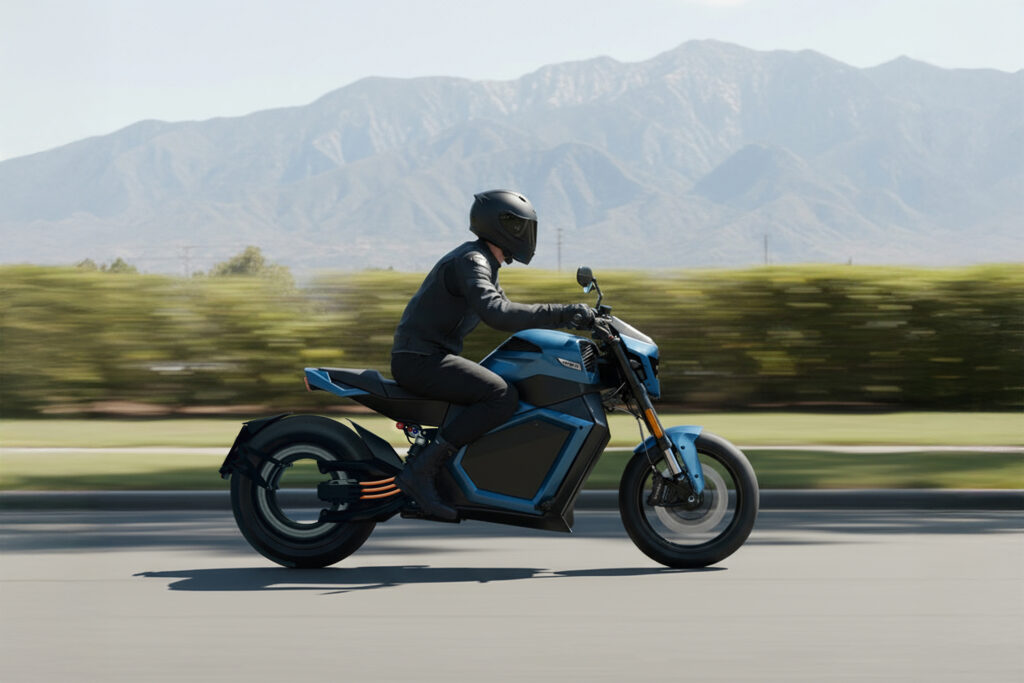
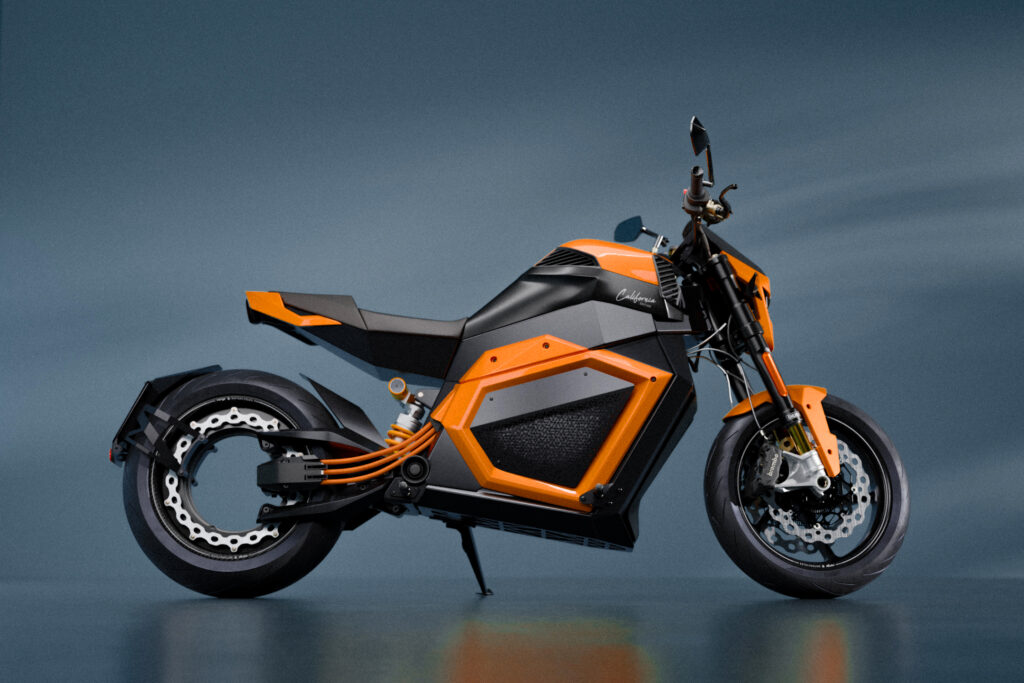
Another interesting example comes from Verge Motorcycles, a company with its roots in Finland. Founded in 2018 as RMK Vehicle Corporation, it attracted attention with its electric motorcycle, the RMK E2. Its most distinctive feature is the hubless rear wheel with an integrated electric motor.
The concept was developed further and unveiled as the Verge TS at EICMA in Milan in 2019. Since then, the company has continued to refine its technology and expand its model range.
In January 2026, Verge and Donut Lab unveiled a new generation of the TS Pro, which the companies claim is equipped with solid-state batteries. With the larger 33.3 kWh battery option, Verge claims a range of up to 600 kilometres and a charging time of less than ten minutes.
These claims have attracted considerable interest, but have also raised questions about the battery technology. Although independent tests have confirmed certain characteristics, questions remain about the battery’s construction and whether it genuinely meets the company’s description of solid-state technology.
The claimed 600-kilometre range has yet to be independently verified in a production TS Pro. Deliveries of the new generation have also been delayed compared with the original plans.
Nevertheless, Verge is an interesting example of how quickly the technology is developing and just how ambitious manufacturers have become.
If we could have our wish – the electric motorcycle of the future
Imagine an electric motorcycle designed from the outset around next-generation battery technology. A lighter, more compact battery pack would give engineers greater freedom to design the chassis and distribute weight, whether for a sports bike, touring motorcycle or adventure model. With a well-balanced design, instant power delivery and throttle response that can be adjusted to suit different riding conditions, the riding experience itself could evolve.
With a range of 500–600 kilometres in mixed riding conditions and the ability to charge the battery from 10 to 80 per cent in just 10–15 minutes, longer journeys, even with luggage and a passenger, would become considerably easier without having to plan around lengthy charging stops.
Just how far this technology will take us remains to be seen. But perhaps the next major step will not simply be batteries that store more energy, but motorcycles that are better suited to different types of riding and designed to last for many years.

Anna Haglund